Astronomy Picture of the Day Unveils the Process of Cleaning Cosmic Imagery to Reveal the True Andromeda Galaxy

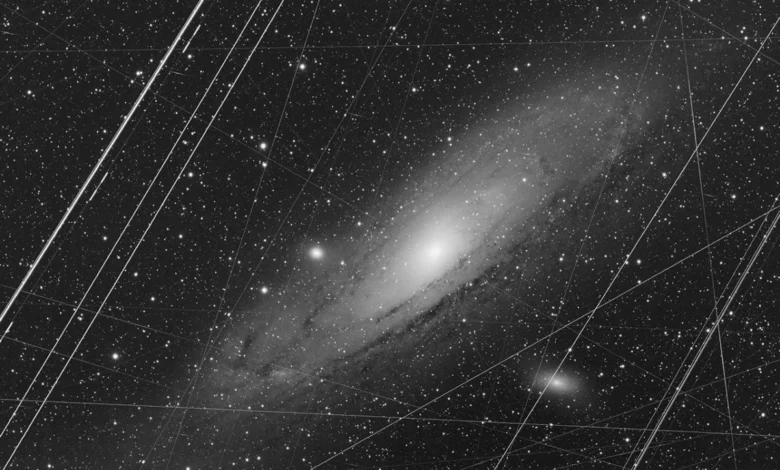
The quest to capture the majesty of the cosmos from the surface of Earth is an endeavor fraught with technical hurdles, atmospheric interference, and the persistent intrusion of human technology. A recent feature by NASA’s Astronomy Picture of the Day (APOD) offers a rare, transparent look at the reality of modern astrophotography. By presenting a side-by-side comparison of a raw, artifact-ridden dataset against a processed final image of the Andromeda Galaxy (M31), the feature underscores the immense computational effort required to isolate the light of distant stars from the noise of our own planet.
The Reality of Earth-Based Observations
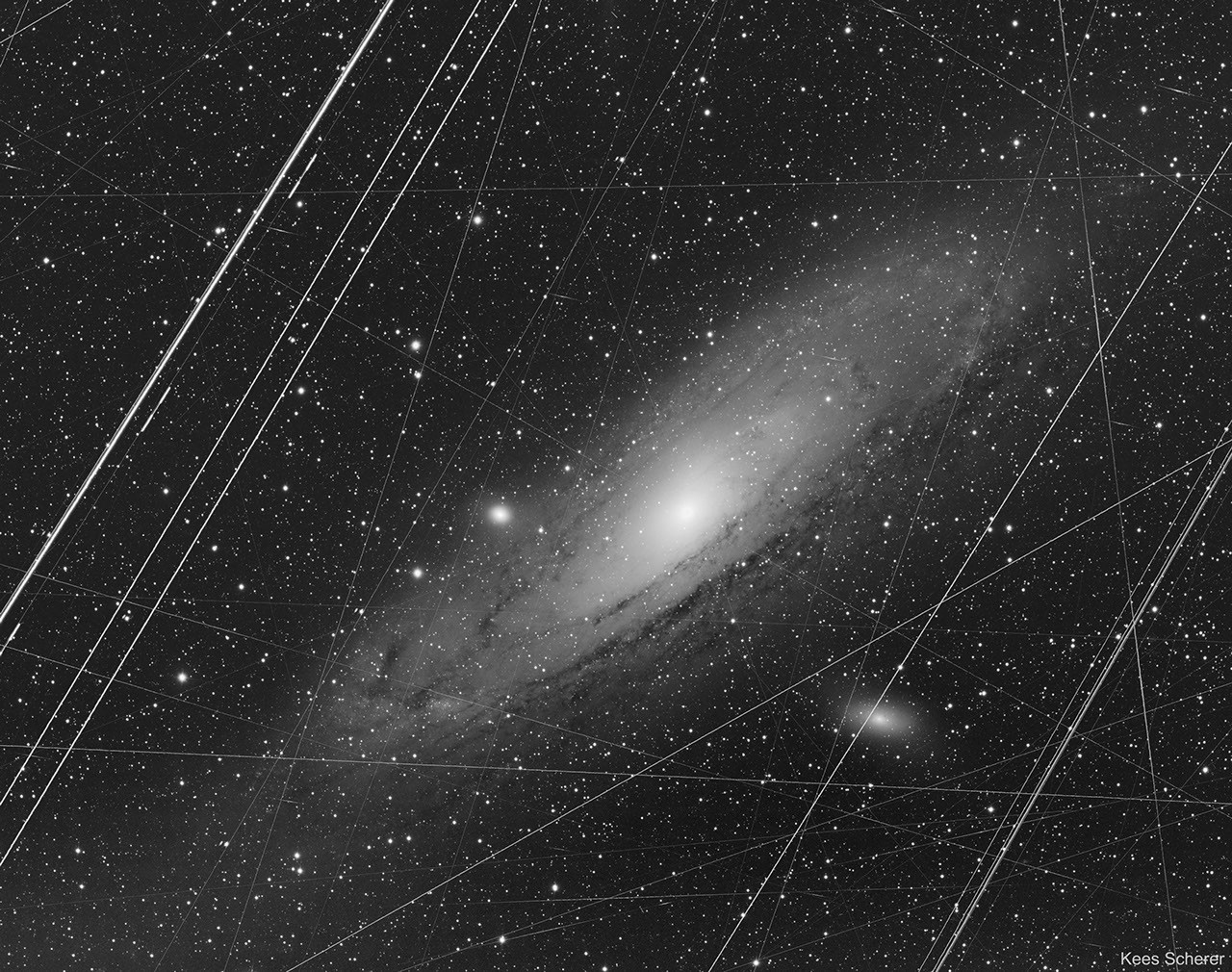
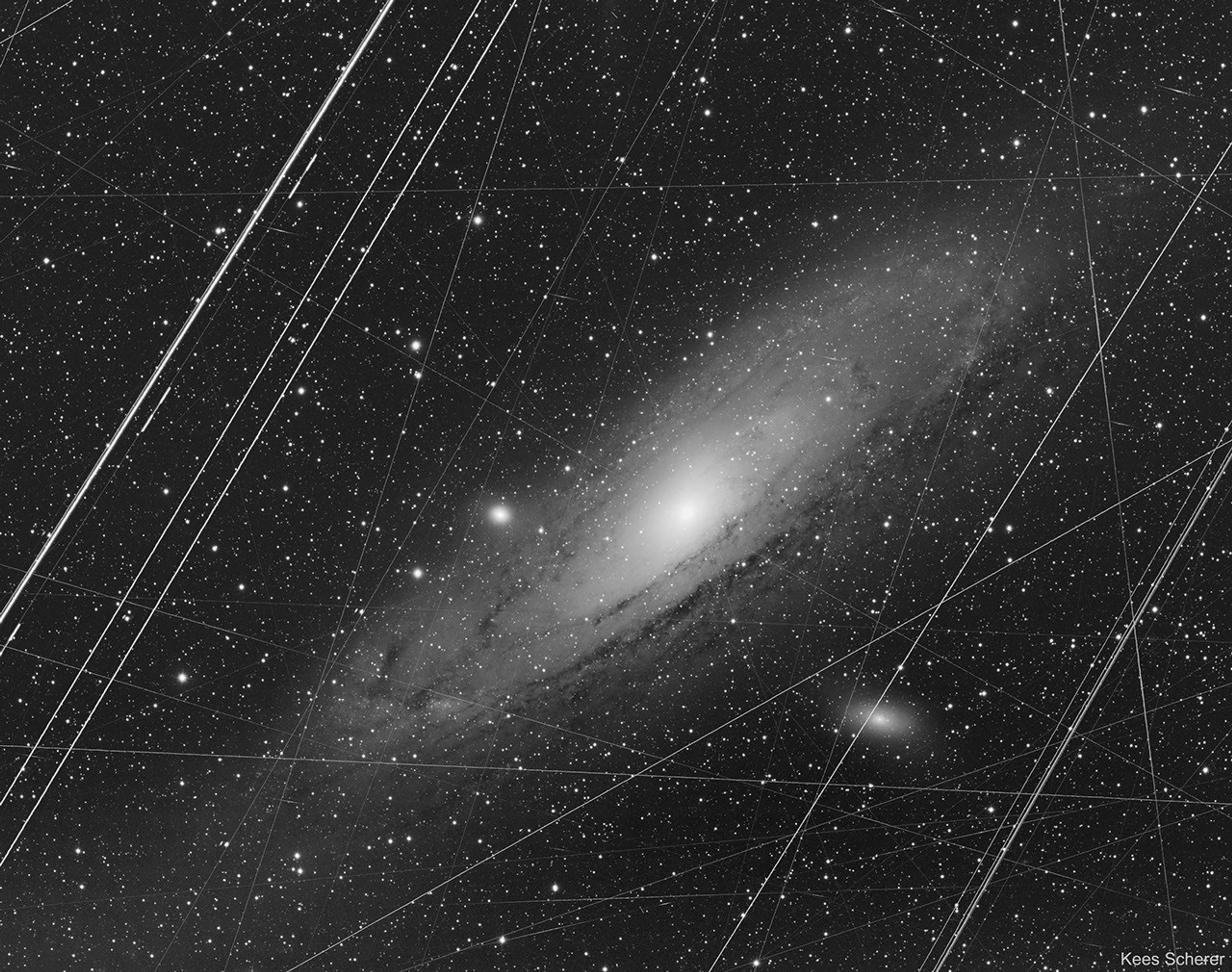
Andromeda, or M31, is the nearest major spiral galaxy to our own Milky Way, situated approximately 2.5 million light-years away. While it remains a favorite subject for both amateur and professional astronomers, photographing it from a backyard observatory presents a unique set of challenges. The "before" image featured in the recent NASA release serves as a sobering reminder of these obstacles.
Captured during a 2019 campaign in Portugal, the raw data consists of 223 individual exposures, each lasting 300 seconds. While long-exposure photography is essential for gathering the faint photons emitted by distant galactic structures, it also leaves the sensor vulnerable to a barrage of unwanted inputs. The resulting frames were marred by parallel airplane trails, continuous lines left by orbiting satellites, short, sharp streaks caused by high-energy cosmic rays, and the inevitable "hot" or "dead" pixels inherent to CCD and CMOS camera sensors. These artifacts are not merely aesthetic blemishes; they represent the collision of modern astronomical ambition with the reality of an increasingly crowded low-Earth orbit and the limitations of consumer-grade hardware.
A Chronology of the Imaging Campaign
The project, helmed by photographer Kees Scherer, serves as a case study in modern data processing workflows. The timeline of the project began in 2019 with the primary data collection phase in a garden observatory in Portugal. Over the course of several nights, the camera system tracked the Andromeda Galaxy as it moved across the sky, maintaining a fixed orientation relative to the target to ensure the 223 frames could eventually be aligned.
Following the acquisition of this raw data, the post-processing phase began. This stage is where the "after" image was born. Contrary to misconceptions that such images are products of artistic manipulation or "digital fantasy," the transformation was the result of rigorous mathematical algorithms. Utilizing a specialized suite of software—specifically Astro Pixel Processor, DeepSkyStacker, and PixInsight—the team employed a technique known as "sigma clipping" or "median stacking."
In this process, the software compares each of the 223 frames pixel by pixel. Because the galaxy remains stationary in the frame while satellites and airplanes move rapidly across the field of view, the software can identify which pixels represent the constant light of the galaxy and which represent transient noise. By statistically rejecting the outliers—the streaks and hot pixels—the software effectively "masks" the interference, leaving behind a clean, high-signal-to-noise ratio representation of the target.
Supporting Data and Technical Context
To understand the necessity of this processing, one must look at the technical requirements for deep-sky imaging. The signal-to-noise ratio (SNR) is the primary metric by which an astrophotograph is judged. The signal is the light from M31, while the noise is a combination of thermal camera noise, read noise, and light pollution.
With 223 images each at 300 seconds, the total integration time for this project amounted to approximately 18.5 hours. In astrophotography, the SNR improves with the square root of the number of frames. By stacking nearly 20 hours of data, the photographer was able to suppress the random noise that would have rendered a single 300-second exposure nearly unusable for scientific or high-fidelity aesthetic purposes.
The presence of satellite trails—a recurring issue in the "before" image—highlights a growing concern within the astronomical community. As the number of satellites in low-Earth orbit increases due to global internet constellation deployments, ground-based observatories face an uphill battle. The streaks seen in the raw Andromeda data are emblematic of this broader trend, necessitating more complex and time-consuming software solutions to "clean" the sky for scientific observation.
The Philosophy of Digital Restoration
The distinction between "digital manipulation" and "data processing" is a frequent subject of debate in the astronomical community. Critics of processed imagery often argue that software-enhanced photos are not "real." However, the methodology described by NASA’s feature highlights a different perspective: the processing is an act of restoration, not creation.
By using tools like PixInsight, the photographer is not adding features that do not exist; they are removing artifacts that do not belong to the object being studied. The goal is to recover the "ground truth" of the Andromeda Galaxy—its spiral arms, its dust lanes, and its surrounding satellite galaxies—which are otherwise obscured by the atmospheric and technological clutter of the 21st century. The finished image is, in many respects, a more accurate representation of the physical reality of M31 than any single, unprocessed exposure could ever be.
Broader Implications for Astronomy
The transition of the APOD main site from the traditional apod.nasa.gov address to science.nasa.gov/apod marks a shift toward greater integration within NASA’s broader digital communication strategy. This shift reflects the importance of high-quality, accessible public science communication.
The inclusion of this specific comparison—before and after processing—serves a dual purpose. First, it provides educational value, explaining to the public why professional images of space look the way they do and the labor involved in creating them. Second, it highlights the technical sophistication of modern amateur astronomy. The software used by the photographer—PixInsight and Astro Pixel Processor—are the same tools used by researchers working with professional telescopes.
As the field of astronomy continues to advance, the gap between amateur and professional imaging techniques is narrowing. The ability to process deep-space data at home allows for a more democratic engagement with the cosmos. It allows individuals to contribute to a culture of precision and patience, where the objective is to pierce the veil of our own atmosphere and witness the universe as it exists, millions of light-years away.
Conclusion: A Transparent Future
The Andromeda Galaxy, as seen in the final, processed image, is a testament to human persistence. It stands as a reminder that the universe is constantly sending us light, but we must be diligent, careful, and technically proficient to receive it without the interference of our own technological footprint.
For those looking to engage with this process, the recent shift in APOD’s submission guidelines and the movement to the new NASA science portal indicate that the organization is doubling down on its commitment to these stories. By showcasing the "raw" along with the "refined," NASA is fostering a deeper public understanding of the scientific method, ensuring that future generations of sky-watchers understand not just what they are seeing, but exactly how much work it takes to see it clearly. As the community moves toward future cosmic discoveries—such as the upcoming "cosmic latte" featured in future bulletins—the lesson from the Andromeda project remains clear: through careful data management and a commitment to accuracy, the truth of the cosmos is within our reach, provided we are willing to clear away the noise.
Related posts: