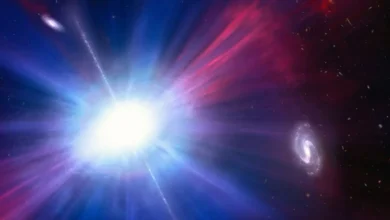
Astronomers are currently engaged in a high-stakes scientific recalibration as they grapple with data returned by the James Webb Space Telescope (JWST). Since its deployment, the telescope has peered into the nascent universe, detecting light that has been traveling for over 13 billion years. Among its most startling revelations is the existence of supermassive black holes (SMBHs)—objects millions or even billions of times the mass of our Sun—that appear to have reached maturity just 400 to 500 million years after the Big Bang. According to standard models of cosmic evolution, these structures should not have had sufficient time to grow to such proportions. This temporal discrepancy has triggered a search for new astrophysical mechanisms capable of accelerating black hole formation and growth.
A compelling new study published in The Astrophysical Journal, led by UCLA doctoral student Claire Williams, offers a potential resolution to this mystery: a bottom-up framework that relies on the chaotic, high-density stellar environments of the early universe. By modeling the repeated collision and merger of stars within dense proto-clusters, researchers have identified a pathway that could produce the massive "seeds" required for SMBHs to emerge far earlier than previously deemed possible.
The Problem of Premature Giants
In the standard hierarchical model of galaxy formation, SMBHs grow slowly through the gradual accretion of surrounding gas and the episodic merging of smaller black holes. However, the JWST’s discovery of "monstrous" black holes in the early universe suggests that nature possesses a "fast-track" mechanism.
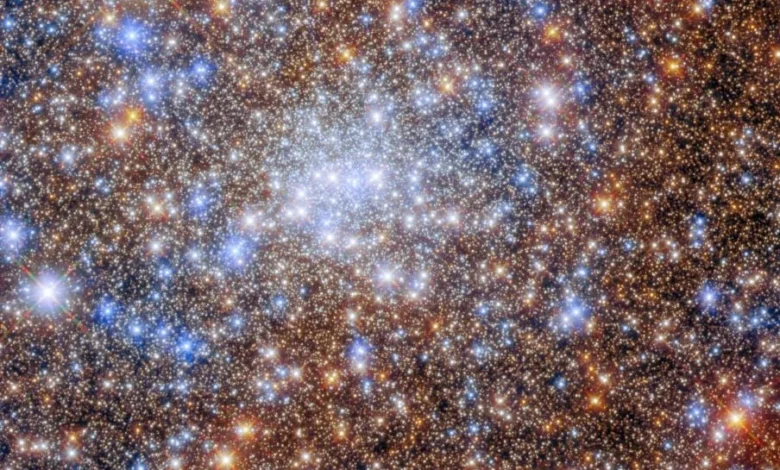
The timeline of the early universe is characterized by extreme density. During the first billion years, matter was packed much tighter than it is today, particularly within the centers of proto-galaxies. These regions, often referred to as Nuclear Star Clusters (NSCs), served as gravitational petri dishes. In the Milky Way, we observe a modern analog: the cluster surrounding Sagittarius A*, our galaxy’s central black hole. The new research posits that the high-redshift universe was teeming with similar, yet more volatile, environments where stars were so closely packed that physical collisions were not just possible, but inevitable.
Simulating the Cosmic Collision Course
To test this hypothesis, Williams and her team utilized the AREPO cosmological simulation software, a sophisticated computational tool designed to model the dynamics of gas and stars in an evolving universe. By establishing initial conditions that mimic the high-density environments of the early universe, the researchers created a series of test cases. Each simulation tracked 1,000 stars within a one-parsec radius—a significant concentration, though conservative compared to the estimated stellar densities in some galactic nuclei.
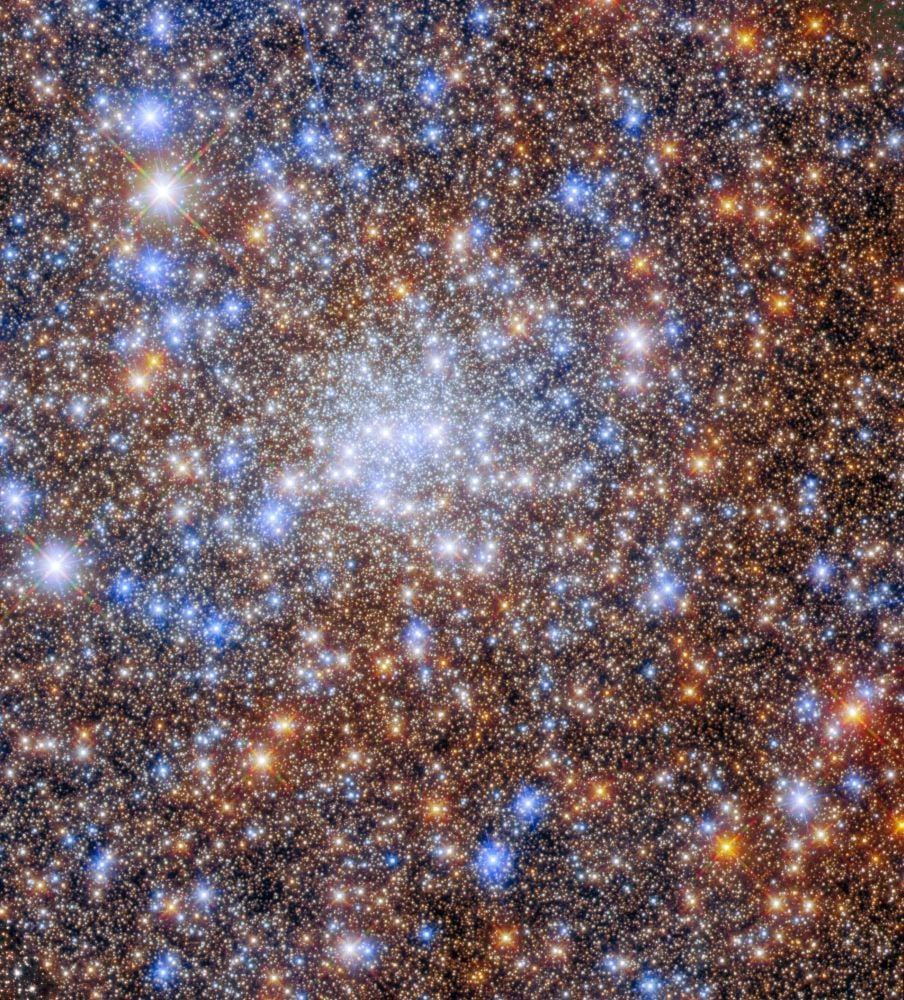
The simulation results revealed two distinct outcomes based on the presence of a pre-existing massive object. In clusters lacking a central black hole, stellar collisions were found to be largely "constructive." Stars repeatedly collided and merged, building up mass through a runaway process until they formed Very Massive Stars (VMS), objects exceeding 100 times the mass of our Sun. When these gargantuan stars reached the end of their brief lifespans, they were predisposed to undergo direct collapse, bypassing the supernova stage and leaving behind an Intermediate-Mass Black Hole (IMBH).
In clusters where a black hole had already begun to form, the dynamics shifted. Collisions became more destructive, shredding stars upon impact and flooding the local environment with gas. This gas-rich environment is critical to understanding the second major discovery associated with the JWST: the "Little Red Dots."
Bridging the Gap to Little Red Dots
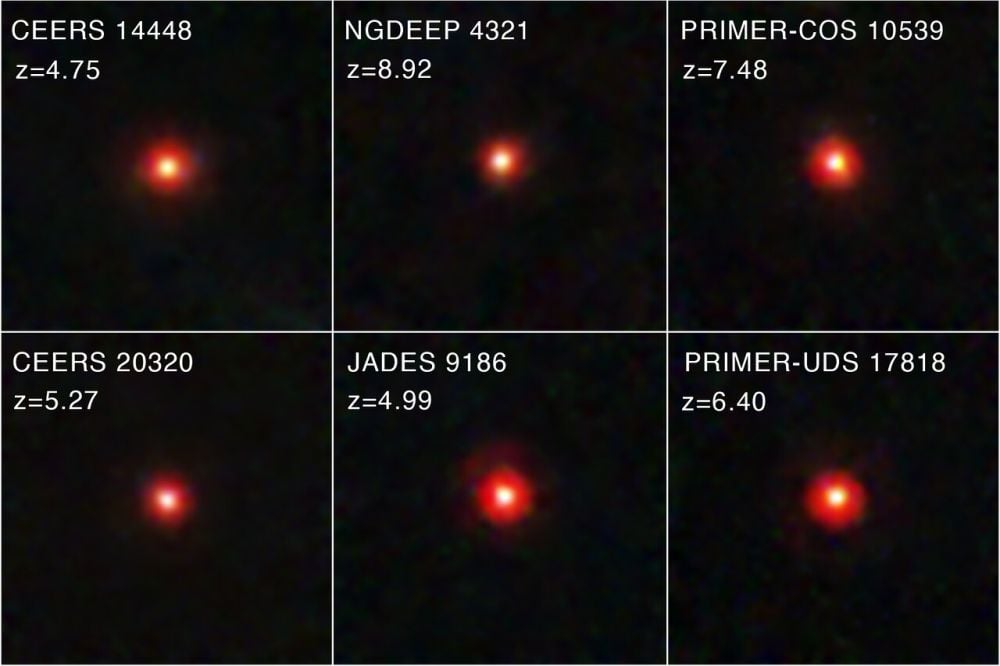
"Little Red Dots" (LRDs) are compact, mysterious objects identified by the JWST that appear as faint, reddened points of light. They have become one of the most debated topics in modern astrophysics. Their spectral signatures suggest they harbor rapidly growing black holes, yet they are shrouded in a thick veil of dust and gas that obscures their internal mechanics.
The research conducted by Williams and her team provides a physical explanation for the existence of these LRDs. In their simulations, the high rate of destructive stellar collisions provides a constant, localized supply of fuel. This gas feeds the central black hole at what is known as a "super-Eddington" rate—a speed that theoretically defies standard accretion limits. Furthermore, the sheer volume of debris created by these collisions explains why LRDs appear so obscured; the "fog" of shredded star material acts as a natural mask, hiding the high-energy X-ray signatures that astronomers typically use to identify active black holes.
Implications for Galactic Evolution
The significance of this study extends beyond the mere identification of black hole precursors. It fundamentally alters our understanding of how galaxies and their central engines co-evolve. If SMBHs begin as products of stellar runaway mergers within dense clusters, then the "seed" for every galaxy’s central black hole may be an inherited property of the cluster’s initial star-formation density.
"Dense star clusters provide a natural birthplace for massive black-hole seeds," says Williams. This framework suggests that the architecture of a galaxy—its central density, its star formation rate, and its eventual black hole mass—is determined in the first few hundred million years of existence.
Smadar Naoz, a UCLA astrophysicist and co-author of the study, likens the current scientific investigation of LRDs and early SMBHs to the fable of the blind men and the elephant. "Each researcher describes the phenomenon differently based on which part they are touching," Naoz noted. By connecting the dots between stellar dynamics, gas accretion, and the JWST’s observational data, the team believes they are finally beginning to see the "whole elephant."
Fact-Based Analysis and Future Prospects
While the model is robust, it faces the challenge of observational verification. Detecting the intermediate-mass black holes (IMBHs) that act as the middle-link in this chain remains difficult. To date, no IMBH has been definitively confirmed, though candidates exist in clusters like Omega Centauri.
If the Williams-led model is correct, we should expect to see a higher frequency of gravitational wave events in the early universe, corresponding to the mergers of these IMBHs. Future observations from upcoming gravitational-wave observatories may provide the "smoking gun" needed to validate the stellar-collision pathway.
Furthermore, the study highlights a crucial shift in how we view the "Little Red Dots." Rather than viewing them as anomalies, they may be a ubiquitous phase in the life cycle of galaxies. If this is the case, it suggests that the early universe was far more violent and dynamic than previously assumed. The "bottom-up" construction of black holes from stellar debris, rather than a slow "top-down" accretion from the cosmic web, provides a consistent explanation for why these massive objects appeared so quickly after the Big Bang.
Conclusion
The work of Williams and her colleagues represents a major step forward in reconciling the JWST’s observations with theoretical cosmology. By moving away from the assumption that black holes grow only through smooth, long-term accretion, and instead embracing the chaotic reality of dense stellar collisions, astronomers have uncovered a mechanism that is both efficient and mathematically consistent with the observed universe.
As the scientific community continues to analyze data from the JWST, this framework will likely serve as a foundational guide for interpreting the nature of the first galaxies. The mystery of the early supermassive black holes is far from fully solved, but the focus has shifted from "impossible" to "explained by the violent, crowded conditions of the dawn of time." Future research will now focus on refining the simulation parameters and searching for the specific observational markers—such as unique light signatures from stellar collisions—that can confirm this tumultuous history of our cosmos.
Related posts: