Four European Space Companies Form Strategic Alliance to Deliver End-to-End Dual-Use Imaging Solutions

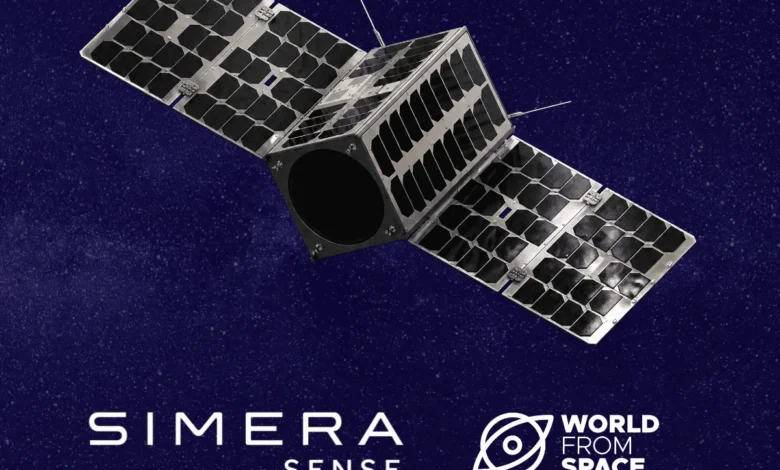
Bremen, Germany — In a significant development for the European small-satellite sector, four specialized space technology firms have formally joined forces to streamline the delivery of Earth observation and space-based intelligence. Simera Sense, Spacemanic, Zaitra, and World from Space signed a landmark Memorandum of Understanding (MoU) in Bremen, establishing a comprehensive partnership designed to offer a seamless, end-to-end mission solution built around advanced dual-use optical payloads.
The alliance bridges a historically fragmented gap in the aerospace supply chain. By integrating high-resolution optical hardware, customizable satellite buses, artificial intelligence-driven onboard data processing, and downstream analytics into a single coordinated offering, the consortium aims to drastically simplify how commercial and institutional customers procure space data. Rather than negotiating with multiple vendors for sensors, spacecraft manufacturing, launch integration, edge-computing software, and final analytics, clients will now be able to access a turnkey ecosystem through a single point of contact.
This new agreement significantly expands upon an initial framework established earlier in the month. On November 3, 2026, optical payload specialist Simera Sense and nanosatellite manufacturer Spacemanic signed a foundational MoU in Prague. While that initial pact focused primarily on hardware compatibility and space platform integration, the Bremen agreement broadens the scope considerably. By welcoming Zaitra—an expert in onboard data processing and artificial intelligence—and World from Space—a specialist in geospatial imagery analytics—the partnership now covers the entire data lifecycle, transforming raw photons captured in orbit directly into actionable operational intelligence.
Chronology of the Partnership and Strategic Expansion
The genesis of this multi-company consortium reflects a broader industry trend toward horizontal and vertical integration within the European New Space economy. As constellations grow in complexity and the demand for real-time intelligence escalates, hardware manufacturers and software developers are increasingly forced to collaborate prior to launch rather than leaving system integration to the end user.
The timeline of the collaboration highlights a rapid consolidation of capabilities:
- November 3, 2026: Simera Sense and Spacemanic formalize their initial cooperation in Prague, establishing a technical baseline for integrating Simera Sense’s sophisticated optical payloads onto Spacemanic’s modular satellite architectures.
- November 18, 2026: During a strategic industry gathering in Bremen, Germany, the partnership formally expands. Zaitra and World from Space are integrated into the alliance, extending the technological pipeline from raw image capture to onboard data crunching and final earth-bound analytics.
- Future Outlook: The consortium intends to begin marketing joint mission packages immediately, targeting defense, civil, environmental monitoring, and commercial markets requiring rapid-revisit, high-reliability dual-use imagery.
The Technological Ecosystem: Hardware to Insights
At the heart of the newly minted partnership is a vertically integrated technological stack that combines specialized hardware with advanced software processing. The core offering revolves around Simera Sense’s xScape 200 dual-use camera. Designed to cater to both commercial Earth observation and security-oriented surveillance applications, the payload delivers exceptional spatial resolution while maintaining a compact form factor suitable for smaller satellite buses.
To accommodate this payload, Spacemanic provides its flight-proven CORVUS satellite platform, complemented by its proprietary SPACECANNON in-house deployment system. This allows the spacecraft structure to be custom-engineered specifically around the optical payload rather than forcing the sensor to adapt to a generic bus. This bespoke yet modular approach ensures optimal thermal management, pointing accuracy, and power distribution—critical factors for high-performance optical missions.
However, capturing high-resolution images is only the first step in the modern data chain. Traditional Earth observation models require satellites to transmit vast quantities of raw imagery back to ground stations, creating significant communication bottlenecks and latency issues. The inclusion of Zaitra in the consortium directly addresses this challenge. Zaitra specializes in onboard data processing, utilizing specialized hardware and AI algorithms to analyze, filter, and compress imagery directly in orbit. By processing data on the edge, the satellite can discard cloud-obscured frames, detect anomalies, or identify specific targets of interest before downlink, ensuring that only high-value data is transmitted to ground infrastructure.

The final link in the chain is provided by World from Space, which translates processed space data into readable, commercially or operationally valuable insights. Earth observation pixels, no matter how sharp, require sophisticated calibration, spatial context, and domain-specific modeling to be useful for end-users tracking deforestation, agricultural yields, urban expansion, or maritime traffic. World from Space bridges the final gap between the satellite network and the end consumer.
Executive Perspectives on the Collaboration
Industry leaders from all four participating entities emphasized the customer-centric nature of the agreement, noting that the market is rapidly moving away from component-level sales toward complete mission assurances.
Emile Van Riel, Business Development Manager at Simera Sense, underscored the operational advantages of the partnership. "Combining the xScape 200 dual-use camera with a satellite tailored around it, onboard processing, and analytics makes dual-use imaging easier for customers to adopt," Van Riel stated. "We are glad to build on our cooperation with Spacemanic and to welcome Zaitra and World from Space."
Juraj Dudáš, CEO of Spacemanic, highlighted the manufacturing and deployment efficiencies unlocked by the alliance. "With CORVUS and our in-house SPACECANNON deployer, we can shape the whole satellite around the customer’s payload," said Dudáš. "With Zaitra’s onboard processing and World from Space’s insights, customers get a complete path from image to insight from one consortium."
Addressing the philosophy behind edge computing in space, Marek Marušín, CEO and co-founder of Zaitra, pointed to the necessity of smarter orbital infrastructure. "Zaitra was founded on a simple idea: a satellite should send down answers, not just pixels," Marušín explained. "This partnership puts that idea at the heart of a mission built around what customers actually need."
Roman Bohovic, Chief Technology Officer at World from Space, elaborated on the transformative role of downstream analytics. "Imagery creates value once it becomes insight," Bohovic noted. "And Earth observation data doesn’t come ready. Together with Simera Sense, Spacemanic, and Zaitra, we connect the satellite with users and deliver insights to customers."
Broader Market Implications and Strategic Analysis
The formalization of this four-way consortium arrives at a critical juncture for the European space sector. As geopolitical tensions shift and the commercial demand for sovereign, reliable Earth observation capabilities intensifies, European space startups are under pressure to scale quickly and compete globally against heavily funded monolithic aerospace primes.
By pooling their respective competencies, Simera Sense, Spacemanic, Zaitra, and World from Space have created a resilient, highly competitive alternative that can drastically reduce time-to-orbit for new space projects. Dual-use technology—systems capable of serving both civilian environmental monitoring and defense or security objectives—is seeing a surge in institutional funding and regulatory support across the European Union and NATO-aligned nations.
Analysts suggest that turnkey mission solutions of this nature will particularly appeal to emerging space-faring nations, regional government agencies, and commercial enterprises that lack the internal engineering bandwidth to manage disparate supply chains. By mitigating technical risks through pre-validated hardware and software integration, the consortium positions itself to capture a significant share of the rapidly expanding market for responsive, tactical, and commercial space intelligence.
Related posts: