The Return of the Flagship: Motorola Challenges Industry Leaders with the Signature 27

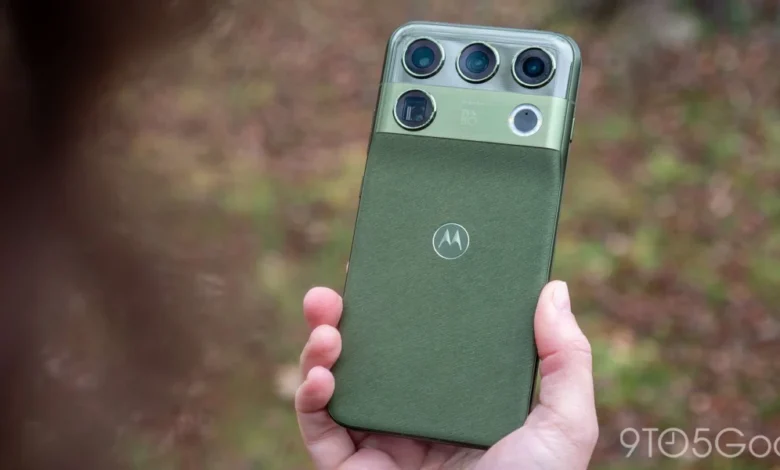
The mobile landscape in North America has long been defined by a duopoly, but Motorola is attempting to disrupt this status quo with the release of the Motorola Signature 27. Representing a strategic pivot for a brand that has spent the last decade focusing heavily on mid-range and budget-conscious hardware, the Signature 27 marks a return to the premium segment. With a starting price of $1,599, the device is positioned to compete directly with high-end offerings from Apple and Samsung, signaling a renewed ambition to reclaim the cultural relevance the company held during the peak of its Moto X and Moto Z eras.

A Strategic Pivot in Design and Engineering
The Motorola Signature 27 is not merely an iterative update; it is a fundamental redesign of the company’s flagship philosophy. The device features a distinct textile-clad finish, specifically in the Capulet Olive colorway, which deviates from the industry-standard glass and aluminum slabs. The integration of a ribbed metal frame and curved, ergonomic edges suggests a move toward tactile comfort, a design choice intended to differentiate the device from the increasingly uniform aesthetic of modern smartphones.

From an engineering perspective, the device employs a 120Hz LTPO tandem OLED display, which offers dynamic refresh rate capabilities to balance power consumption with performance. The display technology incorporates a hybrid dimming system, utilizing DC dimming for higher brightness levels (above 20%) and 2160Hz pulse-width modulation (PWM) for lower brightness. This technical implementation is aimed at reducing eye strain, a feature increasingly demanded by power users in the flagship market.

Chronology of Motorola’s Market Positioning
To understand the significance of the Signature 27, one must look at the historical trajectory of Motorola under its current ownership. Following the acquisition of Motorola Mobility by Google in 2012 and its subsequent sale to Lenovo in 2014, the brand underwent a protracted period of restructuring.

- 2013-2015: The "Moto X" period, characterized by high customization and software-centric value, established a loyal following.
- 2016-2020: The "Moto Z" era introduced modular accessories, though it ultimately struggled to achieve mass-market penetration against the rising dominance of the iPhone and Galaxy series.
- 2021-2025: A pivot toward budget-friendly devices and the successful "Razr" foldable series helped stabilize the company’s market share in North America.
- November 2026: The official launch of the Signature 27, marking the first time in nearly a decade that Motorola has attempted to launch a non-folding device that targets the absolute top of the premium price bracket.
Technical Performance and Software Integration
The internal specifications of the Signature 27 have been optimized to facilitate high-speed performance, utilizing the latest mobile architecture to ensure rapid application response times. The device ships with Android 17, which introduces a new system-wide design language. This iteration of the OS features refined UI elements, including gradients for quick toggles, though these design choices have faced early scrutiny for potential conflicts with the established flat-design principles of Google’s Material Design.

Beyond the UI, the Signature 27 integrates several advanced AI-driven features. Tools such as "Rambler," "Sign to Text," and "Create My Widget" demonstrate a move toward on-device intelligence. Furthermore, Motorola has confirmed that the device will eventually support Gemini Intelligence, placing it among a select group of hardware partners currently authorized to deploy these advanced Google AI models.

Industry Performance Metrics and Competitive Analysis
The camera system on the Signature 27 has become a central pillar of the company’s marketing strategy. Recent assessments by DXOMark have placed the device as the second-highest-rated smartphone camera globally, trailing only the Huawei Pura 80 Ultra and outperforming the iPhone 18 Pro. While such benchmarks are subject to varying interpretations, the high ranking provides a significant marketing advantage for a company looking to establish its credibility in professional-grade mobile photography.

The following table summarizes the competitive positioning of the Signature 27:

| Feature | Motorola Signature 27 | Industry Standard (Flagship) |
|---|---|---|
| Starting Price | $1,599 | $1,199 – $1,500 |
| Camera Ranking (DXOMark) | #2 Global | #1 – #5 |
| Display Technology | LTPO Tandem OLED | LTPO OLED |
| Dimming Technology | Hybrid (DC/PWM 2160Hz) | Variable (PWM) |
Market Implications and Future Outlook
The decision to launch a $1,599 device carries significant risks and rewards. In the current economic climate, consumers are increasingly holding onto their devices for longer periods, often exceeding the traditional two-year upgrade cycle. To justify the high price point, Motorola must provide not only superior hardware but also a long-term commitment to software support and a seamless ecosystem experience.

Industry analysts note that Motorola’s success will depend on its ability to sustain the "premium" perception. While the hardware feels robust and the camera performance is objectively competitive, the brand must overcome the legacy of being perceived primarily as a provider of value-tier hardware. If the Signature 27 can maintain a strong secondary market value and receive consistent, high-quality software updates, it could serve as the cornerstone for a new, profitable chapter for Lenovo’s mobile division.

Conversely, if the device fails to gain traction, it may force a reassessment of the company’s high-end strategy. The reliance on features like "Gemini Intelligence" suggests that Motorola is banking heavily on the integration of software services to differentiate its hardware from the competition. As the market for artificial intelligence in mobile devices matures, the ability of a manufacturer to tailor these services to user needs will be a primary factor in brand loyalty.

Conclusion
The Motorola Signature 27 serves as a benchmark for the company’s current engineering and design capabilities. By blending a distinct physical aesthetic with high-tier performance metrics and cutting-edge AI software, the firm is making a calculated bet on the high-end consumer. While the initial feedback on the device’s build quality and camera performance is positive, the long-term impact on the competitive landscape will depend on how the device performs in daily, real-world usage and whether it can consistently challenge the dominant market leaders. As of late 2026, the Signature 27 is not just a phone; it is a statement of intent from a brand that is no longer satisfied with the margins of the mid-market.