An artificial ‘Saturn’s ring’ of satellites could soon fill the sky, astronomers warn


The celestial landscape that has guided human navigation and inspired scientific inquiry for millennia is on the verge of a radical and potentially irreversible transformation. According to leading astronautics experts and astronomers, the night sky could soon be dominated by an artificial, luminous "Saturn’s ring" composed of hundreds of thousands of data center satellites and massive orbiting mirrors. This shift, driven by a new commercial race to move terrestrial infrastructure into Earth’s orbit, threatens to outshine the stars and planets, rendering traditional ground-based astronomy nearly impossible and fundamentally altering the human experience of the cosmos.
The Dawn of the Orbital Data Center Era
For decades, the primary occupants of Low Earth Orbit (LEO) were communication, weather, and reconnaissance satellites. However, the last year has seen the emergence of an "orbital data center frenzy." Several high-profile aerospace and technology firms, including SpaceX, Blue Origin, Cowboy Space, Orbital, and Starcloud, have submitted applications to the U.S. Federal Communications Commission (FCC) for licenses to launch what would eventually total more than one million data center satellites.
These spacecraft are designed to function as high-performance computing hubs in orbit. Proponents of the technology argue that moving data centers into space offers significant environmental and logistical advantages. On Earth, data centers are notorious for their massive footprints, requiring vast tracts of land and consuming enormous amounts of water for cooling. They also place significant strain on local power grids and contribute to carbon emissions. In the vacuum of space, however, cooling is naturally facilitated by the environment, and electrical power can be harvested 24 hours a day via solar arrays, provided the satellites are placed in specific orbits.
China has also entered the fray, announcing a comprehensive five-year plan to develop its own orbital data center network. This global rush to monetize the "high ground" of orbit is creating a logistical challenge that experts say can only be solved by a highly concentrated orbital architecture.

The Mechanics of the Artificial "Saturn’s Ring"
Hugh Lewis, a professor of astronautics at the University of Birmingham in the United Kingdom, warns that the only way to accommodate such a staggering number of satellites is to stack them in a specific orbital plane. Unlike the Starlink megaconstellation, which is distributed relatively evenly around the Earth to provide global internet coverage, these data centers and proposed solar mirrors require constant sunlight to remain operational and profitable.
To achieve "24 hours of sunlight," these constellations must occupy a "terminator orbit" or a sun-synchronous orbit that follows the boundary between day and night on Earth. Because multiple companies are targeting this same narrow orbital real estate, the resulting congestion would create a dense, luminous band of light circling the planet.
"If you were to look up at night, they would be all in one plane, really close together, going in the same direction," Lewis explained. He noted that the impact would be "absolutely catastrophic," creating a permanent streak of light across the sky that would be visible from every corner of the globe. This band would not merely be a series of dots but a continuous, bright track that could outshine the brightest stars, planets, and, in some configurations, even the full moon.
Reflect Orbital and the Rise of Space Mirrors
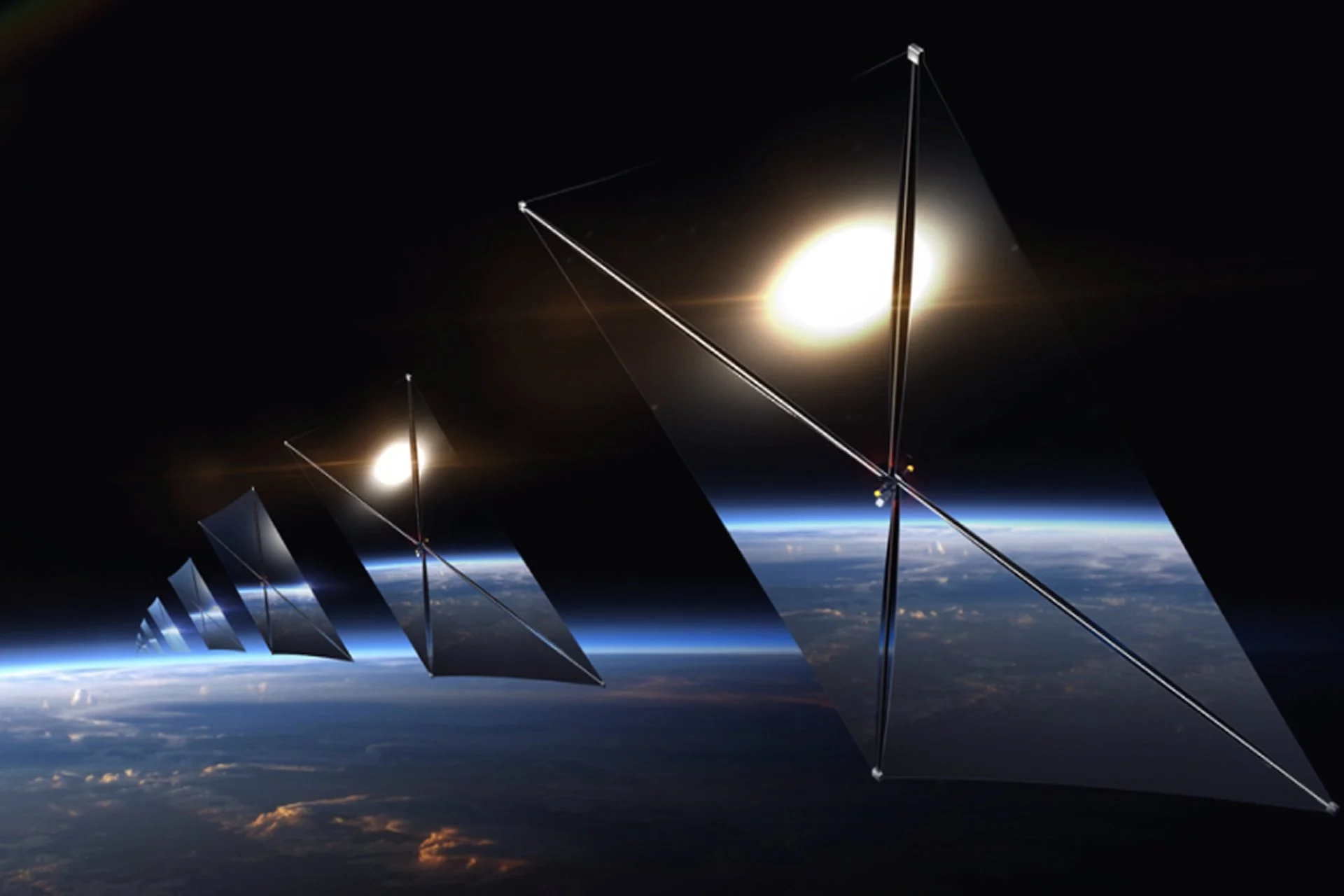
Adding to the complexity of the data center constellations is a separate but equally controversial project by California-based Reflect Orbital. The company aims to launch approximately 50,000 orbiting mirrors designed to reflect sunlight down to specific locations on Earth after dusk. The primary goal is to increase the energy yield of solar power plants, extend the growing seasons for agricultural operations, and provide lighting for construction sites or disaster zones.
On Friday, July 10, the FCC granted Reflect Orbital a license to launch its first demonstration satellite, Eärendil-1. This 60-by-60-foot (18-by-18-meter) mirror is expected to be in orbit by the end of this year. While the company insists it is working to minimize disruption and is commissioning third-party research on its impact, astronomers are skeptical.
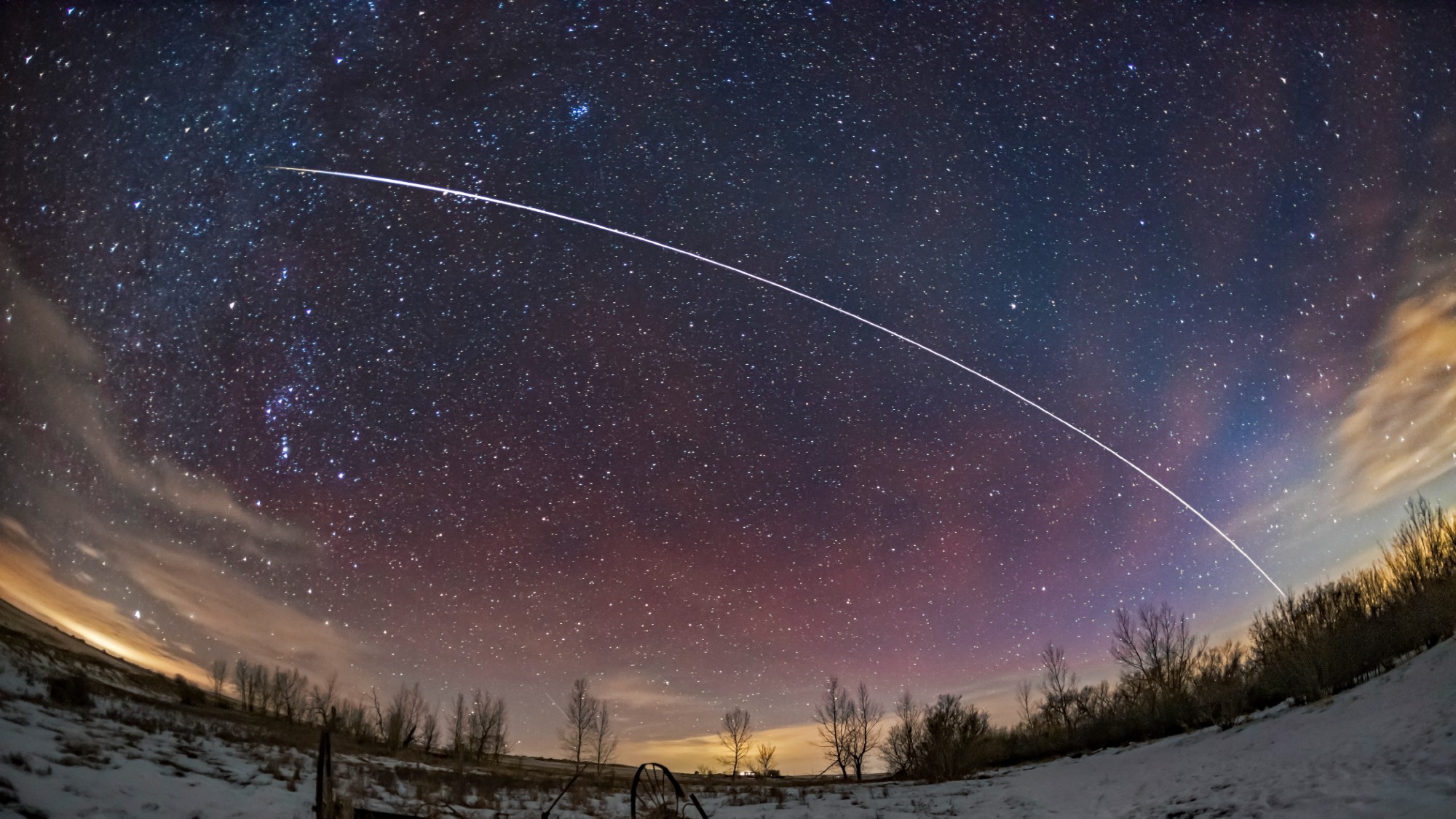
A study conducted by the European Southern Observatory concluded that a full constellation of 50,000 mirrors could increase the ambient brightness of the night sky by as much as 300 percent. Such an increase would effectively end the era of ground-based optical astronomy, as the scattered light would drown out the faint signals from distant galaxies and stars.
Scientific Consequences and the "X" in the Sky
Samantha Lawler, an astronomer at the University of Regina in Canada, has utilized computer modeling to visualize the impact of these proposed fleets, including SpaceX’s "Starmind," Blue Origin’s "Project Sunrise," and Cowboy Space’s "Stampede" constellation. The results suggest that satellites would not only outshine the stars but would also outnumber them in the visible sky.
Lawler’s research indicates that the "Saturn’s ring" effect would be most prominent during the early evening and the hours just before dawn—critical windows for astronomical observation. Because the Earth rotates under this fixed orbital plane, the band of satellites would pass overhead at the same time every night. Furthermore, Blue Origin’s Project Sunrise is planned for an orbital inclination that, when combined with other constellations, would create a giant "X" shape of crawling satellites visible from equatorial regions.
"It would make our taxpayer-funded telescope time much less effective," Lawler warned. "We could do a lot less science for the same cost, and many science cases, including the search for dangerous near-Earth asteroids, would be seriously compromised." The ability to detect incoming space rocks is dependent on spotting faint, moving objects against a dark background—a task that becomes impossible if the background is cluttered with hundreds of thousands of reflective artificial objects.
Regulatory Gaps and the FCC Controversy
The rapid advancement of these projects has exposed a significant vacuum in international space law and domestic regulation. Currently, the FCC is the primary body responsible for licensing American satellite launches. However, the commission has explicitly stated that its mandate does not include the protection of the night sky or the preservation of optical astronomy.
In its Order and Justification for Reflect Orbital’s mission, the FCC wrote: "The Commission’s rules do not address the protection of optical astronomy, and thus we decline to interpret commenters’ concerns in connection with the Commission’s mandate." This stance has drawn sharp criticism from the American Astronomical Society (AAS) and the Royal Astronautical Society in the U.K.
The AAS issued a formal statement highlighting the physical dangers of space mirrors, including the potential for "flash-blinding" pilots and drivers, and even permanent eye damage for individuals looking through mid-sized telescopes when a mirror passes overhead. Robert Massey, executive director of the Royal Astronautical Society, expressed disappointment in the FCC’s decision, noting that it sets a dangerous precedent for the unchecked deployment of massive constellations without regard for the global environment.
A Legacy of Increasing Brightness
The concern among scientists is not just about future projects but about a trend of increasing satellite size and reflectivity. While SpaceX initially made efforts to dim its Starlink satellites using dark paint and specialized visors, Lawler points out that these improvements have been offset by the increasing size of the spacecraft. The first-generation Starlink satellites weighed approximately 570 pounds (260 kilograms); the latest versions exceed 4,400 pounds (2,000 kilograms), making them significantly brighter and more visible to the naked eye.
John Barentine, an astronomer and dark sky advocate, noted that humanity has already reached a tipping point. "Humanity has already fundamentally altered the cosmos to the point where Earth is now an artificial ‘ringed planet’ choked by satellites and space debris," Barentine said. He emphasized that projects like Reflect Orbital represent a shift from a "scattered field of moving dots" to a permanent, structural change in the appearance of the heavens.
The Path Forward: Cooperation or Conflict?
As the end of the year approaches and the launch of Eärendil-1 looms, the debate over the "democratization of space" versus the "preservation of the night sky" is intensifying. Reflect Orbital maintains that its technology is a tool for sustainability and disaster relief, promising to "listen and adapt" to scientific concerns. However, for many in the astronomical community, the two goals are fundamentally incompatible.
The international community now faces a choice: develop new regulatory frameworks that recognize the night sky as a shared global heritage, or allow the commercialization of orbit to proceed under existing rules that prioritize frequency allocation and debris mitigation over the preservation of the stars. Without a change in course, the "Saturn’s ring" of satellites may soon become a permanent fixture of the human experience, a glowing reminder of a terrestrial infrastructure that outgrew the planet.
Related posts: