FBI Investigates Major Security Breach Targeting National Crime Information Center Database

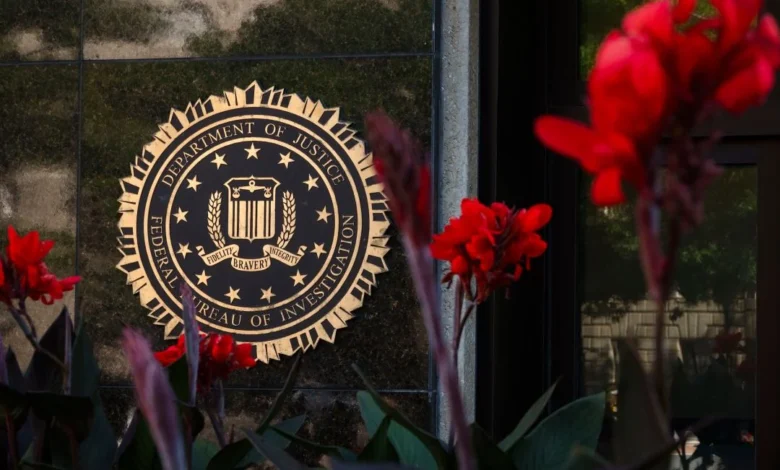
The Federal Bureau of Investigation has launched an urgent, high-priority investigation following an apparent cyberattack targeting the National Crime Information Center (NCIC), a critical digital infrastructure backbone utilized by law enforcement agencies across the United States. According to widespread reports originating from major news organizations including CNN and the Associated Press, the breach compromises a centralized repository that federal, state, and local police departments rely on daily for conducting critical operations, running background checks, tracking active warrants, and identifying missing persons.
While the full scope, exact methodology, and ultimate objective of the intrusion remain under active investigation, the incident has immediately triggered severe alarm bells across the American national security apparatus. Law enforcement and cybersecurity experts warn that the breach not only exposes vulnerabilities in sensitive government databases but also threatens the very integrity of the data that police officers depend upon during high-stakes field encounters.
The Chronology of the Incident and Escalating Threats
The revelation of the NCIC compromise does not occur in a vacuum; rather, it represents the latest in a troubling string of cyber security incidents plaguing the nation’s premier federal law enforcement agency. Just two months prior, in September 2026, the FBI was forced to acknowledge a separate major cyberattack in which malicious actors successfully stole the personal information of numerous FBI agents and support staff members. That previous breach highlighted lingering vulnerabilities within internal administrative networks, raising uncomfortable questions regarding the bureau’s overall cyber defense posture.
The timeline of the NCIC breach began to unfold in mid-November 2026, when anomalous network activity was detected. Initial internal alerts quickly escalated as technical
teams realized that unauthorized actors may have breached portions of the law enforcement network. By November 21, 2026, details of the intrusion leaked to the press, prompting public confirmation from federal authorities and forcing political leaders to address the crisis publicly.
Understanding the National Crime Information Center (NCIC)
To fully grasp the gravity of the current situation, one must understand the foundational role the NCIC plays in American policing. Established in 1967 under the administration of FBI Director J. Edgar Hoover, the NCIC is a computerized database of documented criminal justice information. It functions as an electronic clearinghouse that connects local, state, federal, and international criminal justice agencies, allowing them to share records in real time.
The database contains millions of active records partitioned into various specialized files, including wanted persons, missing persons, unidentified persons, protection orders, deported felons, violent gang members, known or suspected terrorists, and stolen property such as vehicles, firearms, and license plates. On any given day, law enforcement officers executing routine traffic stops, responding to domestic disturbance calls, or executing search warrants query the NCIC system millions of times to determine whether an individual is armed, dangerous, or wanted by the law.
Because the NCIC operates as the central nervous system for inter-agency communication and officer safety, any disruption, data corruption, or unauthorized access poses an immediate hazard to public safety and operational security.
Expert Warnings and the Threat of Data Manipulation
In the wake of the breach, cybersecurity professionals and former law enforcement officials have rushed to analyze the potential ramifications. While data exfiltration—the theft of sensitive information—is a primary concern in any cyberattack, the unique nature of a law enforcement database introduces a far more insidious threat: data tampering.

Speaking on condition of anonymity to major media outlets, a former senior FBI official articulated the core anxiety gripping the law enforcement community. The official noted that the primary concern extends far beyond whether hackers managed to steal sensitive files, although that remains a significant issue. Instead, the deeper, more terrifying prospect is whether malicious actors could systematically alter, corrupt, or compromise the accuracy of the information that everyday police officers rely on in the line of duty.
If an attacker were capable of manipulating NCIC records—such as quietly removing active warrants for violent offenders, inserting false aliases, or falsifying background check flags—the consequences could be catastrophic. Officers relying on compromised database returns during field stops could unwittingly release dangerous fugitives, or conversely, be dispatched into hazardous situations under false pretenses. While investigators have not yet confirmed whether data manipulation actually occurred during this specific incident, the mere possibility has forced IT and security teams to conduct exhaustive data integrity audits.
Political Reactions and Official Responses
As news of the breach reverberated through Washington, political figures weighed in on the security failure. During an interview with Fox News on Saturday, November 21, 2026, President Donald Trump addressed the unfolding situation, acknowledging the severity of the reports.
"We just heard about it and I will say that it’s not good," President Trump remarked during the broadcast. At the same time, the President offered a broader, characteristically unorthodox perspective on the situation, suggesting that the breach might inadvertently unearth hidden historical information. Trump asserted that as a result of the breach, "maybe we’ll learn things that we would have never learned otherwise because, you know, you had the Russia, Russia, Russia hoax."
Meanwhile, leadership within the FBI and the Department of Justice has remained largely tight-lipped regarding the operational specifics of the investigation, citing the need to protect ongoing counter-cyber operations. Special agents and cyber task forces are currently working in tandem with private-sector incident response firms to trace the origin of the attack, identify the threat actors—whether state-sponsored advanced persistent threat (APT) groups or sophisticated cybercriminal syndicates—and determine the exact vectors used to breach the infrastructure.
Broader Implications for Federal Cybersecurity
The repeated targeting of the FBI underscores a sobering reality in modern geopolitics and digital warfare: no institution, regardless of its security clearance or technological sophistication, is entirely immune to determined cyber adversaries. In recent years, nation-state actors from countries such as Russia, China, Iran, and North Korea, alongside financially motivated ransomware gangs, have increasingly focused their efforts on penetrating Western government networks, critical infrastructure, and law enforcement databases.
The fallout from the NCIC hack is expected to catalyze rigorous congressional oversight. Lawmakers from both sides of the aisle have signaled their intent to summon FBI leadership for closed-door and open hearings to demand answers regarding how federal networks continue to be compromised. Questions will likely center on resource allocation, legacy infrastructure modernization, zero-trust architecture implementation, and the adequacy of third-party vendor security protocols.
Furthermore, the incident serves as a stark reminder of the vulnerabilities inherent in centralized digital record-keeping. While centralization offers unprecedented efficiency and connectivity for police forces spread across thousands of distinct jurisdictions, it also creates a single point of failure that, if successfully exploited by hostile actors, can paralyze nationwide operations.
Path Forward and Remediation Efforts
As the investigation enters its crucial early phases, the immediate priority for the FBI’s cyber division is containment, remediation, and verification. Technicians are systematically scrubbing system logs, isolating compromised subnets, and executing cryptographic integrity checks on the millions of records housed within the NCIC.
Law enforcement agencies nationwide have been advised to maintain heightened vigilance while querying the database, remaining alert to any anomalous system behavior or discrepancies in record returns. While the road to fully restoring public and internal trust in the security of the nation’s premier crime database will be arduous, the bureau faces mounting pressure to deliver swift accountability and demonstrate that America’s critical law enforcement infrastructure can be adequately safeguarded against an increasingly hostile and unpredictable digital landscape.