WordPress Core Zero-Day Allows Anonymous Remote Code Execution on Millions of Websites, Prompting Urgent Forced Updates

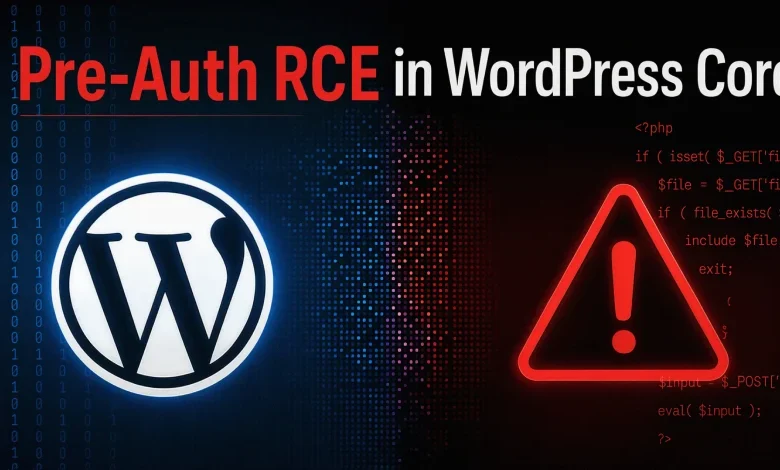
The discovery of a critical pre-authentication remote code execution (RCE) vulnerability within the core of WordPress has sent ripples through the web security community, necessitating immediate forced updates for potentially millions of websites globally. This severe flaw, designated "wp2shell" by its discoverers, permits an unauthenticated attacker to execute arbitrary code on a vulnerable WordPress installation with no preconditions, making it a highly potent threat. The vulnerability impacts all WordPress sites running versions 6.9 and 7.0, a significant segment of the internet’s most widely used content management system, until Friday, July 17, 2026, when WordPress initiated an unprecedented series of forced updates to versions 6.9.5 and 7.0.2.
The Unprecedented Threat of "wp2shell"
At its heart, the "wp2shell" vulnerability represents a critical security lapse that fundamentally undermines the integrity of WordPress installations. A pre-authentication RCE signifies that an attacker requires no prior access, no user credentials, and no special privileges to exploit the flaw. They can simply send a crafted HTTP request to a target server and achieve complete control over the compromised website, including its underlying database, file system, and server resources. This level of access can lead to total website compromise, extensive data exfiltration, defacement, or the deployment of persistent malware, turning a legitimate web presence into a launchpad for further attacks.
The specific mechanism of the exploit, as described by WordPress in its official release post, involves a "REST API batch-route confusion and SQL injection issue leading to Remote Code Execution." This confluence of attack vectors is particularly insidious. The WordPress REST API, a cornerstone of modern WordPress functionality, facilitates diverse operations from the block editor to mobile application integrations and headless WordPress architectures. The batch endpoint within this API is designed for efficiency, allowing multiple individual requests to be processed within a single HTTP call. However, a "route confusion" vulnerability implies that the API might misinterpret or incorrectly process a malicious request, inadvertently allowing it to bypass established security protocols or access unauthorized internal functions.
When combined with an SQL injection, which enables an attacker to manipulate or inject malicious SQL queries into the site’s database, the potential for harm escalates dramatically. While SQL injection typically leads to data theft or manipulation, its chaining with a route confusion in a sensitive API endpoint can be escalated to arbitrary code execution. This transforms a database-level compromise into a full server takeover, granting the attacker a persistent foothold. The most alarming aspect is that this vulnerability resides in the "core" of WordPress, meaning that even a pristine, bare-bones installation without any third-party plugins or custom themes is immediately susceptible. This dramatically expands the potential attack surface to virtually any site running the affected versions.
Discovery and Strategic Disclosure by Assetnote
The critical flaw was meticulously discovered and responsibly reported by Adam Kues, a distinguished security researcher operating under Assetnote, which serves as the attack surface management division of Searchlight Cyber. Kues submitted his findings through WordPress’s official HackerOne bug bounty program, a widely recognized platform designed to foster secure disclosure and collaborative efforts between security researchers and software vendors. This established process allowed the WordPress core development team to address and patch the vulnerability proactively before it became public knowledge, a crucial step in mitigating widespread damage and ensuring user safety.
Following the disclosure, Searchlight Cyber issued a preliminary write-up titled "wp2shell," a moniker intended to convey the severity of the flaw and its potential for gaining a shell (command-line access) on compromised systems. The report unequivocally stated that the attack requires "no preconditions and can be exploited by an anonymous user." In a strategic move to prioritize immediate defense over detailed technical understanding that could aid malicious actors, Searchlight Cyber has opted to withhold specific technical details of the exploit for the interim. This decision aims to deny potential attackers a clear blueprint for weaponizing the vulnerability, thereby providing website administrators a critical window to apply the necessary updates. Instead of a comprehensive technical deep-dive, Searchlight Cyber has provided a publicly accessible checker tool at wp2shell.com. This allows WordPress site owners to quickly and safely test their own instances for susceptibility without inadvertently exposing the exploit methodology. This approach exemplifies a delicate balance within the cybersecurity community: furnishing sufficient information for defense while minimizing the immediate risk of widespread, automated exploitation.
Rapid Patch Deployment and Forced Updates: A Critical Race

In an urgent response to the extreme severity of "wp2shell," WordPress moved with unprecedented speed, releasing security patches 6.9.5 and 7.0.2 on July 17, 2026. These updates specifically target and close the pre-authentication RCE in the core, which an anonymous request can trigger against a default installation. The vulnerability directly impacted two primary version ranges: all iterations of 6.9.x (specifically from 6.9.0 up to 6.9.4) and all versions of 7.0.x (from 7.0.0 up to 7.0.1). Demonstrating a comprehensive patching strategy, the fix has also been backported and integrated into 7.1 beta2, ensuring that even pre-release versions are secured against this critical flaw.
Crucially, WordPress elected to initiate "forced updates" through its robust auto-update system. This mechanism, typically reserved for critical, high-impact security patches, bypasses user-defined update preferences to ensure the broadest possible deployment of the fix as quickly as possible. The rationale behind such a drastic measure underscores the extreme danger posed by "wp2shell," where the imminent risk of exploitation far outweighs potential disruptions caused by an unscheduled, mandatory update. WordPress’s auto-update system, continuously refined since its introduction in earlier major releases, aims to maintain the security posture of installations by default, especially for minor releases that frequently contain vital security fixes. However, a significant question mark remains regarding the efficacy of forced updates for sites that have explicitly disabled automatic updates. WordPress has not publicly confirmed whether these forced pushes override such specific user configurations, leaving a potentially large segment of the user base in a state of uncertainty. Consequently, all site owners are emphatically advised to manually verify their current WordPress version rather than making assumptions about the successful application of the patch.
Compounding the security challenges, this update round concurrently addressed a separate, high-severity SQL injection bug found in WordPress 6.8.6, which was reported by a distinct research team. While unrelated to "wp2shell," the timing of these multiple critical patches highlights a period of intense scrutiny on WordPress’s security architecture and underscores the persistent, multifaceted challenges inherent in maintaining robust security across a vast and actively developed codebase.
The Enormous Scale of WordPress and the Vulnerable Landscape
The sheer ubiquity of WordPress profoundly amplifies the potential impact of a core RCE vulnerability like "wp2shell." Searchlight Cyber’s estimate that over 500 million websites currently run WordPress underscores its unparalleled dominance, accounting for approximately 43% of all websites across the internet. This includes an incredibly diverse array of online presences, ranging from personal blogs and small business sites to major corporate portals, extensive e-commerce platforms, educational institutions, and even government agencies. A vulnerability of this magnitude could theoretically expose a substantial portion of the global digital infrastructure to compromise, posing systemic risks.
However, it is imperative to differentiate between the total WordPress install base and the actively vulnerable population. The flawed code responsible for "wp2shell" was initially introduced in WordPress 6.9, which was officially released on December 2, 2025. This means that only sites updated to version 6.9 or 7.0 within the preceding eight months were susceptible. While this fact narrows the immediate target pool compared to the entirety of the WordPress ecosystem, it still represents a formidable number of relatively new, actively maintained, and likely high-traffic websites. WordPress has refrained from releasing specific figures on how many sites fall within these vulnerable version ranges. Still, given the platform’s rapid adoption rates for new major releases—driven by enticing new features, performance enhancements, and security improvements—the number is credibly estimated to be in the tens of millions. The widespread migration to recent WordPress versions, often seen as an indicator of a proactive approach to website management, paradoxically led many administrators to inadvertently expose their sites to this critical flaw.
The Absence of Standardized Identifiers: A Defender’s Conundrum
As of July 18, 2026, neither the official advisories from WordPress nor Searchlight Cyber included a Common Vulnerabilities and Exposures (CVE) ID or a CVSS (Common Vulnerability Scoring System) score for "wp2shell." This omission presents a significant and immediate challenge for the broader cybersecurity community. CVE IDs provide a standardized, unique naming convention for publicly known cybersecurity vulnerabilities, facilitating clear communication, tracking, and referencing across disparate security tools, databases, and intelligence feeds. CVSS scores, conversely, offer a quantitative, industry-standard measure of a vulnerability’s severity, helping organizations to accurately assess risk and prioritize patching efforts based on objective metrics.
Without an assigned CVE ID, automated security scanners, vulnerability management platforms, and threat intelligence feeds that heavily rely on these identifiers will be unable to automatically detect or flag "wp2shell" on networks. This creates a critical blind spot for countless organizations that depend on such tools for their continuous security posture assessments and compliance requirements. Furthermore, the absence of a CVE ID prevents the United States Cybersecurity and Infrastructure Security Agency (CISA) from adding this vulnerability to its authoritative Known Exploited Vulnerabilities (KEV) Catalog. The KEV Catalog is a vital resource for federal agencies and critical infrastructure organizations, guiding them in identifying and mitigating high-risk vulnerabilities that are actively being exploited in the wild. Consequently, organizations are forced to track this vulnerability solely by its version number, necessitating manual checks, direct vendor communication, and potentially delaying critical patching decisions. This situation highlights an inherent tension in rapid-response disclosure processes, where the immediate imperative to deploy a patch might, at times, precede the administrative and bureaucratic steps required for formal vulnerability identification and cataloging.
Essential Interim Mitigation Strategies for Unpatched Systems

For WordPress site owners who, for various reasons such as complex IT environments, specific plugin incompatibilities, or critical operational constraints, are unable to apply the official updates immediately, Searchlight Cyber has generously offered temporary mitigation strategies. These stopgap measures are designed to block anonymous callers from accessing the problematic batch endpoint, thereby preventing the "wp2shell" exploit from being triggered. The suggested options include:
- Blocking
batch/v1at the web server level: Implementing granular rules within web server configuration files, such as.htaccessfor Apache or Nginx configuration blocks, to deny or restrict access to the/wp-json/batch/v1endpoint specifically for unauthenticated or suspicious requests. - Leveraging a Web Application Firewall (WAF): Configuring a robust Web Application Firewall (WAF) to actively filter and inspect requests targeting the
batch/v1endpoint. A WAF can be configured to block any potentially malicious, suspicious, or unauthenticated attempts to interact with this critical API endpoint. Both commercial and open-source WAF solutions typically offer such advanced filtering capabilities. - Implementing a specialized security plugin: Certain advanced WordPress security plugins provide granular control over REST API endpoints and can be configured to restrict access to
batch/v1based on user roles, IP addresses, or other criteria.
However, Searchlight Cyber explicitly cautions that all these proposed mitigations are strictly temporary and are "capable of breaking legitimate integrations." The batch endpoint is a widely utilized component, relied upon by various core WordPress functionalities, numerous third-party plugins, and external services for efficient data exchange and operation. Indiscriminately blocking or restricting access to it could inadvertently disrupt essential website features, impair plugin operations, or sever vital integrations with external services. Therefore, site administrators must meticulously assess the potential impact and functional dependencies before implementing any of these stopgap measures, viewing them strictly as short-term solutions until a full, permanent update can be safely performed.
The Broader Threat Landscape: Mass Exploitation and Open-Source Dilemmas
The emergence of the "wp2shell" vulnerability unfolds against a backdrop of an increasingly sophisticated, industrialized, and aggressive landscape of WordPress exploitation. As the most widely adopted content management system globally, WordPress sites represent an exceptionally lucrative and pervasive target for attackers, leading to the development of highly specialized tools and dedicated groups focused on mass exploitation. The article references the notorious "WP-SHELLSTORM" crew, which, prior to a significant server leak in June, had reportedly compromised over 17,000 websites using a single caching-plugin flaw. This particular vulnerability, though already public and patched, only affected non-default settings, starkly illustrating how even known and fixed issues can be weaponized against a vast user base that is often slow to update or misconfigure their systems. The "wp2shell" bug, being a core RCE with no preconditions, represents an even more immediate and severe threat than such plugin-specific vulnerabilities.
The comparison with the Drupal core SQL injection (CVE-2026-9082) discovered in May is also highly illustrative. In that instance, Searchlight Cyber prominently demonstrated its capability to transform a public patch into a "same-day teardown" with two fully functional proofs of concept. This vividly illustrates the alarming speed at which sophisticated attackers can reverse-engineer patches to develop potent exploits. While Searchlight Cyber has chosen a different, more cautious path for "wp2shell" by intentionally withholding specific technical details, the precedent set by Drupal and numerous other open-source projects demonstrates the inherent "bind" for open-source software: "you cannot ship the fix without shipping the map to the bug." Every public patch, by its very nature, reveals the specific code changes made, implicitly pinpointing the location and nature of the rectified vulnerability.
This dynamic creates a perpetual race between diligent defenders patching their systems and cunning attackers reverse-engineering those patches to develop and deploy exploits. The only leverage left for open-source projects like WordPress is the speed at which the patch can reach and secure vulnerable sites before malicious actors can fully comprehend and weaponize the underlying flaw. WordPress emphatically pulled that lever on July 17 with its forced updates, but the ultimate efficacy of this aggressive strategy will be determined by how quickly these updates propagate across the vast and diverse WordPress ecosystem and, critically, whether attackers can develop and deploy exploits before the majority of vulnerable sites are successfully secured.
Future Outlook: Vigilance and Proactive Security Imperatives
As of July 18, no public reports
Related posts: