Canadian Space Agency Astronaut Joshua Kutryk Completes Critical Spacewalk to Boost International Space Station Power Capacity

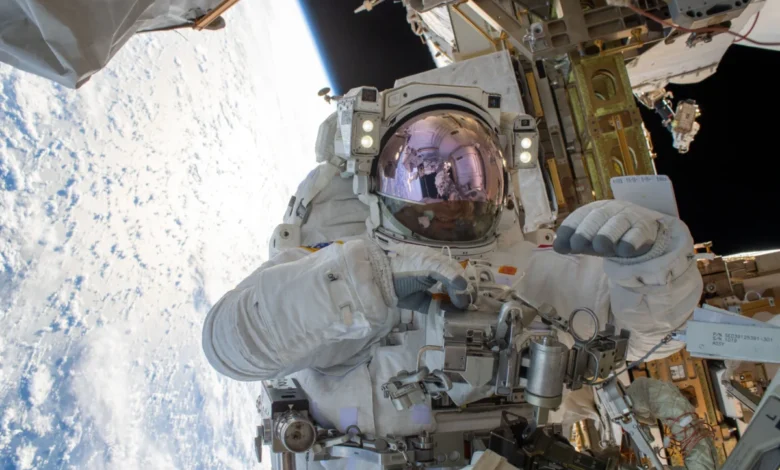
In a significant milestone for the longevity and operational capability of the International Space Station (ISS), Canadian Space Agency (CSA) astronaut Joshua Kutryk and NASA astronaut Anil Menon successfully completed an intensive extravehicular activity (EVA) on October 29, 2026. The duo spent hours working in the vacuum of space while orbiting 267 miles above the South Atlantic Ocean, successfully installing a new International Space Station Roll-Out Solar Array (iROSA). This mission represents a critical phase in the ongoing effort to modernize the station’s aging power grid, ensuring that the orbiting laboratory remains a viable platform for scientific research well into the next decade.
The successful installation marks the seventh of eight planned solar array upgrades. By supplementing the original, life-limited solar wings with these more efficient, flexible roll-out arrays, NASA and its international partners are effectively preventing a power deficit that would have otherwise constrained the station’s research potential.
Chronology of the Mission and Orbital Operations
The EVA, which commenced early on October 29, 2026, was the result of months of rigorous ground-based training and precise orbital planning. Astronauts Kutryk and Menon exited the Quest Joint Airlock, beginning the complex process of unfurling and securing the hardware. The iROSA units, which arrive at the station as compact, tightly wound cylinders, utilize a kinetic deployment system that relies on stored strain energy to unfurl, requiring careful manual handling and structural attachment by the spacewalking crew.
Following the successful deployment and electrical integration of the seventh array, the astronauts transitioned to "get-ahead" tasks. These secondary objectives were designed to streamline the schedule for the next planned EVA, currently slated for November 5, 2026. During this upcoming mission, the duo will install the eighth and final iROSA unit. Once that terminal array is fully operational, the ISS will boast a significantly enhanced power-generation capacity, effectively restoring the station’s total electrical output to levels seen in its earlier years while simultaneously providing the high-voltage energy required for modern laboratory equipment and future orbital modules.
Technical Specifications and the iROSA Advantage
The decision to upgrade the ISS power system was driven by the degradation of the original solar arrays, which were designed for a 15-year service life. Many of these arrays have been in continuous operation for over two decades, leading to measurable losses in power conversion efficiency. The iROSA technology, developed by Boeing and deployed under NASA’s technical supervision, offers a revolutionary approach to space-based energy harvesting.
Unlike the rigid, heavy panels launched during the early assembly phase of the ISS, the iROSA units are lightweight and flexible. When rolled out, they cover a portion of the original panels, creating a "shadow" effect that prevents the older, degraded cells from causing electrical interference, while providing a massive boost in raw power.
Supporting data provided by NASA engineers indicates that the completion of the eight-array upgrade will increase the station’s total available power by up to 30%. This increase is not merely an incremental improvement; it is a fundamental necessity. As the station hosts an increasing number of commercial modules and high-energy-demand experiments—ranging from advanced bioprinting and fluid physics to material science—the demand for electricity has reached an all-time high. The enhanced power capacity ensures that the ISS can support high-bandwidth communications, life support systems, and the increased data-processing requirements of the next generation of scientific payloads.
Perspectives from Space Agencies and Mission Control
The successful execution of this spacewalk has been lauded by leadership within both the Canadian Space Agency and NASA. For the CSA, Kutryk’s participation serves as a point of national pride and underscores the depth of Canada’s integration into the global space economy.

"The work performed by Joshua and Anil is foundational to the future of the ISS," stated a spokesperson for the CSA mission operations team. "The precision required to handle these massive, yet delicate, solar arrays in a microgravity environment is a testament to the years of training our astronauts undergo. This is not just about keeping the lights on; it is about extending the scientific frontier of low-Earth orbit."
NASA’s flight controllers, stationed at the Johnson Space Center in Houston, managed the complexities of the EVA with routine efficiency. The "get-ahead" tasks completed by the astronauts were particularly praised, as they provide a buffer for the upcoming November 5 mission. By pre-positioning tools and clearing potential structural obstructions, the crew has significantly reduced the operational risk for the final installation phase.
Broader Implications for Orbital Infrastructure
The ongoing maintenance of the ISS serves as a "dress rehearsal" for future exploration missions, including those to the Moon and Mars. The challenges encountered while upgrading the station’s power grid provide invaluable data on long-term hardware maintenance, robotic-assisted EVAs, and the psychological and physical endurance required for sustained deep-space operations.
Furthermore, the shift toward flexible, roll-out solar technology has implications that extend far beyond the ISS. As private sector interest in low-Earth orbit grows—with entities like Axiom Space and Blue Origin developing their own orbital platforms—the ability to deploy high-efficiency power systems rapidly and reliably is a core competency. The success of the iROSA program provides a proven blueprint for the modular construction of future space habitats.
The environmental conditions of low-Earth orbit, characterized by extreme temperature fluctuations, atomic oxygen erosion, and the constant threat of micrometeoroid impacts, continue to test the limits of human-made materials. The longevity of the iROSA arrays will be monitored closely, providing data that will inform the design of future power systems for the Gateway—the planned lunar-orbiting station.
The Path to Completion: The November 5 Mission
As the crew prepares for the final installation, the international scientific community watches with anticipation. The eighth array is not merely the final piece of the power puzzle; it represents the culmination of a multi-year, multi-billion-dollar effort to re-equip the station for its final operational years.
The November 5 mission will focus on the final connection point of the station’s primary power bus. Once the final bolt is tightened and the circuits are closed, the ISS will enter a new phase of energy stability. This stability is expected to facilitate a transition period where the station can focus more heavily on commercial research, demonstrating the viability of the "low-Earth orbit economy" before the eventual planned deorbiting of the facility in the early 2030s.
Conclusion
The successful October 29 spacewalk by Joshua Kutryk and Anil Menon stands as a highlight of the 2026 orbital calendar. Through the systematic application of advanced engineering and human expertise, the mission has ensured that the International Space Station remains a robust, fully powered, and highly productive laboratory.
The installation of the iROSA units is more than a maintenance task; it is an act of engineering preservation that keeps the promise of space-based research alive. With the final solar array installation scheduled for early November, the ISS is set to exit 2026 with more power at its disposal than at any point in its history, providing a stable foundation for the scientists, engineers, and international partners who continue to push the boundaries of what is possible in the vacuum of space. As the global space community looks toward the moon and beyond, the lessons learned from this operation—and the power generated by these new arrays—will remain an essential pillar of human exploration.