The Dazzling Return of Venus: Why the Morning Sky’s Brightest Planet is Captivating Commuters Worldwide

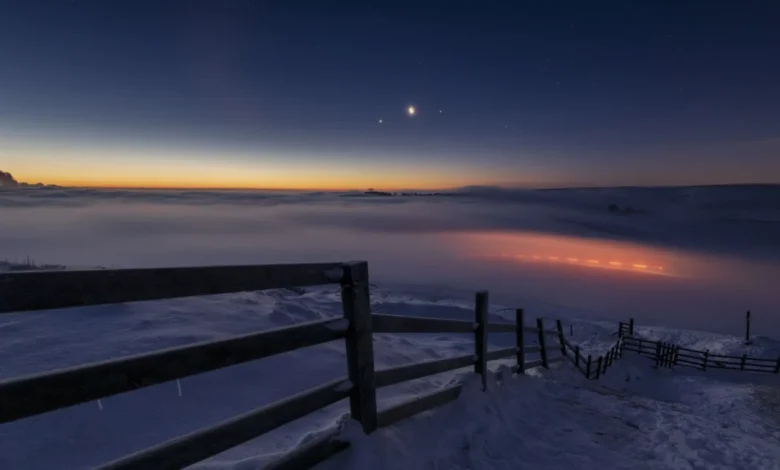
Early morning commuters and students heading out into the predawn chill across the Northern Hemisphere have increasingly found themselves pausing to gaze at a brilliant, unmoving point of light low in the east-southeast sky. For those unfamiliar with the routine patterns of the morning celestial sphere, the object’s sudden prominence can be startling. Just weeks ago, this sector of the dawn sky appeared comparatively ordinary. Today, however, an unmistakable celestial beacon dominates the horizon, shining with an intensity that seems almost demanding of attention.
The object capturing the collective gaze of early risers is Venus, Earth’s planetary neighbor, which is currently ascending into one of its most striking and prolonged morning visibility windows in recent memory. As it vaults upward into the pre-dawn darkness, astronomers and stargazers alike are emphasizing that the planetary show is only beginning to reach its full potential.
The Orbital Mechanics Behind the Spectacle
To understand why Venus has emerged so dramatically from the morning background, one must examine the mechanics of planetary orbits. On October 24, Venus reached what astronomers designate as an inferior conjunction. During this phase, the planet passed directly between the Earth and the sun, effectively bridging the transition from the evening sky—where it had lingered for months—into the domain of the morning sky.
Because Venus orbits the sun on a tighter track than Earth (at an average distance of about 67 million miles compared to Earth’s 93 million miles), its apparent position from our perspective shifts rapidly. Following its transit between Earth and our star, Venus has rapidly pulled away from the sun’s glare from our vantage point, allowing it to climb higher into the dark morning sky with each passing day.
This rapid orbital progression translates directly into enhanced visibility for observers on the ground. Throughout November, Venus has been steadily expanding its lead ahead of the sun. While it initially crept into view just as astronomical twilight began, it is now clearing the horizon more than 90 minutes before sunrise.
A Timeline of the Ascent: From Pre-Dawn Beacon to Daylight Spectacle
The progression of Venus into the morning sky follows a precise, predictable astronomical timeline that will continue to unfold over the coming weeks and months.
- Late October: Venus transitions through inferior conjunction, shifting from the western evening sky to the eastern morning sky.
- Mid-to-Late November: The planet gains altitude rapidly, rising well over an hour and a half before sunrise and commanding attention with its stark white radiance.
- November 29: Venus hits peak brilliance, blazing at an extraordinary magnitude of -4.9. At this peak, it outshines Jupiter—its nearest planetary competitor—by a factor of 12, and eclipses Sirius, the brightest star in the night sky, by 25 times.
- Mid-December: Venus reaches its maximum morning elongation and highest visual prominence, rising nearly four hours before the sun. During this period, it burns in a completely dark sky for more than two hours before morning twilight begins.
- January to March: The planet begins a long, gradual descent back toward the solar glare, rising progressively later each morning.
- Late Spring and Summer: By June, Venus will rise less than an hour before sunrise, eventually sinking entirely into the bright dawn twilight by July, where it will remain hidden during a lengthy summer sabbatical before returning to the evening sky late next year.
Unprecedented Brilliance and Daylight Visibility
For astronomy enthusiasts and casual observers alike, the coming peak on November 29 marks a rare visual treat. Shining at a magnitude of -4.9, Venus will display a level of luminosity that makes it more than just a nocturnal marvel.
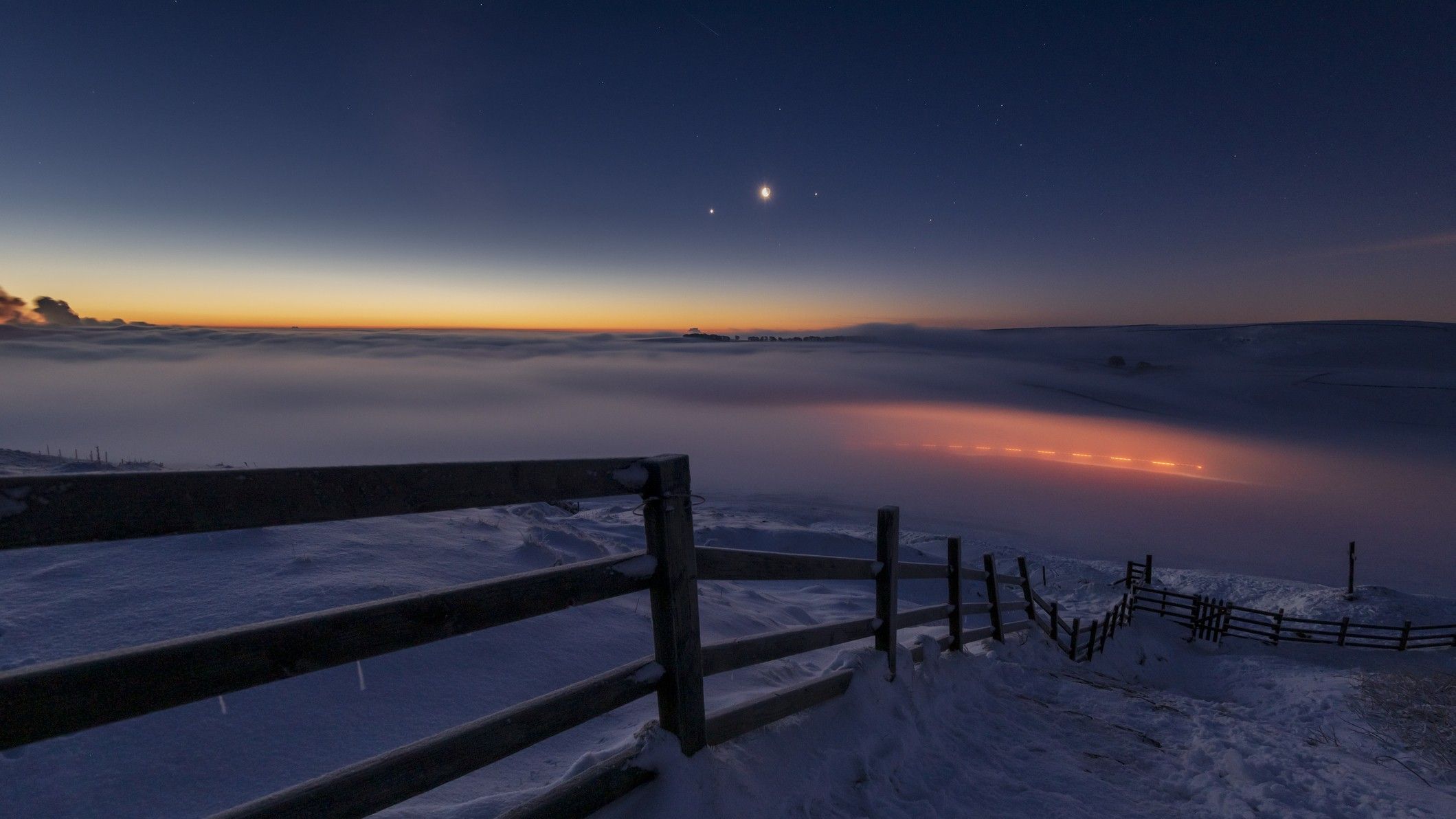
Under pristine rural conditions free from urban light pollution, Venus at maximum brilliance is luminous enough to cast faint, distinct shadows on the ground. Furthermore, because of its extreme brightness, observers who track the planet past sunrise can easily spot it with the naked eye in full daylight. To the daytime observer, Venus appears as a tiny, stark-white speck suspended sharply against the blue canopy of the daytime sky—a rare phenomenon shared only by a handful of celestial bodies, primarily the moon and, under optimal conditions, the brightest supernovae or comets.
This stunning radiance in the east has historically invited historical and cultural comparisons. To many modern observers witnessing its striking holiday-season prominence, Venus serves as a modern celestial echo of the biblical "Christmas Star" described in the Gospel of Matthew, which famously guided the Magi "in the east."
Separating Science from Speculation
The sudden, blinding appearance of Venus in the predawn hours has predictably triggered familiar cycles of public wonder, and occasionally, momentary confusion. Local planetariums and astronomy hotlines routinely report a spike in inquiries during major Venusian apparitions, with citizens occasionally mistaking the intensely bright, low-hanging object for an anomalous aerial phenomenon or an unidentified flying object (UFO).
Astronomers and science educators stress that public outreach is vital during these periods to demystify celestial mechanics. What appears to be an erratic or unnatural light is, in reality, a predictable feature of our solar system’s geometry. As Joe Rao, a veteran meteorologist, eclipse chaser, and instructor at New York’s Hayden Planetarium, frequently notes, the phenomenon is entirely natural.
"If any of your friends or relatives remark to you that they saw a ‘strange UFO’ on the way to work or school recently, you now can set them straight," Rao explains. "It’s not E.T. It’s only Venus."
Broader Implications and Cultural Resonance
Beyond the immediate visual spectacle, the current apparition of Venus highlights the enduring public engagement with practical astronomy. While advanced space probes—such as NASA’s Magellan mission or upcoming international endeavors—study Venus’s runaway greenhouse effect, dense sulfuric acid clouds, and crushing surface pressure from orbit and afar, the naked-eye spectacle reminds the general public of the dynamic, clockwork nature of the solar system.
For millions of commuters navigating the dark winter mornings of the Northern Hemisphere, Venus provides a fleeting moment of cosmic connection. As the planet climbs higher in the weeks leading up to mid-December, it offers a stark reminder of the vast, orderly architecture of space, transforming an ordinary trip to work or school into an encounter with planetary science in action.