Measuring the Innovation Economy: A Strategic Framework for Analyzing National Ecosystems through the Lens of South Korea


Quantifying the health of an innovation ecosystem remains one of the most complex challenges for policymakers, corporate leaders, and global investors. While traditional metrics often focus solely on venture capital volume, a comprehensive evaluation requires a multi-layered approach that accounts for the interplay between startups, scaleups, research institutions, and established corporate demand. This week in Seoul, Mind the Bridge presented a rigorous new assessment of the South Korean innovation landscape, offering a blueprint for how nations can transition from early-stage startup hubs to mature, scaleup-driven economies. By shifting the focus from simple aggregate numbers to a structured analysis of the innovation pyramid, the firm has provided a diagnostic tool that highlights not only where a country stands on the global stage but also the strategic policy levers that have propelled South Korea to the forefront of technological development.

The Pyramid Model: Defining Ecosystem Maturity
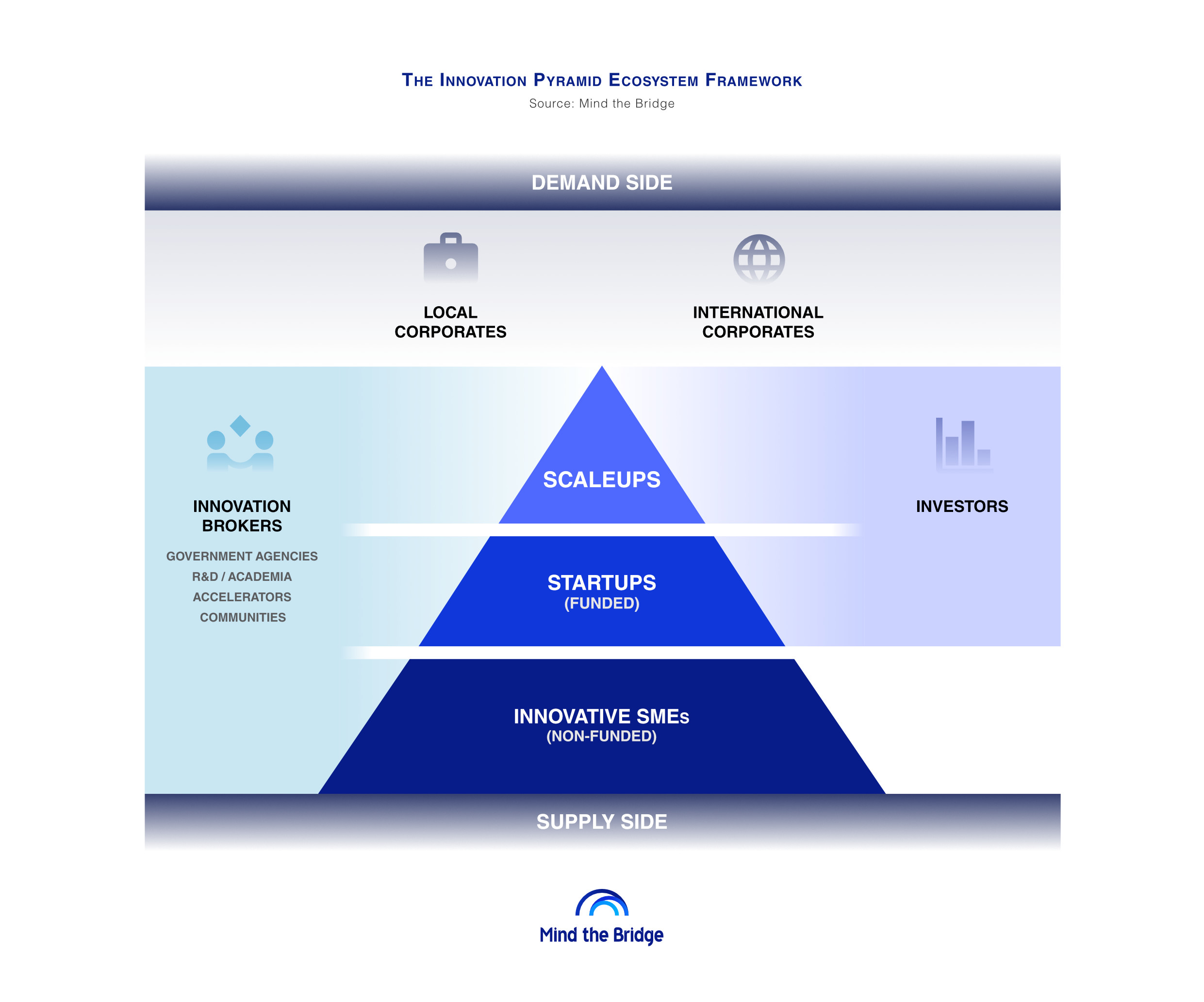
The methodology utilized by Mind the Bridge categorizes innovation ecosystems into a hierarchical structure, or "pyramid," which serves as a more reliable indicator of maturity than isolated funding statistics. At the foundational level lie startups—early-stage entities still refining their business models and seeking product-market fit. As the pyramid narrows, these entities evolve into scaleups, defined as companies that have successfully secured more than $1 million in venture capital. Scaleups represent the most visible output of an ecosystem, serving as a primary proxy for economic vitality.
At the apex of this hierarchy are the "scalers" and "super-scalers." These are organizations that have successfully transcended their domestic markets to achieve international prominence. These outliers, though fewer in number, exert a disproportionate influence on a nation’s innovation profile, acting as anchors for talent, capital, and global reputation. Beyond the venture-backed track, the model accounts for the "hidden" innovation economy: technology-driven small and medium-sized enterprises (SMEs) that bootstrap their growth. Ignoring these non-VC-backed entities often leads to an incomplete picture of a country’s total technological capacity, particularly in markets where traditional industrial expertise remains a core economic driver.

The Symbiosis of Supply and Demand
An ecosystem’s true economic impact is only realized when the supply of technology—derived from universities, research labs, and startups—intersects with the demand from the corporate sector. This interaction is the engine of industrialization. Large corporations, both domestic and international, play a critical role by engaging with startups through venture client models, corporate venture capital (CVC), and strategic mergers and acquisitions.
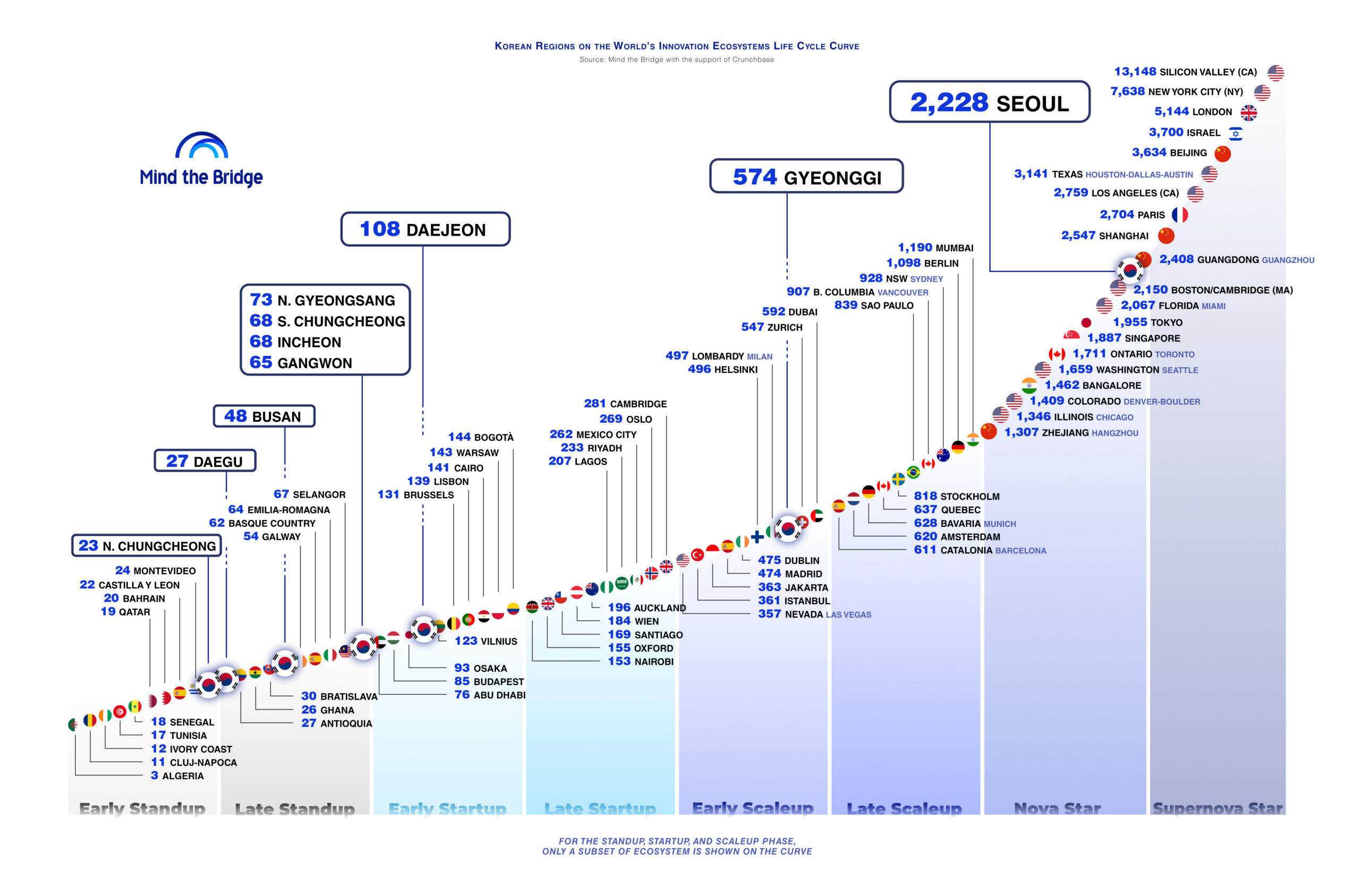
Mind the Bridge’s analysis suggests that as an ecosystem achieves critical mass, it begins to attract foreign direct investment in the form of corporate and government innovation outposts. These entities establish a local presence to capture technology, talent, and deal flow, creating a self-reinforcing cycle of growth. This stage of maturity, often characterized by the "Star" phase of the Innovation Ecosystem Life Cycle, indicates that the region has reached a level of density where innovation is no longer an isolated activity but a central component of the broader economic fabric.
South Korea’s Decadal Transformation: A Chronology of Strategy
The rapid ascent of South Korea’s innovation economy is not an accident of market forces but the result of two decades of deliberate, state-led strategic planning. A timeline of this development reveals a persistent focus on shifting the economy toward higher-value, technology-centric growth:
- 2008: The R&D Baseline. The government committed to a radical increase in national R&D spending, setting a goal to reach at least 5% of GDP—a target that signaled the nation’s intent to move beyond traditional manufacturing into deep-tech dominance.
- 2013: The Startup Pivot. The launch of the Tech Incubator Program for Startup (TIPS) marked a pivotal moment, focusing resources on early-stage entrepreneurship and lowering the barrier to entry for high-potential founders.
- 2014–2015: Infrastructure for Innovation. The establishment of 17 Centers for Creative Economy and Innovation (CCEI) served as a structural bridge, physically and strategically linking regional startups with the immense resources of Korea’s massive conglomerates, or chaebols.
- 2022–Present: The Deep-Tech Shift. Recent regulatory reforms have focused on creating an environment conducive to experimentation, providing flexible financing instruments for scaleups and concentrating capital on deep-tech sectors such as artificial intelligence, robotics, and biotechnology.
Data-Driven Insights into the Korean Market
The latest data from the report provides a snapshot of an ecosystem that has fundamentally diverged from its peers. South Korea now hosts 3,359 scaleups, cementing its position as the eighth-largest national innovation ecosystem in the world. Seoul itself is ranked as the 11th most developed ecosystem globally.
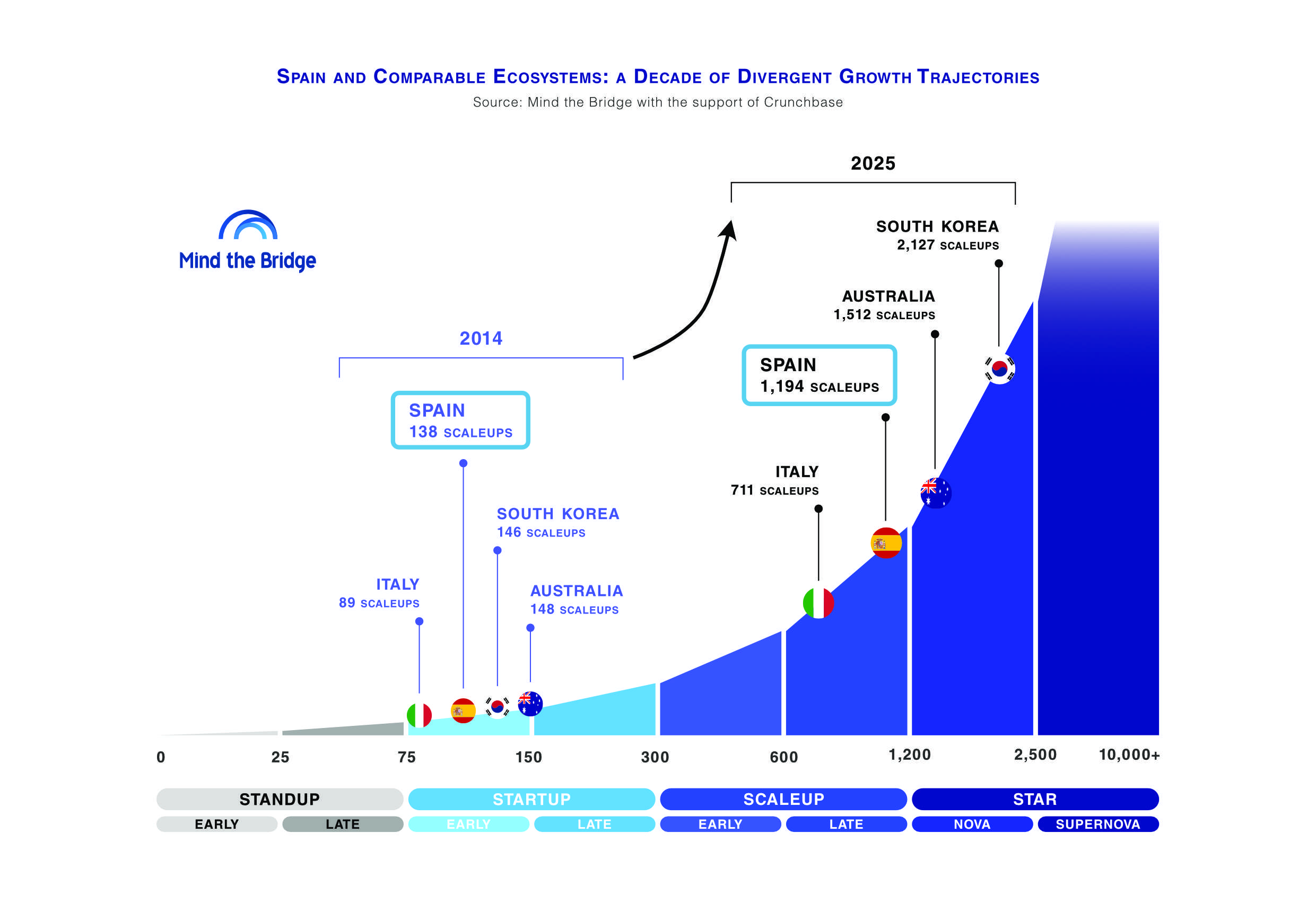
Beneath these figures lies a robust infrastructure: approximately 10,000 startups and 25,000 innovative, non-VC-backed technology companies. The supporting framework is equally significant, comprising 700 active investors and over 550 public and private innovation brokers managing more than 800 unique support programs. Ten years ago, South Korea’s innovation output was substantially smaller than that of Germany or Japan, and comparable to Australia or Spain. Today, it has overtaken those benchmarks, demonstrating a growth trajectory that validates the effectiveness of its long-term policy interventions.
Implications for Global Competitiveness
The diagnostic utility of this methodology extends beyond Korea. By applying this "pyramid" framework, governments worldwide can identify specific bottlenecks within their own national systems. For example, if a nation possesses a high number of startups but a low number of scaleups, the diagnostic suggests a "funding gap" or a lack of institutional support for the growth phase. Conversely, if there is a lack of interaction between startups and large corporations, the issue may be one of cultural or regulatory friction rather than a lack of capital.
Industry experts and policy advisors emphasize that the transition from a "startup nation" to a "scaleup nation" requires a shift in mindset. It necessitates moving away from vanity metrics—such as the total number of new incorporations—toward metrics of sustainability and impact. The ability of South Korea to leverage its existing industrial base to provide a "demand-side" pull for startups has been a key differentiator. As global competition for talent and technology intensifies, the ability to objectively measure these dynamics becomes a critical competitive advantage.
A Future-Oriented Perspective
The release of the South Korean report is intended to serve as more than an academic review; it is an actionable guide for stakeholders. By making this data available through the Mind the Bridge Innovation Ecosystem Platform, the organization aims to encourage a standardized approach to measuring innovation across borders. This transparency is essential for cross-border collaboration, as it allows international investors to identify regions that possess the requisite density and maturity for high-stakes investment.
Ultimately, the case of South Korea serves as a template for other nations seeking to accelerate their economic transition. It demonstrates that while capital is the fuel, strategy is the engine. The combination of sustained R&D investment, the creation of clear pathways for scaleup financing, and the active fostering of synergies between large corporations and smaller innovators has created an ecosystem that is not only resilient but increasingly self-sustaining. For policymakers and business leaders, the takeaway is clear: success in the innovation economy is a long-term project that requires the synchronization of private ambition and public policy. As the global economy continues to prioritize technological sovereignty, frameworks that provide a precise, diagnostic look at where a country stands—and where it must go—will prove indispensable in navigating the challenges of the next decade.