NASA Seeks the Next Generation of Explorers to Join the Astronaut Corps for Future Lunar and Martian Expeditions

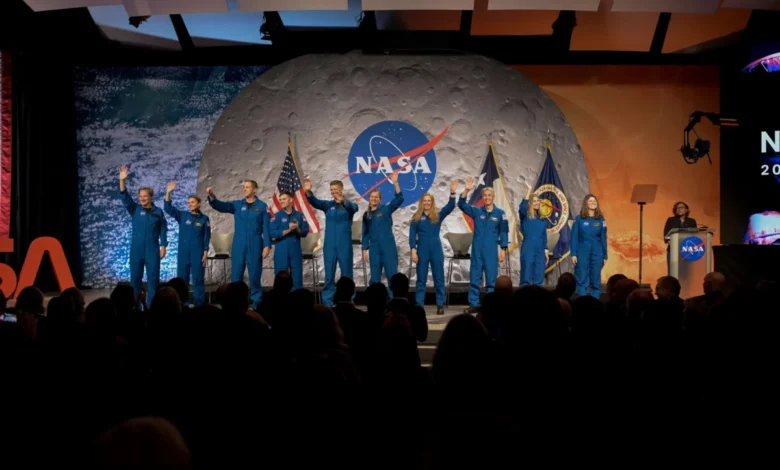
The National Aeronautics and Space Administration has officially inaugurated its search for the next cadre of astronauts, marking a pivotal moment in the history of human spaceflight. As the United States accelerates its efforts under the Artemis program to return to the lunar surface and establish a sustainable presence at the Moon’s South Pole, the agency is looking for a diverse and highly skilled group of individuals to carry the torch of exploration. This recruitment cycle represents more than a routine hiring process; it is a strategic expansion of the nation’s capabilities in anticipation of the first human missions to Mars.
A Historic Call for Applicants
The application window for the next class of astronaut candidates is now open, with a firm deadline of 11:59 p.m. EST on Thursday, December 3. Interested U.S. citizens are invited to submit their credentials through the official NASA portal. The selection process, which is notoriously rigorous, is expected to conclude in late 2027, at which point the chosen cohort will begin an intensive, multi-year training program at the Johnson Space Center in Houston, Texas.
Jared Isaacman, the administrator of the agency, characterized this as an extraordinary epoch for space exploration. "The individuals we select will have the opportunity to walk on the Moon, live and work at a lunar base, and help develop the operational systems that will ultimately carry crews to the Red Planet," Isaacman stated. He emphasized that the missions ahead require a unique synthesis of technical brilliance, sound judgment, unwavering teamwork, and profound courage. By joining the corps, these recruits will step into a tradition that dates back to the dawn of the space age, becoming part of the legacy of pioneers who have expanded the boundaries of human knowledge.
The Evolution of the Astronaut Corps
Since the 1960s, NASA has selected only 370 individuals to undergo the grueling training required to become an astronaut candidate. As of the current fiscal year, the active astronaut corps remains relatively small, with only 32 members currently in rotation. This scarcity underscores the competitive nature of the selection process.
The most recent recruitment cycle, which took place in 2024, saw an overwhelming response from the public, with over 8,000 applications submitted. From that pool, 10 candidates were selected in 2025. These individuals are currently midway through a two-year curriculum that covers everything from complex spacewalk (Extravehicular Activity) procedures and lunar geology to the operation of high-performance aircraft. The incoming class will be expected to master these same skills, but with the added complexity of long-duration, deep-space operations.
Requirements for the Next Frontier
To qualify for selection, applicants must meet stringent criteria. Beyond holding U.S. citizenship, candidates are required to possess a master’s degree in a STEM field—including engineering, biological science, physical science, computer science, or mathematics—from an accredited institution. NASA has clarified that this requirement can also be met through alternative pathways, such as completion of a doctor of medicine (M.D.) or doctor of osteopathic medicine (D.O.) degree, or completion of a nationally recognized test pilot school program.
Professional experience is equally critical. Candidates must demonstrate at least three years of progressively responsible, professional experience after obtaining their degree. For pilots, this requirement is satisfied by at least 1,000 hours of pilot-in-command time on jet aircraft. Medical professionals, meanwhile, may count their residency period toward the three-year requirement, provided it is completed by July 2027. Beyond academic and technical qualifications, candidates must pass the NASA long-duration flight physical, a medical evaluation designed to ensure the candidate can withstand the physiological rigors of microgravity and high-radiation environments.
The Strategic Context: Artemis and Beyond
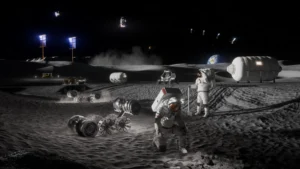
The urgency of this recruitment drive is tethered to the broader objectives of the Artemis program. NASA’s current mission profile involves a shift from low-Earth orbit (LEO) operations to sustained lunar surface exploration. The focus on the lunar South Pole is strategic; the region is believed to contain water ice, a vital resource that can be converted into oxygen and rocket propellant. Establishing a "Base Lunar" would effectively serve as a proving ground for the technologies, life-support systems, and psychological protocols required for a three-year round trip to Mars.
Scott Tingle, the current chief astronaut and chair of the Astronaut Selection Board at the Johnson Space Center, noted that the role is fundamentally transformative. "Becoming a NASA astronaut is more than a career opportunity; it is an invitation to join a legacy of explorers who have pushed the limits of our species," Tingle said. "These candidates will play a direct role in the missions that will define the future of humanity in the solar system, serving as a beacon of inspiration for future scientists, engineers, and dreamers."
The Multi-Year Selection Process
The timeline for this recruitment is calculated to ensure that the next group of astronauts is flight-ready by the time the lunar infrastructure reaches a sufficient level of maturity. Following the December 3 deadline, the selection board will engage in a months-long vetting process, involving interviews, psychological evaluations, and medical screenings.
Historically, the selection rate is less than 0.2 percent of the applicant pool. Once selected, candidates spend their first two years in "candidacy," a period of intensive classroom instruction and field training. Only upon successful completion of this training are they officially designated as astronauts and become eligible for flight assignment.
Broader Implications and Societal Impact
The expansion of the astronaut corps has significant implications for both the aerospace industry and the national economy. As NASA transitions to a "commercial-heavy" model—partnering with private companies for launch services and lunar lander development—the role of the astronaut is also shifting. Today’s astronauts must act not only as pilots and scientists but also as test pilots for commercial vehicles and managers of complex, public-private partnerships.
Furthermore, the diversity of the applicant pool is a key metric for the agency. NASA has made a concerted effort to broaden the reach of its recruitment, seeking candidates who reflect the demographic diversity of the United States. This is viewed as essential for maintaining public support for space exploration and ensuring that the scientific data gathered during missions is interpreted through a broad range of perspectives.
Matt Anderson, the deputy administrator of the agency, echoed the sentiment of urgency and opportunity. "The window of opportunity is wide open," Anderson said. "The mission is waiting. The only thing missing in the greatest adventure humanity has ever embarked upon is you."
Conclusion
As the agency looks toward the next decade, the challenge remains as daunting as it was during the Apollo era, yet the objectives have evolved. The goal is no longer just to reach a destination, but to stay there. The individuals selected from this current recruitment cycle will likely be the ones to set the first human footprints on Martian soil, effectively turning humanity into a multi-planetary species.
For those interested in applying, the portal at go.nasa.gov/3WyvlQi remains the primary point of entry. Prospective candidates are encouraged to thoroughly review the technical requirements and the specific medical standards for long-duration flight. The path to becoming an astronaut is paved with extreme dedication, yet for those who succeed, the reward is the chance to define the trajectory of human history among the stars.