Early Black Friday Deals November 9 Offer Significant Savings Across Consumer Electronics and Home Goods

The annual retail phenomenon known as Black Friday has evolved into a month-long marathon of discounting, with major e-commerce platforms shifting their strategies to capture consumer spending well before the traditional post-Thanksgiving rush. Amazon, as the industry leader, has initiated its early holiday promotional cycle, featuring substantial price reductions on high-end electronics, wearable technology, and essential home appliances. This shift reflects a broader market trend where retailers seek to stabilize supply chain logistics and distribute consumer demand over a longer period, mitigating the intense physical and digital traffic spikes historically associated with the final Friday of November.
The Evolution of the Black Friday Calendar
Historically, Black Friday was defined by singular, 24-hour retail events that prompted significant in-store traffic. However, the maturation of digital commerce has fundamentally altered this landscape. Data from the National Retail Federation (NRF) suggests that a growing percentage of consumers begin their holiday shopping as early as October to avoid shipping delays and inflationary pressures. By initiating "early bird" sales in the second week of November, Amazon and its competitors are attempting to anchor consumer loyalty before the peak of the Q4 shopping season.

This year’s promotional timeline has been particularly aggressive. By mid-November, major tech brands—including Samsung, Apple, and Anker—have authorized price markdowns that rival the depth of discounts typically reserved for Black Friday itself. For consumers, this presents an opportunity to bypass the volatility of late-November pricing, where demand-driven surges can lead to rapid inventory depletion.
High-Performance Home Entertainment: The Samsung 48-inch S90H
The current market for television displays is increasingly dominated by OLED technology, which offers superior contrast ratios and color accuracy compared to traditional LED/LCD panels. The Samsung 48-inch S90H is currently retailing at $998, a 23% reduction from its standard $1,298 price point.
From a technical perspective, the integration of the NQ4 AI Gen3 processor signifies a shift toward machine-learning-assisted image processing, which enhances upscaling capabilities for lower-resolution content. Furthermore, the inclusion of a 165Hz refresh rate for PC gaming is a response to the growing overlap between the home theater and gaming hardware markets. The transition toward smaller 48-inch OLED panels is a strategic move by manufacturers to accommodate urban living spaces, where larger 65-inch or 77-inch displays are often impractical.

Wearable Health Technology and the Oura Ring 4
The smart ring category has emerged as a high-growth segment within the wearable device market, challenging the dominance of wrist-based smartwatches. The Oura Ring 4, now priced at $249—a 29% discount from its $349 MSRP—utilizes an array of optical sensors to monitor over 50 health metrics, including sleep architecture, heart rate variability, and stress levels.
The shift toward ring-based form factors is primarily driven by ergonomic considerations. Consumers who are sensitive to wearing devices while sleeping have moved toward the ring’s less intrusive design. However, the long-term cost of ownership remains a critical factor for prospective buyers, as the device relies on a subscription-based model to unlock comprehensive data analytics. This subscription-first business model is standard in the modern health-tech sector, serving to provide recurring revenue for the manufacturer while offering the consumer continuous software updates and improved algorithm accuracy.
Advanced Sleep Hygiene: Soundcore Sleep A20
The personal audio industry is increasingly segmenting its product lines to address specific lifestyle needs rather than just general music consumption. The Soundcore Sleep A20 earbuds, currently reduced to $100 from $150, represent the specialized "sleep-tech" sub-market. Designed specifically for side-sleepers, the A20s prioritize comfort and noise masking over traditional Active Noise Cancellation (ANC). By utilizing passive noise isolation through specialized ear tip design, the device addresses the common complaint of ear pressure and bulkiness found in standard earbuds. The inclusion of a 14-hour battery life per charge is designed to cover full sleep cycles without the need for midday recharges.

Productivity Hardware: The M5 MacBook Air
Apple’s pricing strategy for the MacBook Air line has remained remarkably consistent, with few deep discounts available during standard sales cycles. The current promotion for the 13-inch MacBook Air, equipped with the M5 processor and 512GB of storage, brings the price down to $1,099 from the standard $1,299.
The M5 chip represents the latest iteration of Apple’s silicon strategy, emphasizing power efficiency and thermal management for mobile professionals. With a 10-core CPU and 10-core GPU, the device is positioned as a mid-tier workhorse capable of handling professional creative tasks. The inclusion of Wi-Fi 7 compatibility signals a future-proofing effort, as enterprise and home network infrastructure transitions to the new wireless standard. The $200 discount is significant in the context of Apple’s typically rigid pricing structure and highlights the importance of the educational and remote-work sectors in driving holiday sales.
Home Appliance Efficiency: Breville Smart Oven Air Fryer Pro
The kitchen appliance market has seen a resurgence in multi-functional countertop devices, as consumers prioritize space-saving designs that consolidate multiple appliances into one footprint. The Breville Smart Oven Air Fryer Pro, discounted to $320 from $400, exemplifies this trend.

The device’s "Element iQ" system, which uses five independent quartz heating elements, is designed to eliminate the temperature fluctuations commonly found in entry-level toaster ovens. By utilizing PID temperature control—a technology common in professional-grade laboratory equipment—the oven ensures consistent heat distribution. This level of precision is becoming a baseline expectation for the "prosumer" home cook, as manufacturers compete to offer restaurant-grade results in residential settings.
Mobile Power and Peripheral Utility
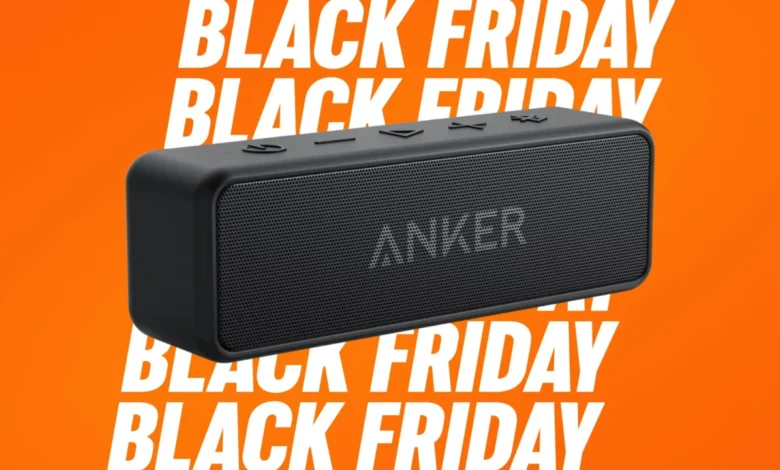
In the realm of mobile accessories, the Baseus PicoGo Air power bank at $50 and the Anker Soundcore 2 speaker at $30 represent the "essential" category of tech upgrades. The Baseus power bank’s 25W wireless charging capacity and its magnetic attachment feature cater to the current ecosystem of Qi2-certified mobile devices. The integration of NTC temperature control is a vital safety feature, particularly as higher-wattage wireless charging generates significant heat that can degrade lithium-ion battery health over time.
Similarly, the Anker Soundcore 2 remains a staple in the budget audio market. Its IPX7 waterproof rating and 24-hour battery life demonstrate that low-cost hardware can still meet high-durability standards. These items often function as "gateway" purchases for consumers looking to round out their tech ecosystem without a major financial commitment.

Broader Market Implications
The concentration of these early-November deals indicates a strategic shift by retailers to secure revenue ahead of the formal start of the holiday shopping season. By front-loading these discounts, Amazon effectively de-risks the Black Friday period. If a consumer purchases an item in early November, the likelihood of them seeking a competitor’s deal on Black Friday is significantly diminished.
Furthermore, these price points offer a barometer for the current health of the consumer electronics market. The prevalence of discounts ranging from 20% to 38% suggests that manufacturers and retailers are working to clear inventory levels, potentially in anticipation of next-generation hardware cycles in the first half of 2027.
Consumers should remain cognizant that these prices remain dynamic. Algorithmic pricing tools used by major retailers mean that costs can fluctuate based on inventory levels, competitor activity, and real-time demand. While the current savings are substantial, prospective buyers are advised to monitor these listings closely, as the window for these specific promotional rates may close as supply levels shift toward the traditional Black Friday peak. As the industry continues to prioritize early engagement, the traditional "big day" of shopping is increasingly becoming a final opportunity for clearance rather than the exclusive window for deep discounts.
Related posts: