Warhammer 40,000: Dawn of War 4 creative director explains how King Art balances RTS factions ‘organically’ so…

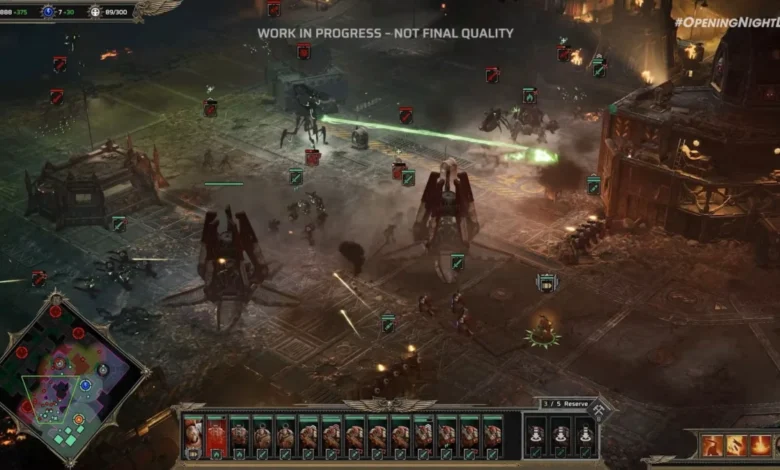
The upcoming release of Warhammer 40,000: Dawn of War 4, scheduled for PC on December 3, marks a significant return to the storied franchise. As the development team at King Art Games navigates the complexities of modern real-time strategy design, the studio is grappling with the perennial challenge of balancing four distinct factions: the Space Marines, Orks, Necrons, and the Adeptus Mechanicus. Creative Director Jan Theysen recently provided insight into the studio’s rigorous development process, emphasizing that achieving mechanical parity is only possible once the "thematic soul" of each army is firmly established.
The Philosophy of Asymmetrical Balance
For developers, balancing an RTS title with thousands of potential unit permutations is often described as a "super challenging" endeavor. In the grim darkness of the far future, where combat involves complex interactions between varied equipment, abilities, and unit tiers, King Art Games has opted for a design philosophy rooted in intuitive gameplay.
Theysen explains that the studio prioritizes the "feeling" of each faction before adjusting numeric values like damage output or health pools. The objective is for players to understand how a faction should be commanded simply by interacting with its units, even if they have little prior experience with that specific army.
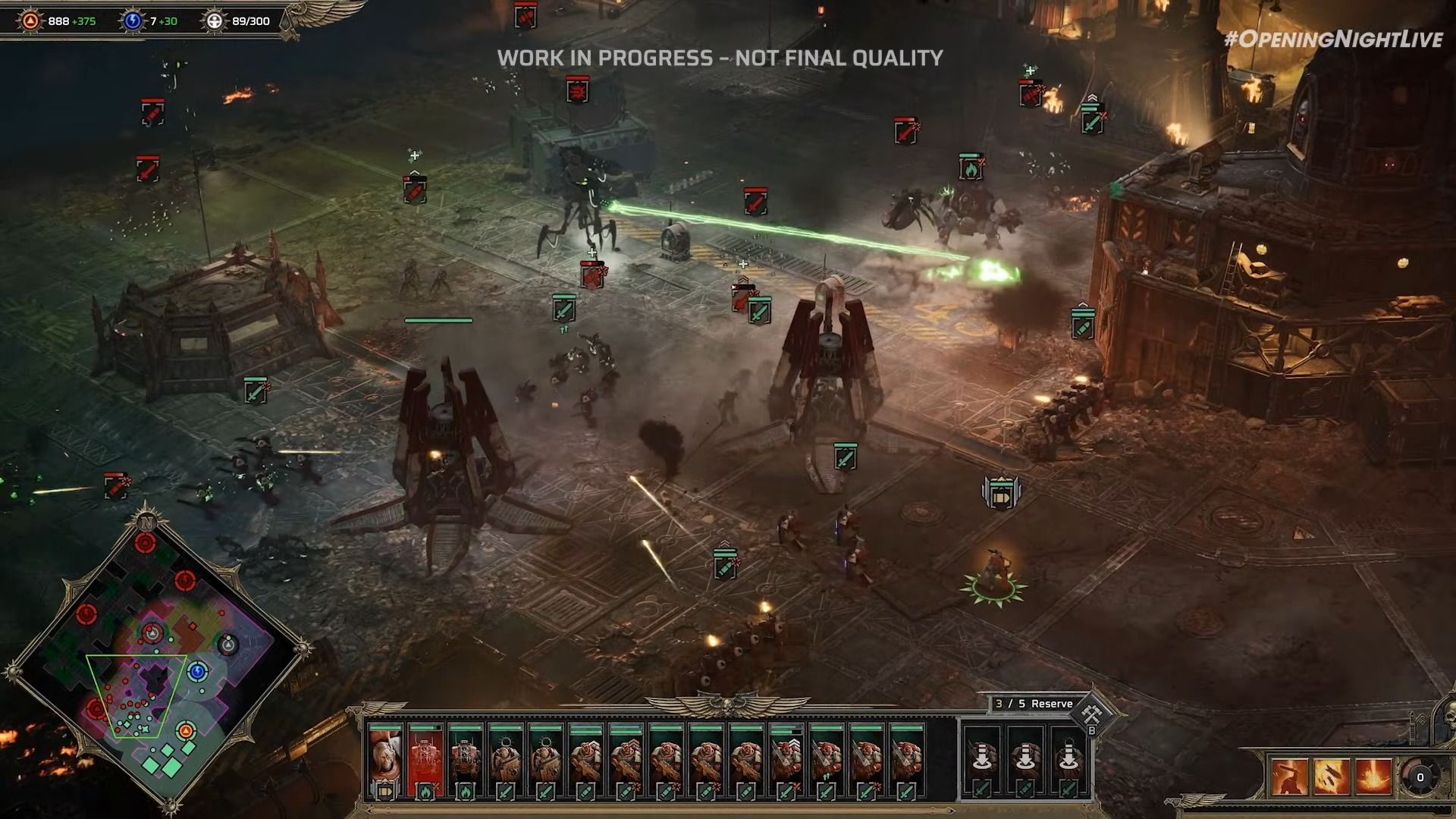
For instance, the design contrast between Space Marines and Orks serves as a primary example of this approach. Space Marine units are developed to be high-cost, high-utility assets; they are elite, durable, and highly customizable through upgrades. Conversely, Ork units are designed to be "dirt cheap," emphasizing the lore-accurate swarm tactics of the Greenskins. By making Orks expendable and prone to dying quickly, the game naturally encourages players to treat individual Ork units with less caution, while Space Marine players are intuitively led to prioritize the preservation of their expensive, specialized infantry.
The Development Timeline and Iterative Testing
The path to the December 3 launch has been defined by a multi-phased development strategy. Following the conceptualization of faction identities, the team moved to define the technological arcs of the game, specifically targeting the power curves of early-, mid-, and late-game units. Once these fundamental roles were established, the project entered an extensive testing phase.
King Art Games utilized a two-pronged testing methodology. Initially, the development team conducted manual skirmishes to test unit synergies and tactical counters. This was supplemented by automated AI-driven simulations. By having the game’s internal AI battle itself thousands of times, the developers could generate massive data sets, identifying win-rate imbalances across various maps and unit combinations.
This analytical data serves as the baseline for "adjusting the dials." The challenge, according to Theysen, lies in lowering the win rate of an over-performing faction—such as the Necrons—without stripping away their unique mechanical identity. It is a delicate balance of maintaining the lore-accurate feel of the faction while ensuring competitive integrity.
The Unpredictable Variable: The Player Base
Despite the sophistication of AI testing, the studio remains acutely aware that real-world players often discover strategies that automated systems cannot foresee. Theysen acknowledges that this is an ongoing, post-launch process. As soon as a game enters the hands of the public, the meta-game shifts in ways that developers cannot always anticipate.
"As soon as real players get this into their hands, they come up with stuff you never thought about," Theysen noted. "If players find an unfair advantage, we have to find a way to fix that." This admission highlights the reality of modern live-service and competitive gaming, where the launch date is merely the starting point for a cycle of patches, balance tweaks, and community-driven meta-shifts.

Contextualizing the Legacy of Dawn of War
The release of Dawn of War 4 carries the weight of a franchise that has evolved significantly over the last two decades. The original Dawn of War, released in 2004, set a high bar for tactical squad-based combat. Subsequent entries, such as Dawn of War 2 and 3, experimented with hero-focused mechanics and differing levels of base-building complexity.
King Art Games has taken an eclectic approach to this fourth installment, opting to borrow specific hero mechanics and user interface (UI) elements from its predecessors while iterating on them. This decision is driven by the fact that the original game is now over 20 years old, and modern audiences have come to expect a higher degree of responsiveness and quality-of-life features. By blending the classic appeal of the series with modern UI conveniences, the studio aims to bridge the gap between long-time veterans and new players.
Future Platforms and Technical Hurdles
While the current focus is squarely on the PC launch, there is growing speculation regarding a potential console port. RTS games have historically faced difficulties on consoles due to the inherent complexities of mapping keyboard-and-mouse commands to a controller.
Theysen has suggested that while such a move is a "big challenge" from a design perspective, he believes it is possible on a technical level. The success of other strategy titles on consoles in recent years suggests that there is a viable market for the genre outside of the traditional PC space. Should Dawn of War 4 perform well on PC, a console expansion would likely be the next logical step in the game’s lifecycle.
The Scale of the Campaign
Beyond the competitive multiplayer, the game features a massive narrative component. The studio has confirmed the inclusion of four full-scale campaigns, totaling approximately 70 missions. The narrative structure incorporates branching stories, which, when combined with the faction-specific mechanics, provides a level of depth rarely seen in the genre. This "snowball effect" in content creation—where ideas for missions and story arcs grew as the game took shape—speaks to the ambition of King Art Games in attempting to deliver a definitive Warhammer 40,000 experience.

Broader Implications for the RTS Genre
The release of Dawn of War 4 arrives at a pivotal moment for the real-time strategy genre. For years, the genre was considered stagnant, with only a few major titles dominating the landscape. However, the resurgence of interest in high-fidelity, complex strategy games suggests a shift in player appetite.
If Dawn of War 4 succeeds in balancing its four factions while delivering a compelling narrative, it could serve as a blueprint for future RTS development. The reliance on data-driven balancing and the focus on "thematic" unit design provides a framework for managing the high complexity inherent in modern strategy games. Furthermore, the studio’s commitment to post-launch support and community responsiveness acknowledges that the success of a modern title is predicated on a collaborative relationship between developers and the player base.
As December 3 approaches, the gaming community remains focused on whether King Art Games can deliver on these promises. The success of the title will likely be measured not just by its initial sales, but by the stability of its competitive scene and the longevity of its player base in the months following release. For now, the integration of deep lore, tactical unit variety, and modern testing methodologies positions Dawn of War 4 as one of the most anticipated strategy titles in recent history.