Martin Cooper and the Wireless Revolution: How One Engineer Redefined Human Connectivity

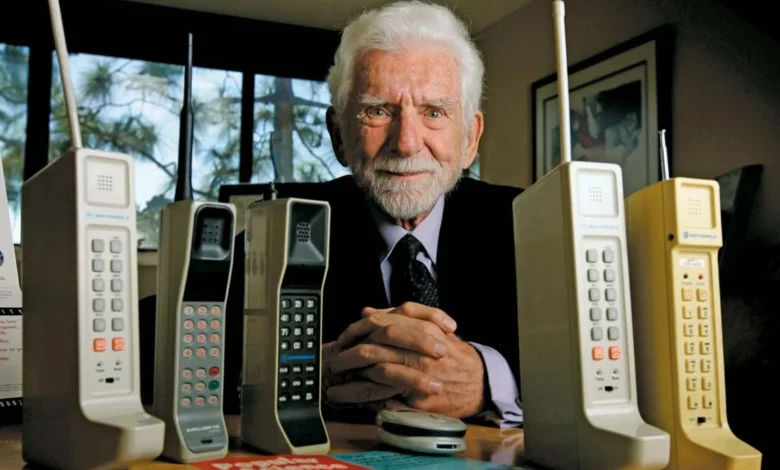
Martin Cooper is widely regarded as the principal architect of the modern mobile era, a visionary whose mid-20th-century foresight dismantled the paradigm of location-dependent communication. Before his breakthrough, telephony was an exercise in geography; a telephone number identified a specific desk, home, or building. Cooper’s intellectual contribution—the decoupling of the telephone number from a physical wire and its attachment to an individual human being—transformed the global socioeconomic landscape. Without his iterative work at Motorola during the 1970s, the contemporary mobile communications industry, now valued at trillions of dollars, would arguably not exist in any recognizable form.
The Genesis of Personal Mobility
In the early 1970s, the telecommunications market was dominated by stationary infrastructure. AT&T’s Bell Labs, a formidable research powerhouse, had been exploring the concept of "mobile" telephony for decades, but their vision was primarily focused on "car phones"—cumbersome, heavy, and power-hungry units that required installation inside a vehicle. The prevailing industry consensus was that true portability was a physical impossibility due to battery density and signal management constraints.
Martin Cooper, serving as the head of Motorola’s communications systems division, held a fundamentally different philosophy. He rejected the notion that a person should be tethered to a machine. Cooper envisioned a "personal telephone," a device small enough to carry in a pocket, which would allow a user to navigate the world without being tethered to a copper wire. This was not merely a technological challenge; it was a conceptual pivot. By shifting the identity of the phone number from the location to the person, Cooper introduced the concept of the "personal address," a change that would eventually facilitate the entire global mobile ecosystem.
A Chronology of the First Call
The realization of this vision culminated in a historic demonstration on April 3, 1973. The events of that day remain a cornerstone in the history of technology:
- 1967–1972: Cooper and his engineering team at Motorola face immense internal and external skepticism. They work under the shadow of the FCC’s restrictive spectrum policies, which favored large, high-powered mobile transmitters over low-powered, portable ones.
- April 3, 1973: Martin Cooper stands on Sixth Avenue in New York City, near the Hilton Manhattan. He pulls a prototype DynaTAC (Dynamic Adaptive Total Area Coverage) device from his jacket. The device weighs approximately 2.5 pounds and measures nine inches long.
- The Call: Cooper dials the number of his rival, Joel Engel, the head of research at Bell Labs. Upon hearing Engel’s voice, Cooper delivers the now-famous line: "Joel, this is Marty. I’m calling you from a cell phone, a real handheld portable cell phone."
- October 1973: Motorola formally files a patent for the "Radio Telephone System," with Cooper listed as the primary inventor.
- 1973–1983: A decade of regulatory navigation, battery innovation, and infrastructure development follows. Motorola spends roughly $100 million in 1970s currency to bring the technology to market.
- 1983: The Motorola DynaTAC 8000X is released commercially. It retails for $3,995—equivalent to more than $12,000 today—and offers 30 minutes of talk time after a 10-hour charge.
Technical Challenges and Industry Reactions
The transition from a prototype to a commercial product was fraught with technical hurdles. The most significant obstacle was the management of radio frequencies. At the time, the limited available spectrum could only support a small number of simultaneous calls. Cooper’s team had to invent the concept of frequency reuse—the idea that a geographic area could be divided into "cells," each served by its own low-power base station. This allowed the same frequency to be used simultaneously in different cells, vastly increasing network capacity.
Industry competitors at the time were largely dismissive. Because Bell Labs viewed car-based telephony as the logical endpoint of the industry, they initially underestimated the social demand for personal portability. In interviews, Cooper has recounted how the skepticism of the establishment served as a primary motivator for his team, driving them to prove that personal mobility was a fundamental human need rather than a luxury for the wealthy or the mobile professional.
Supporting Data and Economic Impact
The adoption of mobile technology has been the most rapid in human history. To understand the magnitude of Cooper’s impact, one must look at the trajectory of adoption:
- Market Growth: From the first commercial release in 1983, it took 20 years to reach the first billion subscribers globally. By 2023, there were an estimated 6.9 billion smartphone users, representing nearly 86% of the global population.
- Productivity Gains: According to studies by the International Telecommunication Union (ITU), the proliferation of mobile telephony has directly correlated with GDP growth in developing nations, where mobile devices often serve as the primary bridge to banking, education, and healthcare, bypassing the need for expensive landline infrastructure.
- Device Evolution: The original DynaTAC, with its 2.5-pound weight and 30-minute battery life, has evolved into modern smartphones that possess millions of times more processing power than the computers used by NASA during the Apollo moon landings, all while weighing less than 200 grams.
Institutional and Public Responses
While the scientific community and the media were initially focused on the hardware, the deeper implications of Cooper’s work were recognized more fully as the decades passed. In his 2011 reflection for CNN, journalist Bob Greene noted that Cooper’s contribution was not just the phone, but the empowerment of the individual.
"The idea that you could be anywhere and still reach anyone," Cooper remarked during subsequent retrospectives, "is the ultimate form of liberation." Public reaction, which began with wonder, eventually shifted to a necessity-based dependence. The mobile phone is now categorized by many economists as a "general-purpose technology"—a tool so fundamental that it alters the structure of the entire economy, similar to the steam engine or electricity.
Implications for the Modern Era
The ripple effects of the 1973 demonstration are still being felt. The current era of "always-on" connectivity, remote work, and mobile commerce is the direct byproduct of the "personal telephone" concept. However, this shift has also introduced complex social challenges, including digital privacy, the erosion of the work-life balance, and the psychological impacts of constant connectivity.
From a regulatory standpoint, Cooper’s success forced governments to re-evaluate the ownership of the electromagnetic spectrum. The transition from government-monopolized airwaves to the auctioning of spectrum for commercial use was a direct result of the demand created by the cellular revolution. This shift generated billions of dollars in revenue for governments worldwide and spurred further innovation in Wi-Fi, 4G, and 5G technologies.
Conclusion
Martin Cooper’s legacy is not confined to the hardware he helped build; it is cemented in the behavioral shift he instigated. By daring to envision a world where communication was untethered from walls and wires, he facilitated a global network that has redefined the boundaries of human interaction. As we move into an era of integrated artificial intelligence and satellite-linked personal devices, the foundation remains the same: the belief that every individual deserves the right to communicate from anywhere, at any time. The transition from the bulky DynaTAC to the sleek, hyper-connected devices of today is merely the latest chapter in the narrative of mobility that began on a New York City sidewalk over fifty years ago.