Apple leadership pushes for accelerated AI software development as internal friction mounts under Craig Federighi

The landscape of consumer technology is undergoing a fundamental shift as artificial intelligence becomes the primary battleground for market dominance. For Apple, a company historically defined by its meticulous, iterative approach to software development, this new era presents a significant structural challenge. Recent reports indicate that Apple CEO John Ternus is actively pressuring Senior Vice President of Software Engineering Craig Federighi to accelerate the company’s AI roadmap. This directive comes amid growing concerns that Apple’s current development cycles are ill-equipped to compete with the rapid, aggressive innovation observed at firms like Google, Microsoft, and OpenAI.
The tension within Apple’s executive suite reflects a broader struggle to balance the company’s legacy of "polishing" software with the modern necessity of rapid, large-scale AI deployment. As Apple seeks to transform Siri from a basic voice assistant into a sophisticated, agentic AI capable of navigating complex user tasks, the friction between traditional management styles and the requirements of the AI age has become increasingly apparent.
The Mandate for Change: A New Direction from the Top
John Ternus, who took the helm as CEO with a reputation for operational rigor, has reportedly identified software velocity as a critical vulnerability. In recent high-level meetings, Ternus challenged Federighi—who assumed the mantle of Apple’s AI czar following the departure of former leadership—to move beyond incremental updates to Siri. The core of the issue is not merely technical, but cultural. While Apple’s hardware engineering teams have long operated on multi-year, highly disciplined roadmaps, Federighi’s software division has traditionally functioned on shorter, 12-to-18-month cycles.
This misalignment has created a bottleneck. In an environment where competitors are releasing updates on a weekly or monthly basis, Apple’s reliance on long-term, tightly controlled development windows is increasingly viewed as a liability. Ternus’s intervention signals a shift toward a more urgent, high-stakes development environment, effectively demanding that the software division adopt a mindset more conducive to the volatility of the generative AI sector.
The Federighi Management Style: A Double-Edged Sword
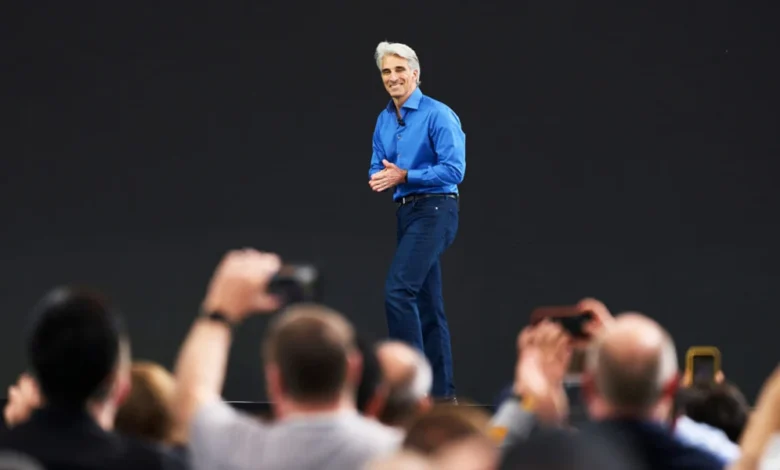
Craig Federighi has been the face of Apple software for over a decade, celebrated for his charismatic stage presence and his deep, hands-on involvement in product development. However, inside the halls of Apple Park, this hands-on approach is reportedly causing friction. Employees within the software engineering and design departments have expressed frustration regarding a management style that leaves little room for alternative perspectives.
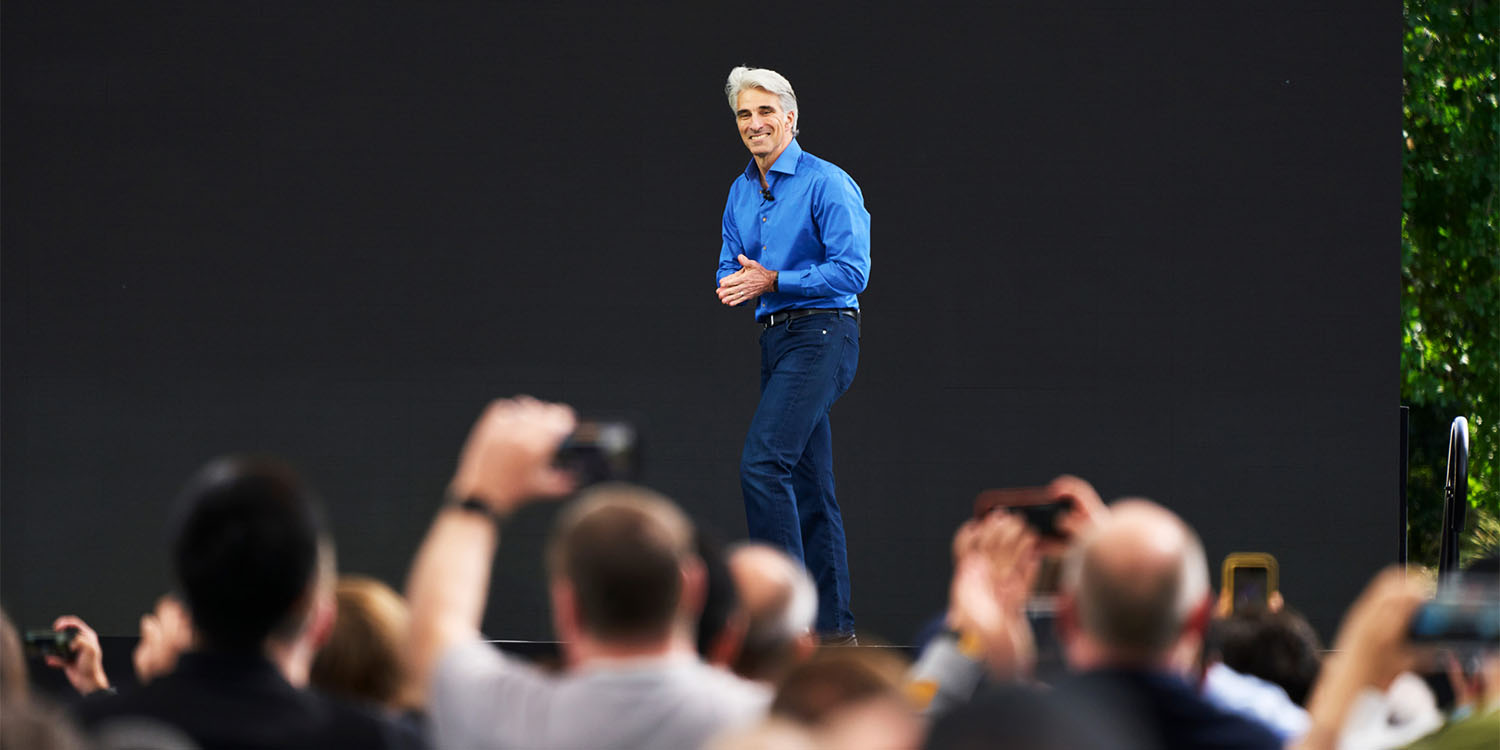
Federighi is well-known for his intellectual dominance in meetings, where he frequently uses his granular command of technical details to debate and often dismiss opposing viewpoints. While this rigor was once the bedrock of Apple’s "it just works" philosophy, some internal teams now describe it as a stifling environment where innovative ideas struggle to gain traction if they deviate from the established roadmap. The implication is that the very traits that made Federighi a successful leader during the era of mobile app dominance are now acting as obstacles in the fast-paced, experimental world of AI.
Leadership Instability: The Potential Departure of Mike Rockwell
The pressure at the top is mirrored by potential instability in key leadership roles. Mike Rockwell, the executive credited with the development of the Vision Pro headset and the current lead for Siri AI, is reportedly considering his departure from the company. Should Rockwell step down, it would represent a significant setback for Apple.
Rockwell has been a central figure in attempting to rehabilitate Siri, a product that has been widely criticized for its stagnation over the past decade. His leadership was instrumental in bringing the latest iterations of Apple’s AI to market, following an embarrassing two-year delay that left the company trailing behind the curve. A departure at this juncture would not only strip the team of a veteran leader but could also further delay the integration of "agentic" capabilities into the Apple ecosystem—a key goal for the company as it moves into the next phase of its AI strategy.
Structural Adjustments and New Development Pipelines
In an effort to alleviate these bottlenecks, Apple is reportedly experimenting with a new development pipeline. Under this proposed structure, engineers would be granted significantly more time—roughly 50% more—to focus on core coding and exploration, rather than being bogged down by the integration-heavy processes that have historically characterized Apple’s releases.
This shift is partly enabled by the rise of "coding agents," AI-assisted development tools that automate mundane programming tasks. By leveraging these tools, Apple hopes to streamline its workflow, allowing its human talent to focus on high-level architecture and feature implementation. This move is a tacit admission that the traditional, labor-intensive way of building software at Apple is no longer sustainable in a world where AI-augmented competitors can iterate with unprecedented speed.
Chronology of Apple’s AI Evolution
- 2011: Siri is introduced as a groundbreaking consumer AI, initially developed by a third-party startup and acquired by Apple.
- 2017-2022: As competitors like Google and Amazon invest heavily in neural networks and LLMs, Siri is perceived as stagnating, with internal teams struggling to modernize its underlying architecture.
- 2023: At WWDC, Apple unveils new privacy-focused AI features, yet still falls behind the rapid growth of ChatGPT and Gemini.
- 2024: Following internal leadership shuffles, Craig Federighi takes a more direct, centralized role in the company’s AI initiatives.
- 2025-2026: Reports emerge regarding the "agentic" vision for Siri, with CEO John Ternus pushing for a fundamental acceleration of the company’s software roadmap.
Broader Implications and Strategic Outlook
The situation at Apple highlights a broader crisis currently facing legacy technology giants: the "Innovator’s Dilemma." Apple has built its reputation on perfection, quality control, and a "walled garden" that prioritizes user experience over raw speed. However, the generative AI revolution favors companies that can move fast and break things—or, at the very least, iterate rapidly based on user feedback.

If Apple fails to bridge the gap between its cautious, long-term design philosophy and the need for agile AI development, it risks losing its relevance as an AI-first platform. The pressure on Federighi is emblematic of a company trying to reconcile its past with a future that demands a fundamental change in how it develops software.
Furthermore, the potential loss of high-level talent like Mike Rockwell underscores the difficulty of maintaining morale during a period of intense internal transformation. If Apple cannot foster an environment where top engineers feel they have influence and autonomy, the company may struggle to retain the very people necessary to build the next generation of intelligent systems.
As Apple looks toward the future, the success of its AI initiatives will likely hinge on its ability to decentralize some of its decision-making. By allowing other leaders to rise and giving its engineering teams more room for experimentation, the company may be able to regain its competitive edge. However, this will require a significant cultural shift—one that may force the organization to prioritize velocity over the absolute, exhaustive control that has defined it for so long.
For now, the mandate from John Ternus is clear: Apple must evolve, and it must do so quickly. Whether that evolution results in a revitalized Siri and a more agile software division, or merely highlights the limitations of Apple’s current management structure, remains the most critical question in the company’s recent history. The coming months will be a litmus test for both Federighi’s ability to adapt his leadership style and Apple’s capacity to pivot its massive, inertia-heavy organization toward the new frontier of AI.
Related posts: