Nugget the black bear awarded the 2026 Annoying Sibling title after persistent summer antics at Alaska’s Anan Creek

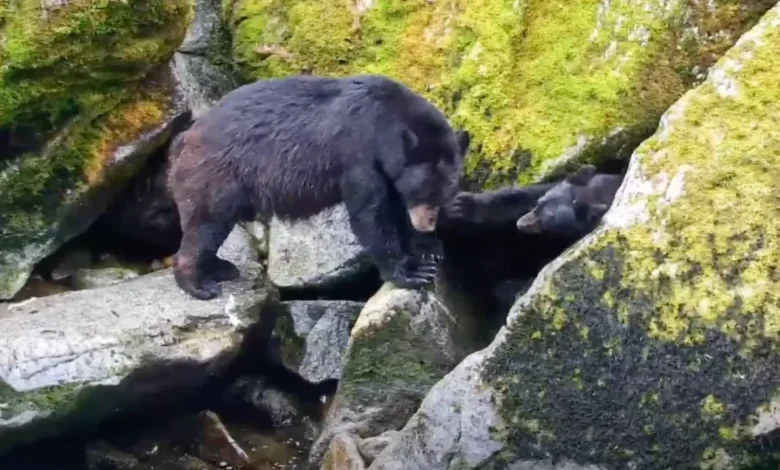
In the vast, rugged wilderness of the Tongass National Forest in southeastern Alaska, the dynamics of ursine social behavior have been brought into sharp focus by the U.S. Forest Service. Among the 39 distinct bears documented at the Anan Wildlife Observatory this year, a young black bear known as Nugget has captured public attention not for his foraging prowess, but for his relentless commitment to pestering his larger sibling, Crescent. This behavioral display, which persisted throughout the summer months, culminated in the U.S. Forest Service officially designating Nugget as the recipient of the 2026 Annoying Sibling Award, a lighthearted but scientifically grounded recognition of sibling hierarchy and social development in black bears.
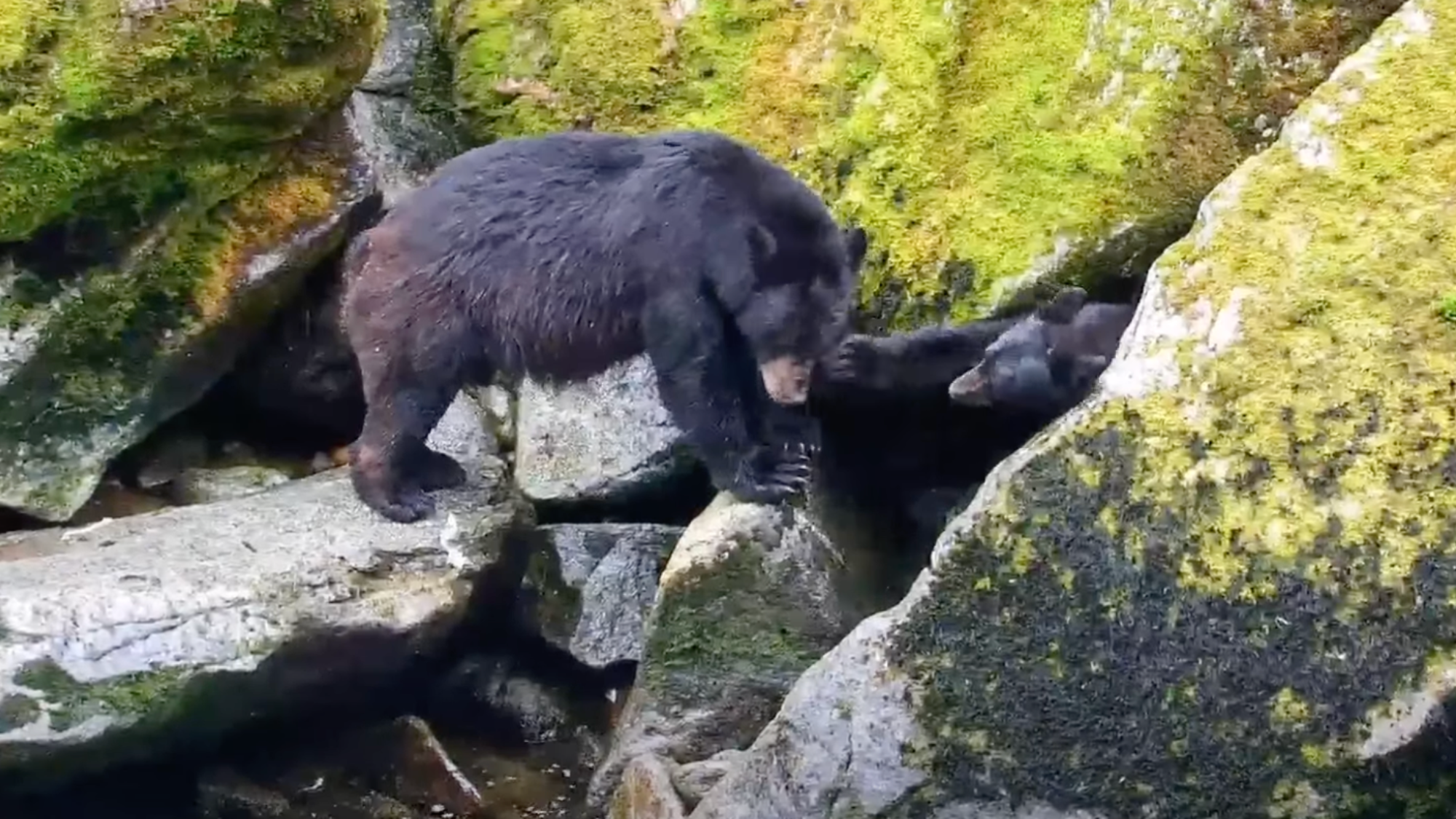
The incident that solidified Nugget’s reputation involved a sustained, 30-minute engagement between the two bears. Rangers stationed at the Anan Creek site observed Nugget—distinguished by his small physical stature, unique goggle-like fur markings, and a coat that transitions from a reddish hue to deep black—repeatedly jabbing at Crescent. The interaction followed a rhythmic pattern: Nugget would emerge from the brush to physically provoke his sibling, leading to a brief, play-oriented sparring session, before retreating only to return moments later to restart the cycle.
The Social Dynamics of Black Bear Siblings
While the behavior was humorous to observers, it provides a window into the complex social lives of Ursus americanus. In the wild, siblings often engage in play-fighting as a crucial developmental tool. These interactions help juveniles refine their motor skills, test physical boundaries, and establish social dominance.
Biologists note that while black bears are generally considered solitary creatures compared to other social mammals, they maintain intricate relationships during their early years. The tolerance shown by Crescent, the larger sibling, is a common trait in adolescent bears as they learn to navigate environmental stressors and competition for resources. According to observations from the U.S. Forest Service, the "Annoying Sibling" interaction is a classic example of social conditioning, where the younger or smaller individual tests the patience and reaction times of its kin.
Anan Creek: A Hub for Ursine Research
The Anan Wildlife Observatory is uniquely positioned to host such behavioral studies. Located within the Tongass National Forest, which serves as the largest national forest in the United States, the observatory offers a rare, high-density environment where black and brown bears congregate. The site is anchored by Anan Creek, which sustains one of the most significant pink salmon runs in all of Southeast Alaska.
This massive influx of salmon serves as a biological magnet, drawing in a population of 39 identified bears—comprised of 31 black bears and 8 brown bears. The annual migration of salmon provides the caloric intake necessary for these animals to survive the impending winter months. Consequently, the observatory acts as a critical classroom for cub development. Mothers utilize the salmon runs to teach their young essential hunting and fishing techniques.
The U.S. Forest Service has implemented a rigorous tracking system for these bears, allowing researchers to document individual habits, growth rates, and social milestones. This data is augmented by live-stream technology provided by explore.org, which broadcasts 24-hour footage of the creek’s lower falls and caves. This transparency has allowed researchers and the public alike to witness the nuances of bear life, moving beyond the traditional image of the bear as a purely predatory or fearsome creature.
Chronology of the 2026 Season
The 2026 summer season at Anan Creek was characterized by high levels of interaction due to stable salmon populations and favorable weather conditions. The chronology of the Nugget and Crescent interactions spanned the height of the spawning season:
- Early Summer: Initial observations indicated that Nugget began exhibiting territorial curiosity, focusing heavily on his sibling’s movements.
- Mid-Season: Increased physical contact was noted by rangers. During this phase, Nugget’s "goggle" markings became more prominent as his summer coat reached its full transition.
- The 30-Minute Engagement: In late summer, the specific encounter that led to the "Annoying Sibling" award was recorded. Rangers noted that the behavior remained within the boundaries of play, suggesting a healthy, albeit irritating, social bond.
- Post-Season Assessment: As the salmon run began to taper off, the U.S. Forest Service finalized their "Anan Bear Awards," a program designed to engage the public in wildlife conservation by highlighting individual bear personalities.
Official Perspectives and Ecological Context
The U.S. Forest Service staff at Tongass have emphasized that these behavioral anecdotes are not merely entertaining; they are vital for public education. By highlighting the unique traits of bears like Nugget, the Forest Service encourages a deeper respect for the ecosystem.
"Well-managed ecosystems and recreation sites on national forests like the Tongass provide unique opportunities to witness scenes like this," the rangers noted in their official release. "It was like watching two siblings fight until the bigger sibling had enough."
From an ecological standpoint, the presence of these bears indicates a healthy, functioning watershed. The Tongass National Forest covers a vast portion of southeastern Alaska, surrounding the capital of Juneau and encompassing critical habitat for salmon, eagles, and large mammals. The management of these areas requires a delicate balance between human tourism—such as the cruise ship industry that frequently visits the region—and the preservation of the bears’ natural behaviors.

Broader Implications for Wildlife Management
The study of bear personality traits, such as those exhibited by Nugget, is becoming an increasingly important facet of wildlife biology. Understanding that individual bears have distinct temperaments allows managers to better predict how human-bear interactions might unfold in shared spaces. When the public perceives animals as individuals with "quirks" and complex social hierarchies, they are statistically more likely to support conservation initiatives.
Furthermore, the comparison to the "Fat Bear Week" phenomena in Katmai National Park is intentional. Like the bears of Katmai, the residents of Anan Creek serve as ambassadors for their species. The use of digital platforms to share these stories has transformed how the public engages with federal land. Instead of viewing the Tongass as a distant, abstract wilderness, citizens are now connected to the daily lives of individual animals, fostering a sense of stewardship that is essential for the long-term protection of these environments.
As the 2026 season concludes, the focus shifts to the upcoming winter hibernation period. For Nugget and Crescent, the lessons learned during their summer at Anan Creek—how to share space, how to manage conflict, and how to tolerate a persistent sibling—will be fundamental to their survival in the years to come. The "Annoying Sibling" award serves as a lighthearted footnote to a serious scientific endeavor: understanding how the next generation of predators develops in one of the last truly wild places in the United States.
The continued documentation of these 39 bears at Anan Creek ensures that the legacy of these interactions will be preserved, providing researchers with longitudinal data that may eventually lead to a better understanding of how climate shifts and changing salmon runs impact the social structure of black bear populations in the Pacific Northwest and Alaska. Through the lens of the U.S. Forest Service and their digital partners, the story of Nugget remains a poignant reminder of the enduring, and often relatable, nature of the wild world.