Oppo cancels the Find X10 Ultra as the smartphone industry grapples with the global RAMageddon crisis

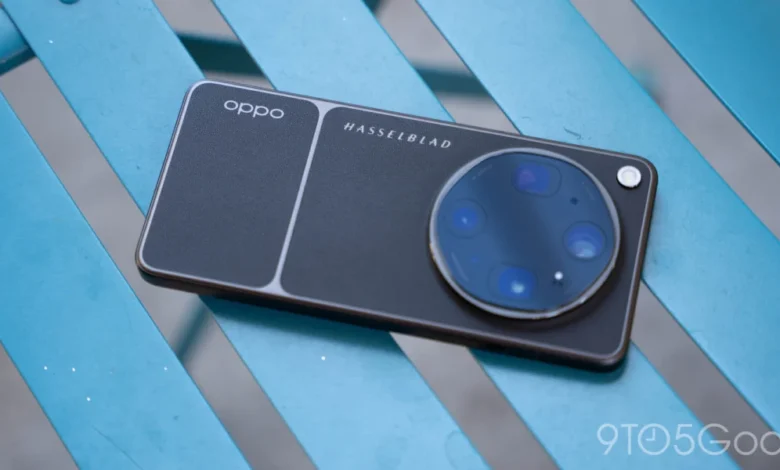
The landscape of the premium smartphone market has shifted significantly as industry reports indicate that Oppo has officially halted development of its highly anticipated Find X10 Ultra. This decision, emerging from industry intelligence shared by the prominent leaker Digital Chat Station, marks a pivotal moment in the current hardware cycle. The cancellation appears to be a direct consequence of the ongoing global memory supply crisis, colloquially referred to in tech circles as "RAMageddon." As manufacturers face unprecedented costs for high-bandwidth memory, the flagship "Ultra" tier—long defined by aggressive hardware specifications and cutting-edge imaging capabilities—is increasingly becoming economically unsustainable.
The Emergence of the Memory Crisis
The term "RAMageddon" refers to the acute shortage and subsequent price inflation of high-speed LPDDR5X and LPDDR6 memory modules. This market instability has been exacerbated by the aggressive expansion of artificial intelligence (AI) applications on mobile devices. Modern flagship smartphones now require significantly higher RAM capacities to handle local large language models (LLMs) and complex machine learning tasks that run on-device.
For companies like Oppo, maintaining the 16GB RAM threshold that defined the Find X9 Ultra has become a logistical and financial hurdle. In the current market, the cost of these memory components has surged, forcing brands to choose between thinning profit margins or compromising on hardware specifications. The Find X10 Pro Max, which currently utilizes a MediaTek chipset and a more modest 12GB RAM configuration, serves as the company’s current attempt to balance performance with a price point that remains palatable for the European market. The feedback regarding that device—which has faced intense scrutiny over its high price-to-value ratio—likely influenced the decision to abandon the more costly Ultra variant entirely.
Chronology of the Find X Series Evolution
The trajectory of the Oppo Find series reflects the broader industry’s pursuit of the "ultimate" smartphone. In 2026, the Find X9 Ultra was widely lauded by critics as the pinnacle of mobile technology. It set a benchmark for hardware, combining a premium Snapdragon processor with an uncompromising camera system.

The following timeline details the shifts in strategy that have led to the current announcement:
- Early 2026: The launch of the Find X9 Ultra establishes Oppo as a leader in mobile photography and processing power. The device is hailed for its 16GB RAM configuration, which ensures future-proof performance for heavy multitasking and AI-driven image processing.
- Mid-2026: Global supply chains begin to experience significant strain. The integration of AI features across the Android ecosystem creates a surge in demand for high-speed memory, outstripping production capacity.
- Late 2026: The release of the Find X10 Pro Max signals a tactical pivot. Recognizing the rising costs of raw materials, Oppo shifts toward a MediaTek platform and scales back the RAM, yet the device struggles to gain traction due to its high retail price in competitive regions.
- Early 2027: Industry leaks indicate that the development of the Find X10 Ultra has been terminated, signaling that the "Ultra" concept is currently incompatible with the economic reality of the component market.
Technical Ambitions Left Behind
The canceled Find X10 Ultra was poised to be an engineering marvel, pushing the boundaries of what is possible in a mobile form factor. According to preliminary leaks, the device was intended to feature a sophisticated quadruple-camera array:
- Main Sensor: A massive 200MP 1/1.12-inch sensor featuring LOFIC (Lateral Overflow Integration Capacitor) technology, designed to handle extreme dynamic range and prevent highlight clipping.
- Periscope Telephoto: A 200MP sensor with a 1/1.3-inch footprint, providing unprecedented detail for long-range zoom capabilities.
- Secondary Telephoto: A 50MP 10x periscope lens for specialized long-distance optical zoom.
- Front-Facing Camera: A unique 100MP square sensor designed to deliver professional-grade portraiture and high-resolution video capture.
By canceling this device, Oppo is effectively shelving a hardware project that would have solidified its dominance in the camera-phone segment. The complexity of the camera module, combined with the massive memory overhead required to process the data from these sensors, likely made the bill of materials (BOM) for the Find X10 Ultra too high to justify for a mass-market flagship.
Market Implications and Future Outlook
The cancellation of the Find X10 Ultra carries significant implications for the smartphone industry at large. It serves as a stark reminder that the "more is better" philosophy regarding hardware specifications is hitting a ceiling dictated by global supply chain economics.
Industry analysts suggest that we are entering an era of "pragmatic flagships." Instead of releasing devices with excessive RAM and experimental, high-cost sensors, manufacturers are expected to focus on software optimization and AI-driven efficiency. By shifting the burden from hardware-heavy architecture to software-based performance improvements, companies aim to maintain user experience without the prohibitive cost of flagship-grade memory components.

Furthermore, this move suggests a broader trend among major Android OEMs (Original Equipment Manufacturers). As the cost of premium components remains volatile, the "Ultra" moniker may become a relic of a time when supply chains were more predictable. Brands are likely to consolidate their lineups, favoring a "Pro" model that offers a balanced feature set, thereby avoiding the volatile costs associated with the extreme high-end tier.
The Role of AI and RAM Demand
The primary driver of the current RAM scarcity is the rapid deployment of on-device AI. As users demand more sophisticated voice assistants, real-time translation, and generative image editing, the need for faster, larger memory pools has grown exponentially.
Mobile processors are no longer just handling the operating system and user-facing apps; they are acting as localized data centers. For a flagship device to run these AI models fluidly, 16GB of RAM has transitioned from a "luxury" feature to a "baseline" requirement. However, as manufacturers bid for limited supplies of high-speed memory modules, the costs are passed down to the consumer, leading to the price spikes seen in late 2026 and early 2027.
Conclusion: A Strategic Retreat
Oppo’s decision to cancel the Find X10 Ultra is a calculated response to a difficult market environment. While consumers and tech enthusiasts may lament the loss of a device that promised to redefine mobile photography, the move reflects a necessary fiscal discipline. In the current economic climate, the viability of a smartphone depends as much on the stability of the supply chain as it does on the innovation found within the chassis.
As the industry moves forward, the focus will likely remain on optimizing existing technologies. Whether this is a temporary pause in the evolution of the Ultra category or a permanent shift toward more streamlined product portfolios remains to be seen. For now, the cancellation of the Find X10 Ultra serves as a definitive marker of the pressures facing modern smartphone manufacturers in the age of RAMageddon. By prioritizing the stability of its remaining product line, Oppo is signaling that it is unwilling to gamble on a product that would likely be priced out of reach for the majority of its customer base.
Related posts: