NASA Achieves Breakthrough in Sustainable Aviation with Successful Structural Testing of Advanced Truss Braced Wing Design

NASA researchers have successfully concluded a rigorous series of structural evaluations on a revolutionary wing design that could redefine the architecture of future commercial aircraft. The 15-foot Structural Wing Experiment Evaluating Truss-bracing (SWEET-15) test article, characterized by its exceptionally long, thin profile and lightweight composite construction, was subjected to grueling stress tests to determine its operational limits. The results, which saw the wing withstand forces significantly beyond its intended design parameters, have provided engineers with a high degree of confidence in the viability of the Transonic Truss-Braced Wing (TTBW) concept. This milestone represents a critical step forward in NASA’s mission to develop ultra-efficient aviation technologies capable of drastically reducing fuel consumption and carbon emissions in the global aerospace sector.
The Engineering Evolution of the Truss-Braced Wing
The SWEET-15 project is a tangible manifestation of years of theoretical research into high-aspect-ratio wing designs. In the quest for greater fuel efficiency, aerodynamicists have long known that longer, thinner wings reduce "induced drag"—the air resistance created by the production of lift. However, as wings become longer and more slender, they become increasingly susceptible to structural instability, such as fluttering or snapping under the immense weight and aerodynamic pressure of flight. Traditionally, to make such a wing strong enough, engineers would have to add so much internal structural weight that the fuel savings from reduced drag would be negated.
To solve this paradox, NASA developed the Transonic Truss-Braced Wing concept. By supporting an elongated wing with an aerodynamic strut—and in some configurations, a secondary "jury strut"—the structure gains the necessary rigidity without the prohibitive weight of a traditional cantilevered wing. The SWEET-15 test article was specifically designed to evaluate how this truss-braced configuration handles the complex distribution of loads experienced during take-off, turbulence, and high-speed maneuvers.
Innovation in Composite Manufacturing and Assembly
The development of the SWEET-15 wing was not merely a feat of aerodynamic design but also a showcase for cutting-edge manufacturing technology. The project integrated five distinct advanced composite manufacturing and assembly technologies, which allowed for a novel structural architecture that would have been impossible with conventional metal alloys.
Central to this fabrication process was the use of the Integrated Structural Assembly of Advanced Composites (ISAAC) robot at NASA’s Langley Research Center in Hampton, Virginia. ISAAC is a massive, high-precision robotic arm capable of laying down composite fibers with extreme accuracy. This technology allows for the creation of "tailored" structures where the strength of the material is concentrated exactly where the stress is highest, allowing for a lighter overall airframe. The manufacturing phase focused on creating a seamless integration between the wing skin and its internal bracing, ensuring that the joints—often the weakest points in an aircraft—were as robust as the main components.
Chronology of the SWEET-15 Testing Program
The journey of the SWEET-15 wing from concept to completion followed a meticulously planned timeline involving multiple NASA centers.
- Design and Fabrication (Langley Research Center): Engineers at Langley spent months designing and analyzing the wing using advanced computational fluid dynamics and structural modeling. Once the design was finalized, the ISAAC robot was utilized to fabricate the 15-foot test article.
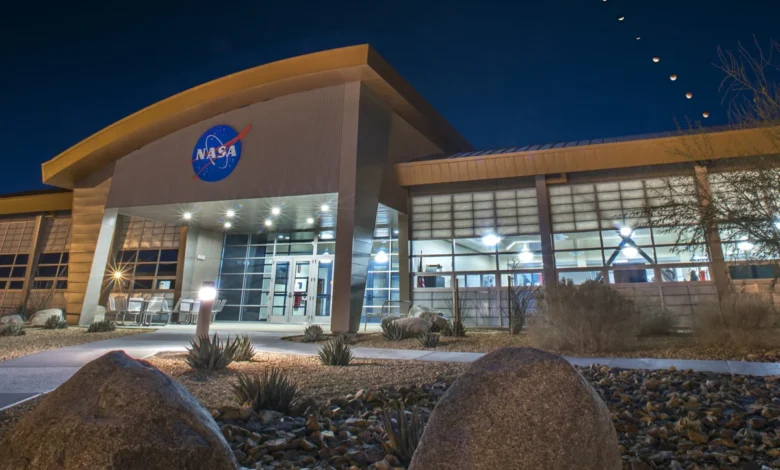
- Transportation and Setup: Following fabrication, the wing was transported to NASA’s Armstrong Flight Research Center in Edwards, California. Armstrong’s Flight Loads Laboratory provided the specialized infrastructure required to simulate the extreme physical stresses of flight in a controlled ground environment.
- Sensor Integration: Before testing commenced, the wing was outfitted with an array of sophisticated sensors. This included traditional strain gauges and NASA’s proprietary Fiber Optic Sensing System (FOSS), which uses hair-thin optical fibers to provide thousands of real-time data points along the length of the structure.
- Incremental Load Testing: Over a period of several months, engineers applied increasing amounts of pressure to the wing. These tests simulated "limit loads"—the maximum force the wing is expected to encounter during its service life.
- Test-to-Failure: The final phase of the program involved a deliberate "test-to-failure." This is a standard but high-stakes procedure in aerospace engineering where the structure is pushed until it physically breaks, allowing researchers to identify the ultimate margin of safety and the specific modes of structural collapse.
Data Analysis and the 127% Failure Threshold
The most significant finding of the SWEET-15 program occurred during the final failure test. Engineers increased the hydraulic pressure on the wing, bending it upward and twisting it to simulate extreme aerodynamic loads. The structure successfully maintained its integrity well past the 100% design limit. It was not until the load reached approximately 127% of its intended design limit that the wing finally suffered a structural failure.
The failure manifested as visible damage near the trailing edge of the wing and within the upper wing cover. For the research team, this was a resounding success. In the aerospace industry, a structure that fails at exactly 100% is considered too risky, while one that fails at 200% is considered over-engineered and unnecessarily heavy. A failure at 127% indicates a highly optimized design that provides a substantial safety buffer while remaining lightweight enough to be economically viable for commercial use.
The data gathered by the FOSS sensors confirmed that NASA’s predictive computer models were remarkably accurate. This alignment between digital simulation and physical reality is crucial, as it allows engineers to iterate future designs in a virtual environment with the confidence that the results will translate to the real world.
Collaborative Efforts and Technological Synergy
The success of the SWEET-15 test was the result of a broad collaboration within NASA’s Research Technology Mission Directorate. The project utilized resources from the Subsonic Flight Demonstrator (SFD) project, which is tasked with accelerating the development of technologies that can achieve net-zero carbon emissions by 2050.
The use of the Fiber Optic Sensing System (FOSS) was particularly noteworthy. Originally developed to monitor the structural health of spacecraft during the high-vibration environment of launch, FOSS has proven to be an invaluable tool for aeronautics. Unlike traditional electronic sensors, which require heavy wiring and can be susceptible to electromagnetic interference, fiber optics are lightweight and can be embedded directly into the composite layers of the wing. This provides a "nervous system" for the aircraft, allowing for real-time monitoring of structural health throughout the plane’s lifecycle.
Broader Implications for Commercial Aviation
The implications of the SWEET-15 results extend far beyond the laboratory. The aviation industry is currently facing immense pressure to reduce its environmental footprint. Aviation accounts for approximately 2% to 3% of global carbon emissions, and with air travel expected to grow in the coming decades, radical new designs are required to meet international sustainability goals.
The Truss-Braced Wing is a cornerstone of NASA’s Sustainable Flight National Partnership. The agency has partnered with Boeing to develop the X-66A, a full-scale flight demonstrator based on the TTBW concept. The data from the SWEET-15 tests will directly inform the construction of the X-66A, which is expected to begin flight testing later this decade.
If successfully implemented on a global scale, TTBW technology, when combined with other advancements in propulsion and materials, could lead to aircraft that are up to 30% more fuel-efficient than today’s most advanced single-aisle planes, such as the Boeing 737 MAX or the Airbus A320neo. For airlines, this translates to billions of dollars in saved fuel costs; for the environment, it represents a significant reduction in the carbon intensity of air travel.
Conclusion and Future Outlook
With the completion of the SWEET-15 structural evaluation, NASA researchers are now pivoting to the next phase of analysis. The focus will shift to a deep-dive forensic study of the failed components to understand the microscopic behavior of the composite resins and fibers at the moment of rupture. This "post-mortem" analysis will help refine the manufacturing processes used by the ISAAC robot, potentially leading to even lighter and stronger wing joints.
The success of the SWEET-15 wing is a testament to the power of cross-center collaboration and the effectiveness of NASA’s incremental approach to high-risk engineering. By proving that an ultra-thin, truss-supported wing can exceed its structural requirements by a wide margin, NASA has cleared one of the most significant technical hurdles facing the next generation of sustainable aircraft. As the industry looks toward a net-zero future, the long, thin silhouette of the truss-braced wing may soon become a common sight in the skies, marking a new era of aerodynamic efficiency.
Related posts: