Beyond the Perseids: A Comprehensive Guide to the 2026 Summer Meteor Showers and Celestial Displays

The 2026 summer astronomical calendar promises a dense schedule of celestial events, headlined by the renowned Perseid meteor shower but bolstered by six additional minor streams that offer a continuous display of "shooting stars" from mid-July through late August. While the Perseids traditionally capture the public’s imagination due to their high frequency and reliable brightness, astronomers emphasize that the cumulative effect of these lesser-known showers—the Capricornids, Delta Aquarids, Piscis Australids, Alpha Capricornids, Iota Aquarids, and Kappa Cygnids—creates a unique observational window for patient skywatchers. As Earth traverses various debris fields left behind by passing comets and asteroids, the Northern Hemisphere serves as a front-row seat to a complex intersection of cosmic trails.
In 2026, the observational conditions will vary significantly based on the lunar cycle. The moon, acting as a natural source of light pollution, will pose a challenge for showers peaking in late July, though it will vanish just in time to provide the dark skies necessary for a spectacular Perseid peak in mid-August. Understanding the nuances of these seven distinct meteor streams, including their velocities, radiant points, and parent bodies, is essential for anyone looking to maximize their time under the stars this summer.
The Mechanics of a Summer Meteor Season
A meteor shower occurs when the Earth passes through a stream of orbital debris—typically dust and small rocks—shed by a comet or, occasionally, an asteroid. These particles, known as meteoroids, enter the Earth’s atmosphere at velocities ranging from 11 to 72 kilometers per second. The friction between the meteoroid and the atmospheric gases generates intense heat, ionizing the air and creating the glowing streak of light we identify as a meteor.
The "radiant" is the perspective-driven point in the sky from which the meteors appear to originate. While meteors can appear anywhere in the sky, tracing their paths backward will lead to this specific constellation. For the summer of 2026, the overlapping nature of these showers means that a single hour of observation might reveal meteors originating from several different radiants, each characterized by different speeds and colors.
Chronology of the 2026 Summer Meteor Showers
The summer season is not a single event but a tiered progression of activity. The following timeline outlines the peak periods and durations for the seven primary showers active between July and August.
The Capricornids (July 10 – August 15)
The season begins in earnest with the Capricornids. Peaking on July 25, this shower is known for being sparse but producing relatively bright, slow-moving meteors. With a peak rate of only a few meteors per hour, they are often difficult to distinguish from sporadic meteors—those not associated with any specific shower—unless their paths are carefully traced back to the constellation Capricornus. In 2026, the waxing gibbous moon will set around 1:40 a.m. on the peak night, providing a window of dark sky until dawn.
The Delta Aquarids (July 12 – August 23)
The Delta Aquarids represent the most significant activity in July, peaking on July 29. This shower is unique because it features a double radiant, suggesting the Earth is passing through two distinct branches of a debris stream, likely associated with Comet 96P/Machholz. Under ideal conditions, observers can see between 20 and 30 meteors per hour. These meteors are generally faint and move at medium speeds. Unfortunately, the 2026 peak coincides with a full moon, which will likely wash out all but the brightest streaks.
The Piscis Australids (July 10 – August 10)
Peaking on July 30, the Piscis Australids are primarily a Southern Hemisphere event, though they are visible from lower northern latitudes. The radiant is located near Fomalhaut, the brightest star in the constellation Piscis Austrinus. While the rate is low—averaging eight per hour—the shower adds to the general "background noise" of meteor activity in late July. Like the Delta Aquarids, this shower will suffer from heavy lunar interference in 2026.
The Alpha Capricornids (July 7 – August 15)
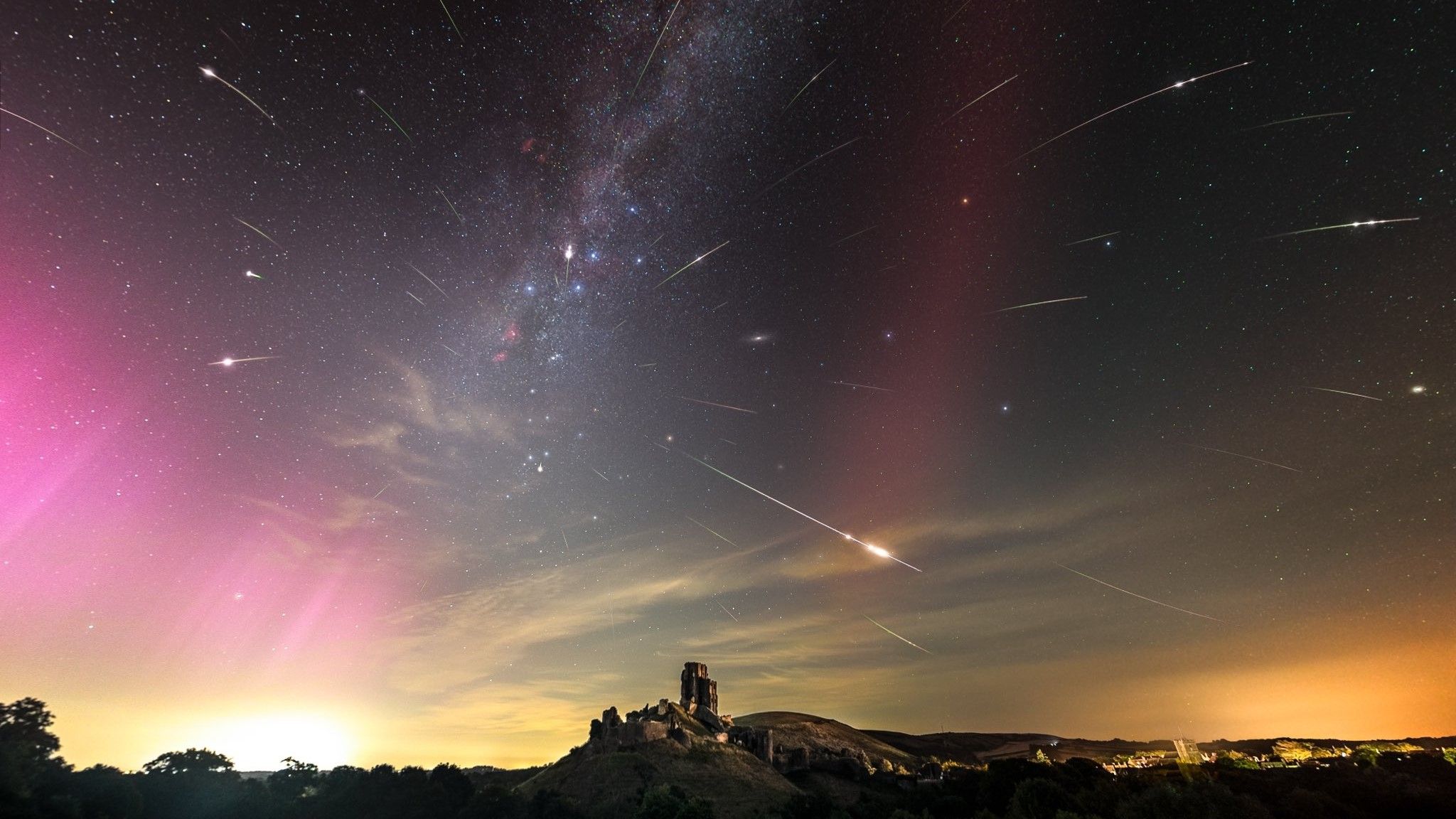
Despite their low frequency (roughly five per hour), the Alpha Capricornids are a favorite among astrophotographers. Peaking on July 31, they are famous for producing slow, bright, yellow fireballs that can cross a large portion of the sky. These "fireballs" are meteors that appear brighter than any of the planets. In 2026, the 93% illuminated moon will hinder visibility, but the sheer brightness of Alpha Capricornid fireballs often allows them to remain visible even in moonlight.
The Iota Aquarids (July 15 – August 25)
The Iota Aquarids are another two-radiant shower, peaking on August 6. With an hourly rate of approximately six meteors, they serve as a precursor to the Perseids. In 2026, a last-quarter moon will rise around 2:30 a.m., providing some interference during the prime viewing hours of the early morning.
The Perseids (July 17 – August 24)
The Perseids are the undisputed highlight of the summer. Derived from the debris of Comet 109P/Swift-Tuttle, they are known for their high speeds (59 km/s) and frequent "trains"—persistent trails of ionized gas that linger after the meteor has vanished. The 2026 peak is predicted for the morning of August 13. Crucially, the moon will be in its new phase on August 12, ensuring perfectly dark skies. During the peak, rates can exceed 50 to 100 meteors per hour in rural areas.
The Kappa Cygnids (August 3 – August 25)
The summer season concludes with the Kappa Cygnids, peaking on August 17. While the rate is low (four per hour), the radiant is positioned high in the northern sky near the "Northern Cross" of Cygnus. These meteors are known for being slow-moving and occasionally flaring into brilliant fireballs. With the waxing crescent moon setting early in the evening, 2026 offers excellent conditions for this final summer display.
Supporting Data: Understanding Velocities and Cometary Origins
The diversity of the summer showers is rooted in the different orbits of their parent bodies. The velocity of a meteor is determined by the angle at which the debris stream intersects Earth’s orbit.
- Perseids: Originating from Comet Swift-Tuttle, these hit Earth’s atmosphere almost head-on, resulting in high velocities of 59 km/s (132,000 mph). This high energy often results in bright, white-blue streaks.
- Alpha Capricornids: These move at a much more leisurely 23 km/s (51,000 mph). Because they spend more time burning in the upper atmosphere, they often appear more colorful and are more likely to terminate in a visible explosion or "bolide."
- Delta Aquarids: These enter at approximately 41 km/s (92,000 mph). Their parent body, Comet 96P/Machholz, has a highly eccentric orbit that brings it very close to the Sun, which may explain the specific composition and faintness of the resulting meteors.
Observational Strategy and Technical Advice
For the best experience during the 2026 season, astronomers suggest moving away from urban centers. The "Bortle Scale," which measures the darkness of the night sky, is a critical factor; a rate of 50 meteors per hour in a Bortle 2 (truly dark) sky can drop to near zero in a Bortle 8 (city) environment.
Using Your Hands as Celestial Tools
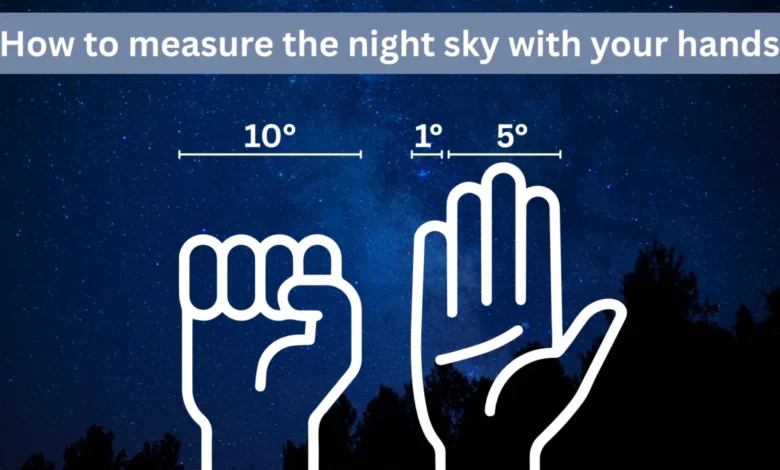
To locate radiants or measure distances from the horizon, observers can use their hands at arm’s length. A clenched fist represents approximately 10 degrees of the sky. The three middle fingers represent 5 degrees, and the pinky finger represents 1 degree. Most summer radiants reach their peak altitude (their highest point in the sky) between 2:00 a.m. and 4:00 a.m., which is generally the best time for viewing.
Physical Preparation
Meteor watching is a marathon, not a sprint. Experts recommend "dark adapting" your eyes for at least 20 to 30 minutes by avoiding all white light, including smartphone screens. If light is necessary, a red-filtered flashlight should be used, as red light does not trigger the pupil-constriction reflex. Due to the phenomenon of radiational cooling, ground temperatures can drop significantly even on warm summer nights; observers are advised to use reclining lawn chairs, heavy blankets, and insulated clothing to prevent chill during long periods of stillness.
Broader Impact and Scientific Implications
While meteor showers are a popular public spectacle, they also provide valuable data for the scientific community. Organizations such as the American Meteor Society (AMS) and the International Meteor Organization (IMO) rely on "citizen science" reports to track changes in meteor stream density. A sudden "outburst" in a minor shower can indicate that a parent comet has recently shed a new pocket of debris, providing clues about the comet’s activity and the evolution of the solar system.
Furthermore, the study of meteor trajectories helps aerospace agencies assess risks to satellites and spacecraft. During peak Perseid activity, for instance, satellite operators may orient sensitive equipment away from the radiant to minimize the risk of high-velocity dust impacts.
Conclusion: The 2026 Outlook
The 2026 summer meteor season offers a study in contrasts. The late July showers will test the resolve of skywatchers as they contend with a bright moon, requiring them to focus on the pre-dawn hours after moonset or search specifically for the brightest fireballs. However, this patience will be rewarded in August. The alignment of the Perseid peak with a new moon creates a "perfect storm" for astronomical observation, promising one of the best displays of the decade.
By viewing the summer as a continuous cycle of activity rather than a series of isolated events, observers can appreciate the complex choreography of our solar system. Whether it is the slow, majestic fireball of an Alpha Capricornid or the lightning-fast streak of a Perseid, the 2026 season stands as a reminder of the dynamic and ever-changing nature of the night sky. For those willing to venture into the dark, the rewards are both scientific and sublime.
Related posts: