Amazon S3 Tables Introduces Managed Migration Pathways from Apache Hive to Apache Iceberg for Streamlined Data Lake Modernization

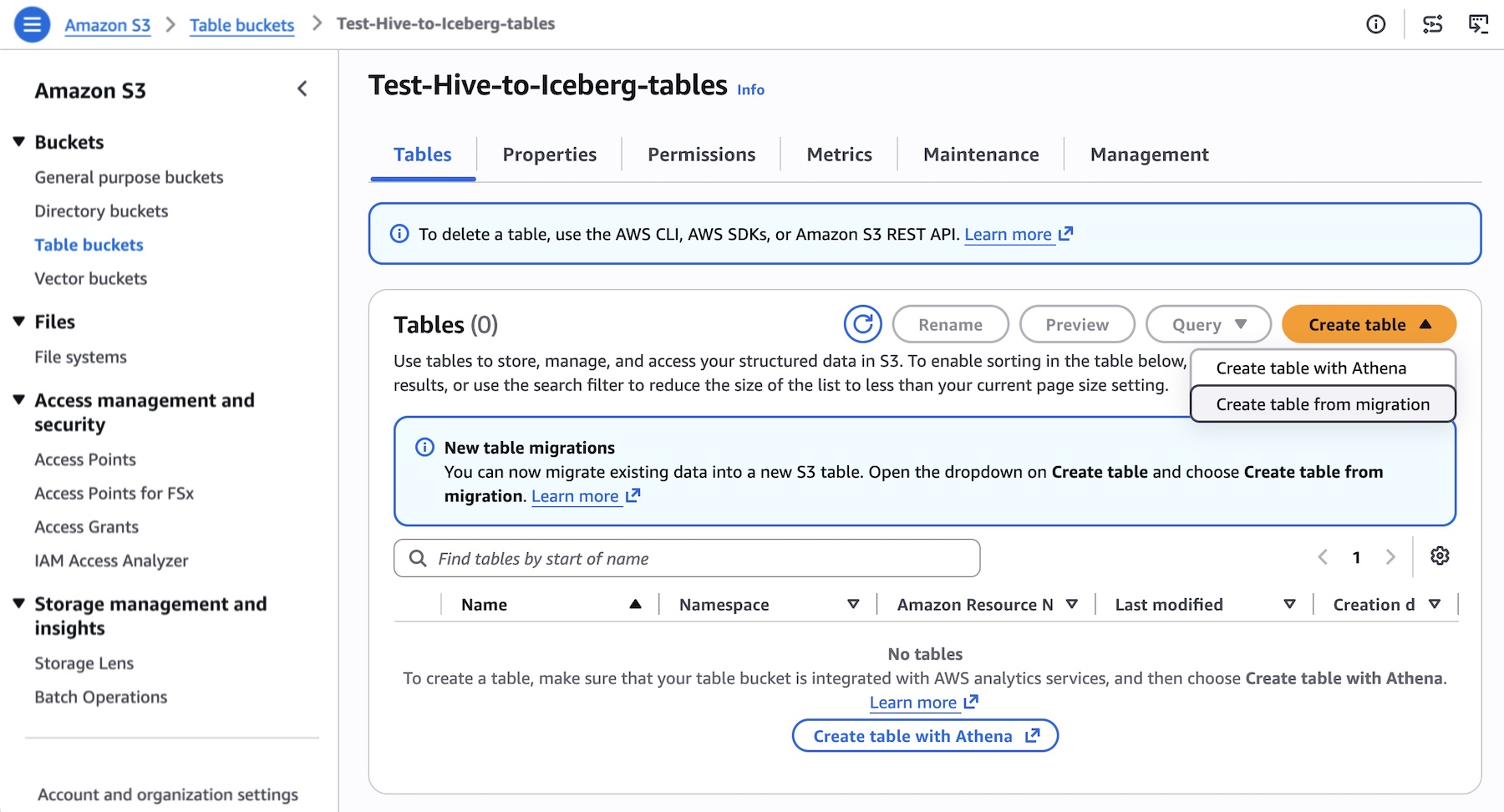
Organizations managing petabyte-scale data lakes have long grappled with the operational friction of upgrading legacy architectures. Historically, transitioning structured data frameworks from Apache Hive to Apache Iceberg—the modern open standard for large-scale analytics datasets—demanded weeks of meticulous engineering work. Teams were forced to manually provision custom compute infrastructure, construct complex data pipelines, translate disparate data types, and design intricate rollback mechanisms to prevent production disruptions. This technical overhead diverted valuable engineering hours away from core product development and analytics initiatives.
Addressing these systemic challenges, Amazon Web Services (AWS) has announced a fully managed, API-driven migration capability within Amazon S3 Tables. This new service is designed to simplify data lake modernization by enabling seamless transitions of Parquet-formatted Apache Hive tables—registered in the AWS Glue Data Catalog—directly into high-performance Apache Iceberg tables. Crucially, the solution operates without requiring developers to build custom migration pipelines or provision dedicated compute resources. Production workloads can continue uninterrupted throughout the transition phase, ensuring high availability and operational continuity for enterprise applications.
Technical Architecture and Migration Workflow
The newly introduced managed migration workflow fundamentally shifts the burden of data transformation and validation from engineering teams to the cloud infrastructure provider. When initiating a migration, S3 Tables automatically manage the entire lifecycle of the process, including comprehensive data validation, compatibility checks, data type conversions, file recompression, and compaction.

Before any data is copied, the service performs an exhaustive inventory of all source objects in scope, generating a detailed compatibility report. This proactive assessment allows database administrators and data engineers to identify and resolve potential schema discrepancies or unsupported data types prior to execution.
The mechanics of the migration are structured to minimize downtime:
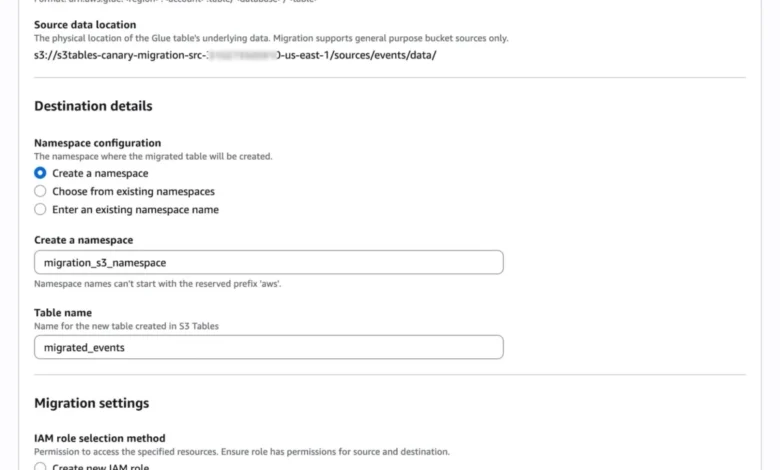
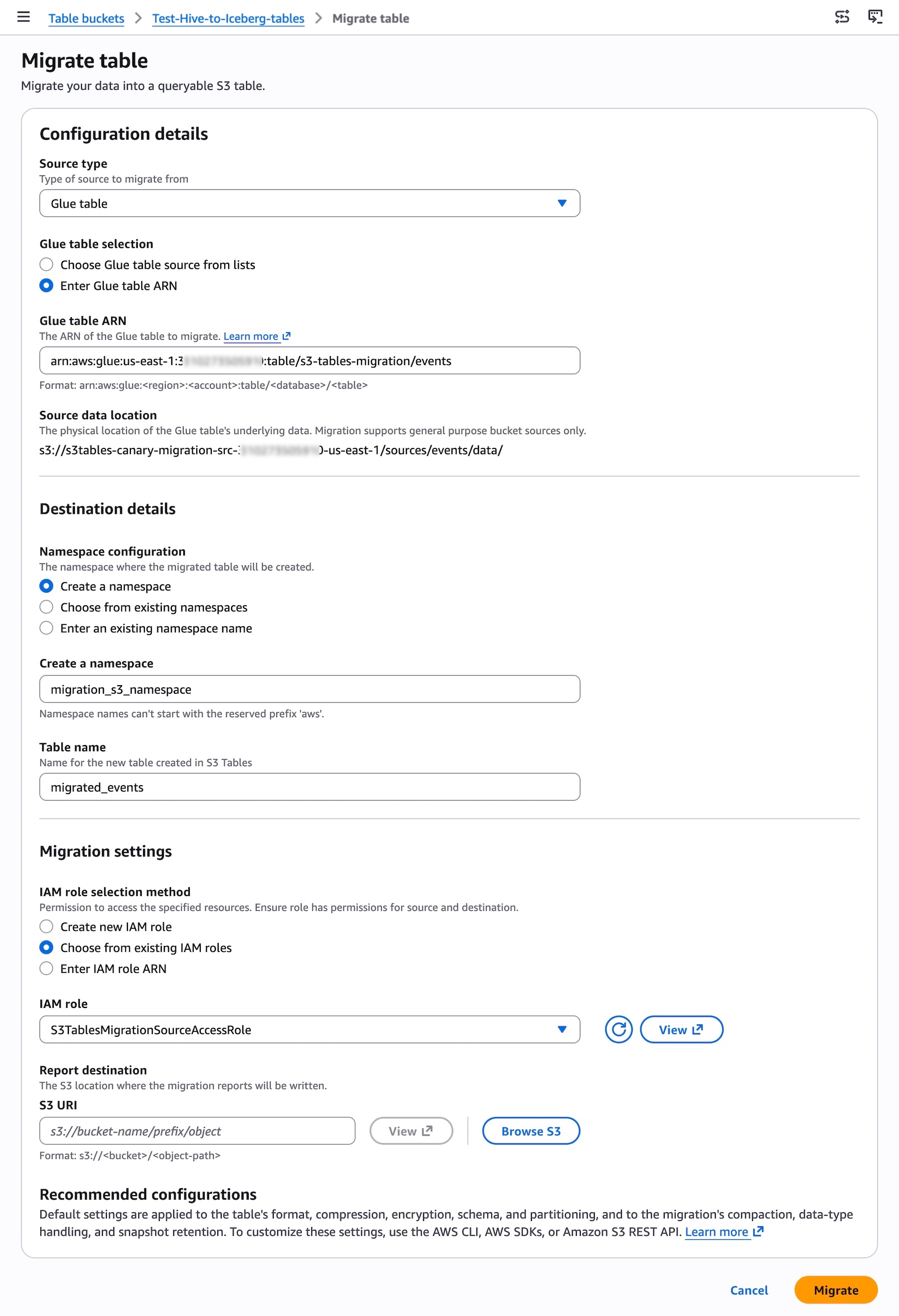
- Initialization: Users select a destination table bucket via the Amazon S3 console, define a namespace and table name, and trigger the migration operation using recommended default settings optimized for query performance and storage efficiency.
- Read-Only State and Syncing: Upon initiation, the destination table enters a read-only state while initial data copying occurs. Organizations can execute incremental synchronization commands as frequently as necessary to capture ongoing modifications in the source table. Each sync operation exclusively processes newly modified data, ensuring efficiency.
- Cutover and Promotion: The final cutover requires only a brief window during which the source table writes are paused. Once completed, the destination table is promoted to read-write status, instantly enabling direct querying through analytical engines such as Amazon Athena and Amazon SageMaker Unified Studio, as well as any tool supporting the Apache Iceberg REST API.
For automation and enterprise-scale orchestration, developers can bypass the console and utilize the AWS Command Line Interface (AWS SDKs), the Agent Toolkit for AWS, or structured JSON configuration payloads paired with the start-table-migration and sync-table-migration API commands.
Economic Efficiency and Cost Structures
In enterprise cloud migration projects, cost containment is a primary consideration. Traditional self-managed migration architectures frequently incur significant expenses associated with temporary compute provisioning, data staging, and duplicated storage tiers during conversion cycles.

Amazon S3 Tables addresses these financial concerns through a streamlined pricing model. Organizations incur charges solely for the volume of data explicitly copied to the destination table. AWS imposes no additional fees for the Hive-to-Iceberg conversion process itself. Furthermore, source objects stored within S3 Intelligent-Tiering remain in their existing access tiers throughout the operation, preventing unexpected tier-transition fees and preserving overall cloud storage cost-efficiency.
Background Context and Industry Evolution
The rapid ascent of Apache Iceberg as the dominant open table format for data lakes stems from its advanced feature set, which addresses foundational limitations inherent in older formats like Apache Hive. Iceberg provides critical capabilities required by modern data-driven enterprises, including robust schema evolution, hidden partitioning to accelerate query performance, and time-travel queries that allow data engineers to inspect historical states of datasets.
Despite these clear advantages, migration friction has remained a persistent bottleneck. Many enterprise data estates were built years ago on Apache Hive metastores, accumulating petabytes of historical Parquet data. Rewriting these legacy systems manually introduced severe risks of data corruption, schema misalignment, and extended system outages. By embedding native migration capabilities directly into S3 Tables, AWS is effectively bridging the gap between legacy infrastructure and modern open-standard analytics architectures.
Official Responses and Strategic Implications
Industry analysts observe that this capability aligns with a broader macroeconomic trend toward reducing operational complexity in cloud environments. As organizations face tighter budgets and increased demands for real-time analytics, automated infrastructure modernization tools provide a distinct competitive advantage.
Although explicit public quotes from external enterprise clients are forthcoming, internal AWS deployment metrics and early technical previews indicate strong demand from data-intensive sectors such as financial services, digital retail, and healthcare. These industries routinely process massive volumes of structured log data, transactional records, and user telemetry—workloads that stand to gain immediate performance improvements from Iceberg’s columnar layout and maintenance automation features.
Furthermore, the integration of coding agents and specialized skills within the Agent Toolkit for AWS—such as the migrating-hive-tables-to-s3-tables skill—signals a strategic shift toward AI-assisted cloud administration. By providing step-by-step guidance embedded with automated safety guardrails, AWS is lowering the technical barrier to entry for complex data architecture overhauls.
Regional Availability and Launch Scope
At launch, the managed migration capability for Amazon S3 Tables is available across a broad footprint of AWS regions, including:
- North America: US East (N. Virginia), US East (Ohio), and US West (Oregon).
- Asia Pacific: Mumbai, Singapore, Sydney, and Tokyo.
- Europe: Frankfurt, Ireland, and Stockholm.
The current feature release supports AWS Glue-registered Hive tables stored in Parquet format, operating within the same AWS account and AWS Region. Developers seeking to integrate these capabilities into existing automation scripts can leverage the AWS Model Context Protocol (MCP) Server and associated plugins to query documentation, verify regional endpoints, and troubleshoot deployment parameters.
As organizations continue to consolidate their data lakes around open standards, managed migration frameworks like those introduced by Amazon S3 Tables are expected to accelerate enterprise timelines, transforming multi-week engineering projects into streamlined, API-driven operations.