The Future of Wearable Tech: Researchers Develop the World’s First Functional Touchscreen Fabric

For over a decade, the promise of “smart clothing”—garments that seamlessly integrate digital functionality into the fabric of our lives—has remained largely relegated to the realm of experimental prototypes and niche wearables. While industry giants like Google attempted to bridge the gap between textiles and technology with the 2017 launch of the Jacquard trucker jacket, the reality of these products often felt underwhelming. The Jacquard project, which allowed users to control music or phone cameras via haptic cuff sensors, offered a glimpse of the potential, yet it lacked the transformative power to truly displace the mobile device. Ultimately, the project was shuttered in 2023, leaving a vacuum in the wearables market that inventors have been eager to fill.
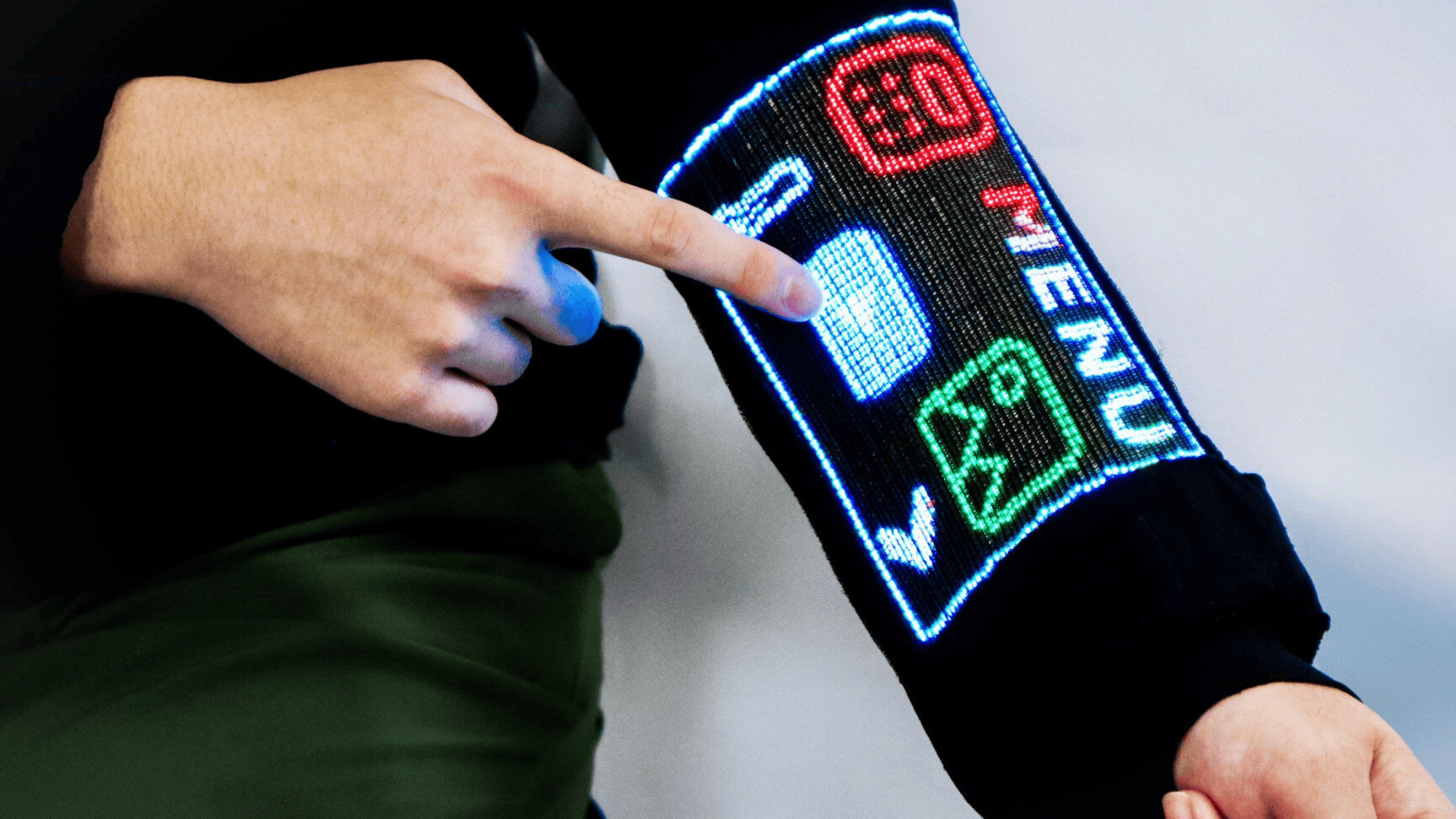
A breakthrough from the National University of Singapore (NUS) College of Design and Engineering now suggests that the next generation of smart clothing will not just sense input, but function as a complete, integrated display. Researchers there have successfully engineered a flexible, wearable fiber that functions as a digital pixel, allowing them to weave a fully operational touchscreen directly into the forearm of a garment.
A Technological Paradigm Shift: From Sensors to Displays
The challenge of creating a "Garment GUI" (Graphical User Interface) has historically been hindered by the inherent geometry of textiles. Traditional electronics are designed for two-dimensional, rigid silicon wafers, whereas clothing is one-dimensional, axially symmetric, and inherently dynamic. To overcome this, the NUS team, led by Assistant Professor Tural Khudiyev, developed a sophisticated interconnection architecture that treats electronic fibers like traditional yarn.
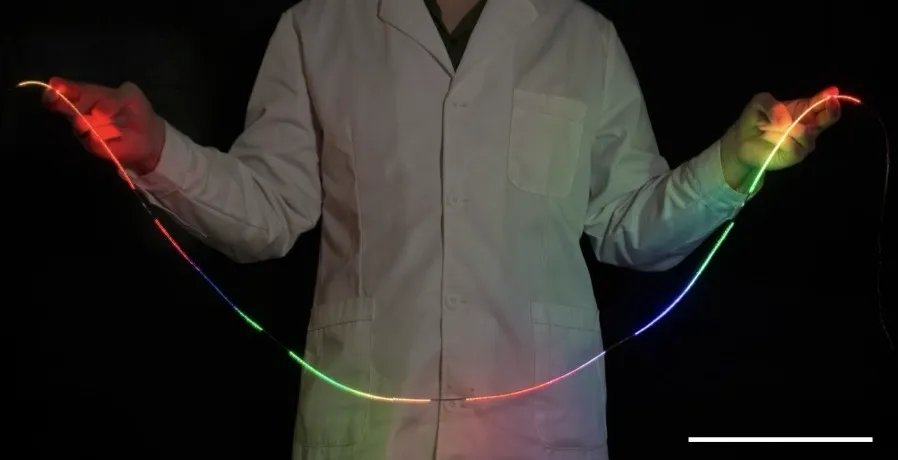
The resulting technology is a masterclass in micro-engineering. The researchers utilized laser-guided molten solder—a technique borrowed from industrial circuit board manufacturing—to create precise connection points along thin, insulated wires. This process allowed them to integrate over 5,000 microchips and more than 20,000 individual electrical components into a single, multilayer thread. The final fiber measures only one millimeter in thickness—thinner than a standard credit card—yet it possesses the computational capacity to drive a high-density display.
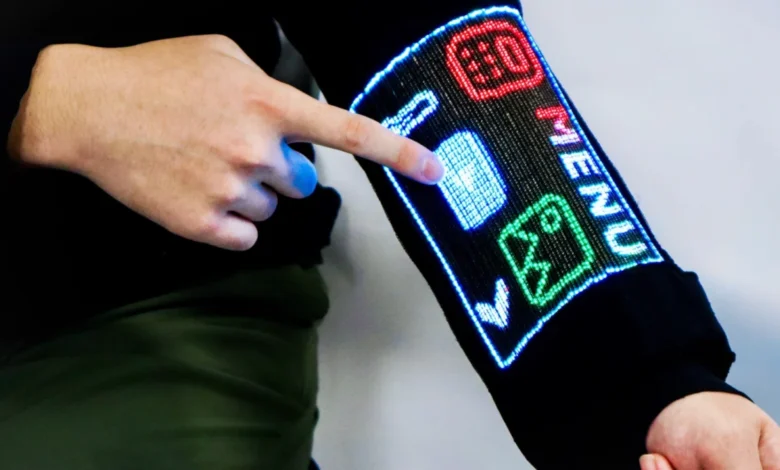
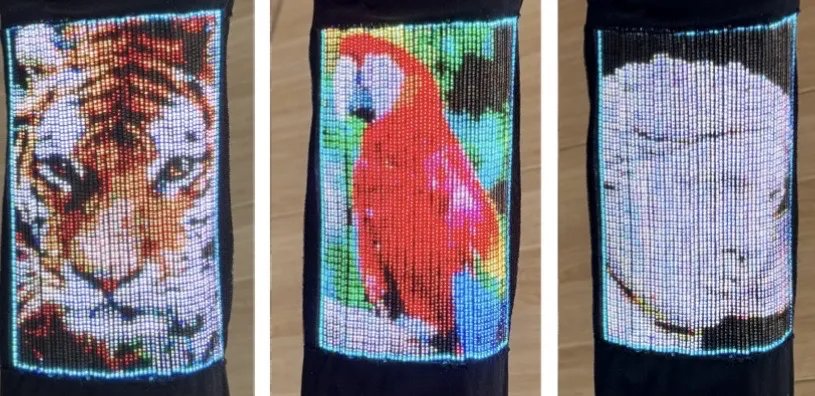
When woven into a garment, these fibers form a 6.6 by 4.3-inch interface. The display operates at a 96 by 54-pixel resolution, supporting 8-bit color depth. While this may sound modest compared to the retina displays of modern flagship smartphones, it is sufficient to render photos, play video content, and run basic applications such as a calculator, a compass, or a health-monitoring dashboard.

Chronology of Wearable Evolution
The development of the touchscreen fabric is the culmination of fifteen years of iterative research in the field of e-textiles. The timeline of this evolution highlights the rapid shift from basic conductivity to complex computation:
- 2010–2015: The "Conductive Thread" Era. Researchers focused on weaving metallic threads into cotton to allow for basic touch-sensing, largely for laboratory use.
- 2017: The Google-Levi Jacquard Collaboration. This marked the first high-profile commercial entry, introducing haptic touch-strips on denim cuffs.
- 2020–2022: Advanced Material Science. The integration of LEDs directly into yarn began to show promise in academic journals, though these prototypes were typically rigid and non-washable.
- 2023: The decline of simple smart fabrics. Google’s decision to sunset the Jacquard project signaled a realization that consumers did not want mere "remotes" for their phones; they wanted functional, independent interfaces.
- 2026: The NUS "Garment GUI" Breakthrough. The publication of the findings in the journal Nature established a new standard for durability, washability, and integrated display technology.
Performance Metrics and Real-World Durability
A critical hurdle for any wearable technology is the "laundry test." Previous iterations of smart fabrics often failed after just a few wash cycles due to the fragility of the micro-interconnects. The NUS team’s approach relies on a robust encapsulation method that shields the delicate circuitry from water, detergents, and physical friction.
During rigorous laboratory testing, the touchscreen shirt was subjected to 1,000 stress-test cycles and 50 standard machine-wash sessions. Following this extreme durability testing, the display and the touch-sensitive matrix remained operational, with no significant degradation in performance. The fabric maintained its breathability, mimicking the tactile properties of heavy cotton or denim, effectively masking the complex hardware hidden within the weave.
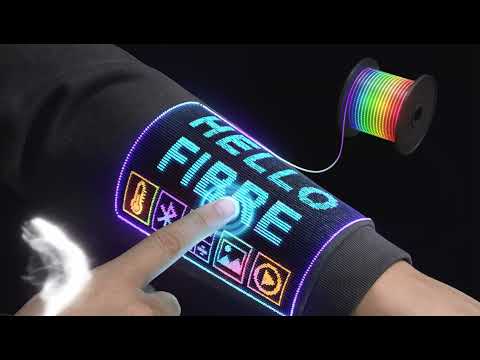
In practical demonstrations, the shirt was linked to a smartphone via Bluetooth. It successfully displayed images with a clear, albeit stylized, resolution, and played video content at a stable 30 frames per second. While audio synchronization currently introduces a minor performance lag—dropping frame rates to 25 FPS—the overall user experience is described as smooth and responsive.
Implications for Health and Human-Computer Interaction
The implications of such a technology extend far beyond the novelty of "back-of-the-hand math." By embedding the interface into the user’s clothing, the device offers a new paradigm for passive health monitoring. According to the research team, the fibers can be configured to read body temperature and transmit physiological data in real-time.
"What made this possible was our ability to construct the GUI system from electronic building blocks in fiber form," said Assistant Professor Khudiyev. "We have created a platform where microelectronic devices can be interconnected along a fiber, effectively turning the garment into a second skin that is also an active display."
This innovation could significantly alter the trajectory of the assistive technology market. For individuals with limited mobility, a sleeve-based display provides an always-available interface for voice commands and emergency alerts. Furthermore, by placing information directly on the forearm, the technology aims to reduce the "neck-down" posture associated with chronic smartphone usage, though experts note that this will only be truly effective if the interface provides enough utility to stop users from reaching for their primary devices.
Industry Challenges and Future Outlook
Despite the excitement surrounding the NUS study, significant challenges remain before these shirts reach the retail market. Power management remains the most pressing concern. While the current prototype can run common apps, the study has yet to detail the power density of the internal batteries or how they are integrated into the garment’s design. Charging a piece of clothing requires a departure from traditional USB-C or wireless induction standards, necessitating a new ecosystem of power-delivery accessories for the wardrobe of the future.
Furthermore, there is the question of the "digital divide." If smart clothing becomes a platform for advertising or data harvesting, privacy concerns will likely exceed those currently associated with mobile phones. As clothing becomes an extension of the digital self, the security of the data flowing through the fabric’s fibers will become a critical area of policy debate.
The "Garment GUI" represents a milestone in material science, successfully merging the durability of textiles with the complexity of silicon-based electronics. While it is not yet ready to replace the iPhone or the Android ecosystem, it serves as a tangible blueprint for the future. We are entering an era where our clothing will no longer just protect us from the elements, but will serve as an active, intelligent interface that blurs the line between human anatomy and the digital world. For now, the team continues to refine the technology, aiming to improve resolution and power efficiency—a task that is as much about precision tailoring as it is about advanced electrical engineering.