Halloween in Orbit: How International Space Station Crews Celebrate Amidst the Stars

While the International Space Station (ISS) operates 250 miles above Earth, orbiting at approximately 17,500 miles per hour, the human element of space exploration remains tethered to the cultural traditions of those residing on the surface. October 31 holds a unique place in the microgravity environment, where the absence of trick-or-treaters does not preclude the crew from observing the festivities. For over two decades, the ISS has served as a rotating home for international astronauts and cosmonauts who have successfully adapted the secular holiday of Halloween to the constraints and creative possibilities of a high-tech orbital laboratory.
The Evolution of Extraterrestrial Celebrations
The tradition of celebrating Halloween in space began in the early years of the ISS habitation era. As the station evolved from a construction project into a permanent research facility, the crew complement grew, allowing for a more communal atmosphere. Early celebrations were modest, often involving small decorations brought from Earth or improvised costumes constructed from station supplies. Over time, these events have become a hallmark of morale-boosting activities, providing a necessary psychological break from the rigorous scientific schedule that defines the daily lives of the residents.
The psychological importance of these celebrations cannot be overstated. Behavioral health experts at NASA’s Johnson Space Center emphasize that maintaining terrestrial traditions—such as holidays, birthdays, and cultural observances—is vital for long-duration spaceflight. These moments of levity help mitigate the isolation of space and reinforce the camaraderie necessary for a successful mission.
A Chronology of Orbital Halloween Festivities
The history of Halloween on the ISS is marked by a steady progression of ingenuity and cultural exchange.
In 2007, the crew of Expedition 16 set an early standard, utilizing the limited resources available to organize a themed evening that included improvised costumes. This set a precedent for future crews, who realized that the "spooky" nature of space—a dark, airless void—provided a natural backdrop for the holiday.
By 2011, Expedition 29 crew members took the celebrations to a new level, with flight engineers showcasing elaborate costumes fashioned from cargo packaging materials and spare hardware components. This era highlighted the "maker culture" that has become synonymous with the ISS; if a piece of equipment was needed, it was fabricated. If a Halloween costume was required, the same engineering mindset was applied.
In 2015, the celebration reached a global audience through social media. Astronaut Scott Kelly, during his historic "Year in Space" mission, engaged with the public by sharing images of his costume, illustrating how the integration of digital communication tools allows the crew to bridge the gap between their isolated environment and the billions of people watching from Earth. This shift in public engagement has allowed NASA to share not just the scientific breakthroughs of the ISS, but also the human stories that occur within its modules.
Resourcefulness: Engineering a Costume in Microgravity
The primary challenge of celebrating Halloween in orbit is the scarcity of materials. Astronauts cannot simply visit a store to purchase supplies. Instead, they must rely on what is available in the cargo resupply ships, such as SpaceX Dragon or Northrop Grumman Cygnus vehicles.
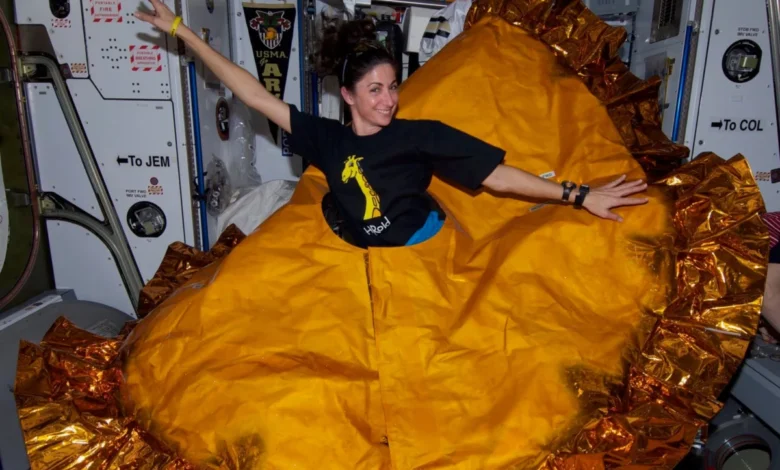
Costumes are often a hybrid of repurposed flight hardware and personal effects. Duct tape, Velcro, spare fabric from discarded cargo bags, and even internal labels have been transformed into masks, capes, and thematic props. This reliance on "upcycling" reflects the broader philosophy of the ISS: nothing is wasted. The ability to manipulate one’s environment to create a festive atmosphere is a testament to the versatility of the crew.

Furthermore, the lighting conditions and the perspective of the station offer a unique aesthetic. Floating in microgravity allows for costume designs that would be impossible on Earth, where gravity would cause capes or masks to drape naturally. In orbit, costumes gain a surreal, ethereal quality, as components drift alongside the wearer, creating a visual effect that is inherently "space-like."
Supporting Data: The Human Factor in Spaceflight
The success of the ISS as a research platform is predicated on the health and performance of its crew. NASA’s Human Research Program (HRP) has documented that social cohesion is a top-tier priority for missions lasting six months or longer. Data collected from the "Behavioral Health and Performance" (BHP) assessments indicate that crews who engage in social rituals, including holiday celebrations, report higher levels of mission satisfaction and lower levels of stress-related fatigue.
As of late 2026, the ISS has maintained a continuous human presence for over 26 years. This longevity has provided an unprecedented dataset on how humans adapt to long-duration isolation. The consistency of these Halloween celebrations serves as a proxy for the stability and mental well-being of the crew members, serving as a benchmark for future missions to the Moon and Mars.
Official Perspectives on Orbital Morale
NASA officials and flight surgeons have consistently encouraged these celebrations. In internal briefings, the Johnson Space Center Office of Communications has noted that the "human interest" aspect of spaceflight is a crucial component of public support for the space program. By humanizing the astronauts, these celebrations make the complex, often daunting science of orbital research more accessible to the general public.
While the primary mission of the ISS remains scientific discovery—ranging from protein crystal growth to fluid physics and the study of human physiology in microgravity—the "soft" science of human interaction is treated with equal professional respect. Leadership at the agency views these events as essential for maintaining the "expeditionary" mindset required to survive in the hostile environment of space.
Implications for Future Deep Space Missions
The strategies employed to maintain morale on the ISS will be critical for the Artemis program and future missions to Mars. As the distance from Earth increases, the communication latency will make real-time interaction with mission control more difficult, and the ability of a crew to self-regulate their social environment will become paramount.
The lessons learned from decades of Halloween celebrations in Low Earth Orbit (LEO) provide a template for "habits of success." Whether it is a festive meal shared in the Unity node or a costume competition in the Destiny laboratory, these activities serve as a psychological tether to humanity. As we prepare for the next phase of space exploration, the ability to replicate the comforts and traditions of home will be a prerequisite for mission success.
Conclusion: A Platform for Science and Spirit
The International Space Station is far more than a collection of pressurized modules and solar arrays. It is a home away from home, a symbol of international cooperation, and a testament to the resilience of the human spirit. When the lights of the station dim on October 31, and the crew gathers to mark the occasion, they are doing more than just playing a game. They are reinforcing the bonds of a global community that transcends borders and gravity.
As humanity continues to push the boundaries of the unexplored universe, the tradition of Halloween in space stands as a reminder that no matter how far we venture, we carry our culture, our creativity, and our need for celebration with us. The ISS remains a vital scientific platform, providing the foundation needed to survive and thrive as we look toward the next frontier. Through 25 years of continuous presence, the station has proven that the human capacity for joy and connection is as robust as the technology that sustains us among the stars.