Google Introduces "Immersive Explorations" to Gemini Student Hub for Interactive, Layer-by-Layer Learning

Google has officially expanded the educational capabilities of its artificial intelligence ecosystem with the rollout of "Immersive Explorations" within the Gemini student hub. Designed to transform how students interact with complex academic concepts, the new feature moves away from traditional text-heavy interfaces, replacing them with dynamic, interactive visuals. By allowing users to dissect subjects layer by layer, Google aims to bridge the gap between abstract theoretical knowledge and engaging, visual-first digital learning. This latest update underscores the tech giant’s broader strategy to cement its presence in modern classrooms, competing directly with established educational technology platforms by integrating generative AI and multimedia exploration into a single, cohesive environment.
Main Facts of the Immersive Explorations Release
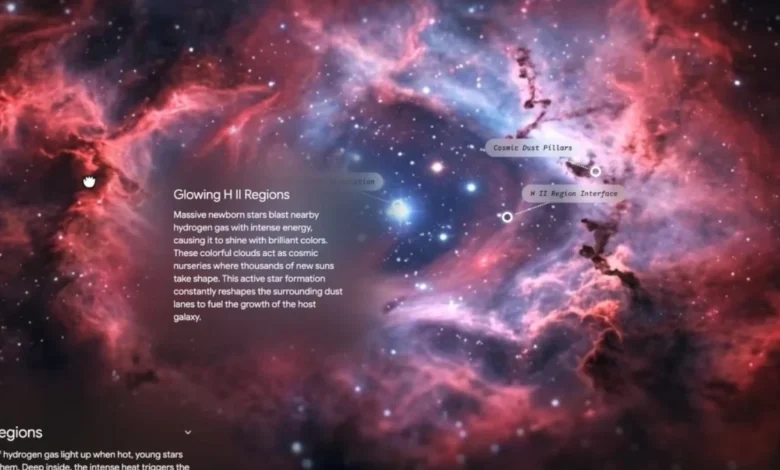
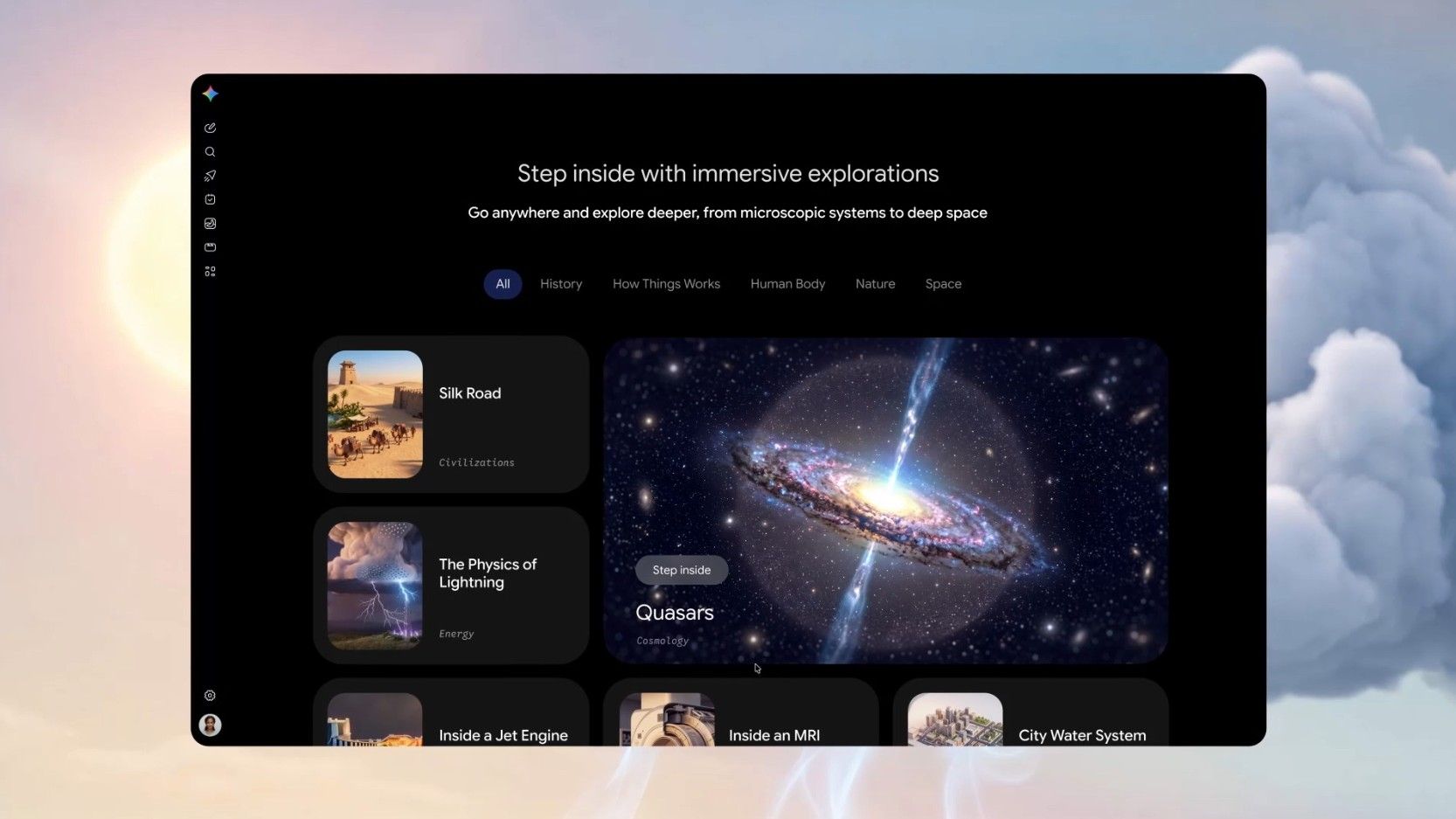
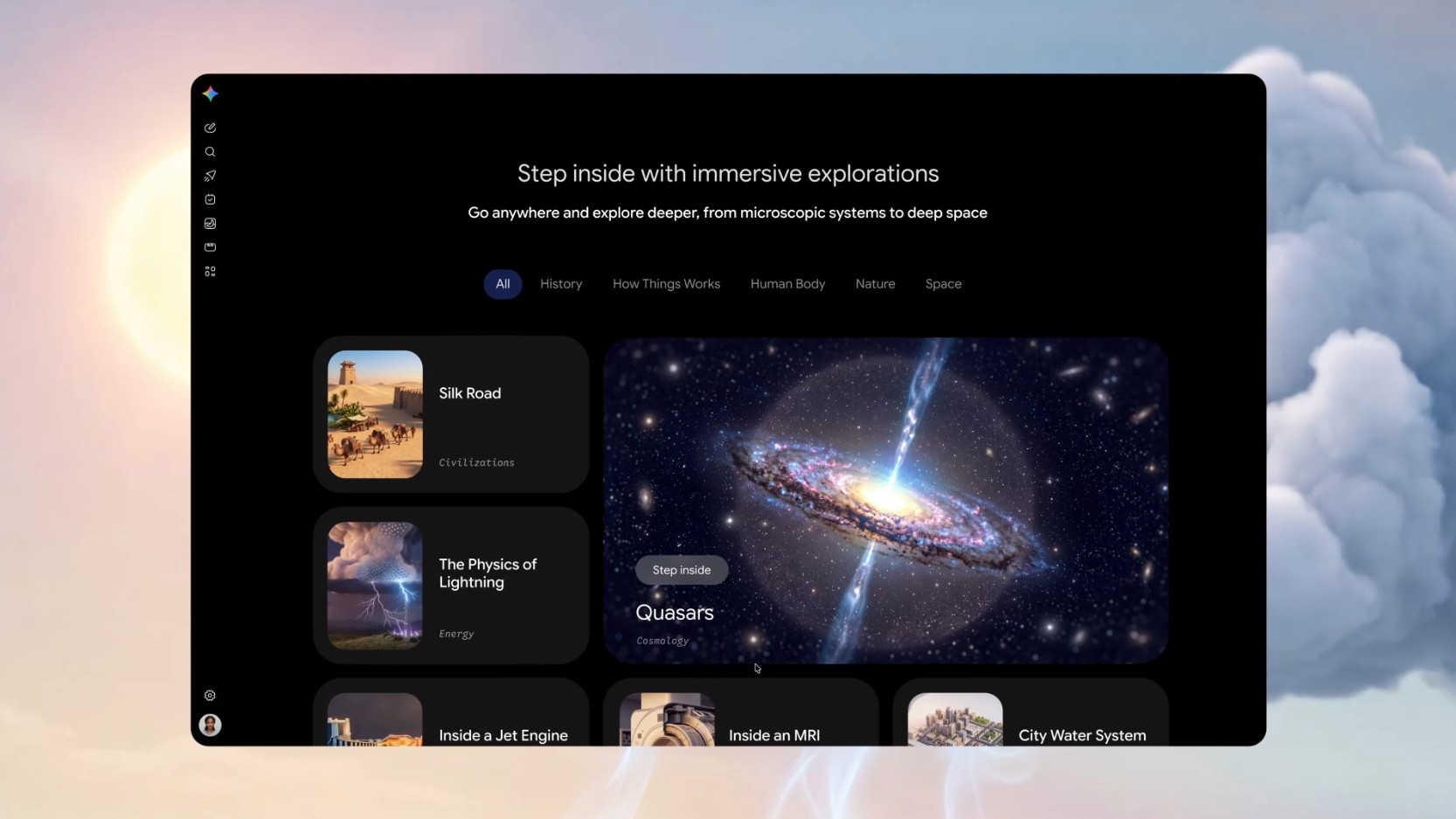
The newly launched Immersive Explorations library within the Gemini student hub is engineered to dismantle the conventional paradigm of reading exhaustive walls of text to understand multifaceted topics. Instead, the feature offers layered visual modules that encourage active user engagement. For instance, when exploring cosmic phenomena such as quasars, students are not merely presented with a static image and a description. They can interact directly with the digital asset, zooming in to inspect host galaxies, interstellar dust lanes, and localized gravitational dynamics. Each component of the visual asset is clickable, unlocking granular details, contextual definitions, and scientific breakdowns.
Beyond astronomy, the initial launch catalog includes diverse subjects across the natural sciences. Students can investigate the intricate mechanics of the physics of lightning, study the cellular and molecular structures of plants, or examine prehistoric ecosystems through detailed dinosaur models. Google has confirmed that the feature is live and accessible immediately through the Gemini app and the dedicated student web portal.
To maximize global accessibility at launch, Immersive Explorations supports multiple languages, including English, Indonesian, Hindi, Brazilian Portuguese, French, and Simplified Chinese. Google has noted that users operating the Gemini app in unsupported languages will temporarily default to English until localized rollouts are completed in subsequent software updates.
Chronology and Context: The Evolution of Gemini in Education
The introduction of Immersive Explorations does not happen in a vacuum; it represents the latest milestone in Google’s methodical, multi-year integration of artificial intelligence into academic spaces. The journey began in earnest when Google adapted its flagship Gemini models for younger demographics, specifically rolling out the AI assistant to teenagers using institutional Google Workspace for Education accounts.
Recognizing both the immense potential and the inherent risks of generative AI in learning environments, Google deployed these school-account iterations with strict safety guardrails. These measures included robust fact-checking mechanisms designed to mitigate the risk of algorithmic hallucinations—a known vulnerability in large language models. Alongside these safety protocols, Google introduced specialized pedagogical tools, most notably "Coach," an interactive feature structured to guide students through step-by-step problem-solving via quizzes and targeted educational games rather than simply providing direct answers.
Simultaneously, Google targeted educators with dedicated upgrades to Google Classroom and NotebookLM—subsequently rebranded in certain contexts as Gemini Notebook. This parallel track of development empowered teachers to leverage AI to streamline administrative and instructional workflows. Educators gained the ability to automatically generate customized rubrics, design comprehensive quizzes from existing curriculum materials, and even build bespoke AI "experts"—trained strictly on verified classroom documents—to assist students struggling with specific foundational concepts outside of regular classroom hours.
Supporting Data and Demographic Integration
The integration of advanced multimedia AI tools like Immersive Explorations arrives at a time of significant transformation in global educational technology. According to recent industry analyses, digital learning tools that incorporate interactive visualization witness significantly higher student engagement rates compared to traditional text-based e-learning modules. By shifting the cognitive load from passive reading to active visual manipulation, Google is tapping into established pedagogical theories regarding spatial reasoning and multi-sensory learning.
Furthermore, the choice of launch languages reflects a calculated global strategy. By immediately supporting English, Hindi, Indonesian, French, Brazilian Portuguese, and Simplified Chinese, Google captures a massive percentage of the global student population across North America, Europe, South America, and Asia. This geographic breadth is critical for Google Classroom and Gemini’s student ecosystem, which currently boasts deployment across more than 100 countries worldwide. The deliberate targeting of multilingual support ensures that educational equity is maintained as much as possible during major feature rollouts, preventing regional disparities in early access.
Official Responses and Institutional Philosophy
While direct statements from external regulatory bodies are still emerging, Google’s official communications surrounding the launch emphasize a commitment to responsible, student-centric innovation. In public blog posts and developer notes, the company has consistently framed its educational AI initiatives around the concept of supplemental empowerment rather than full instructional replacement.
Educational technology experts within Google’s product divisions have emphasized that tools like Immersive Explorations are designed to act as digital catalysts for curiosity. The core philosophy centers on the idea that students retain complex scientific and historical data more effectively when they are allowed to construct their own mental models through guided discovery. By allowing learners to peel back the layers of a complex digital rendering—moving seamlessly from macro-level overviews to micro-level compositions—the AI acts as an interactive tutor that adapts to the user’s immediate point of confusion.
Moreover, the integration of these tools within controlled institutional frameworks reflects a calculated response to early criticisms leveled against generative AI in schools. By tying features like Immersive Explorations and NotebookLM directly to school-managed accounts equipped with administrative guardrails, Google is actively addressing concerns regarding data privacy, age-appropriate content filtering, and academic integrity.
Broader Impact and Future Implications for EdTech
The deployment of Immersive Explorations signals a broader industry shift: the convergence of generative AI text capabilities with immersive 3D graphics and interactive simulation engines. For years, interactive 3D learning models existed as standalone software packages or expensive subscription-based virtual reality modules that required specialized hardware. By embedding a lightweight, browser- and app-accessible version of this technology directly inside an AI chat interface, Google is democratizing access to high-end educational visualizations.
The implications for the broader EdTech market are profound. Traditional textbook publishers and legacy digital learning management systems (LMS) now face heightened pressure to integrate similar generative, multi-modal capabilities into their products. When students can query an AI assistant and instantly generate an explorable, layered visualization of a biological cell or a stellar nebula—complete with contextual explanations and follow-up quizzes—the baseline expectation for digital education is fundamentally raised.
Looking forward, industry analysts expect Google to expand the Immersive Explorations library significantly, moving beyond natural sciences into history, geography, and literature, where spatial and chronological layering could prove equally transformative. As these models become more sophisticated, the line between static textbook media and dynamic, AI-generated interactive environments will continue to blur, marking a new chapter in the digital transformation of global education.
Related posts: