Vivo X500 Pro Max Hands-On: A New Benchmark for Flagship Smartphone Engineering

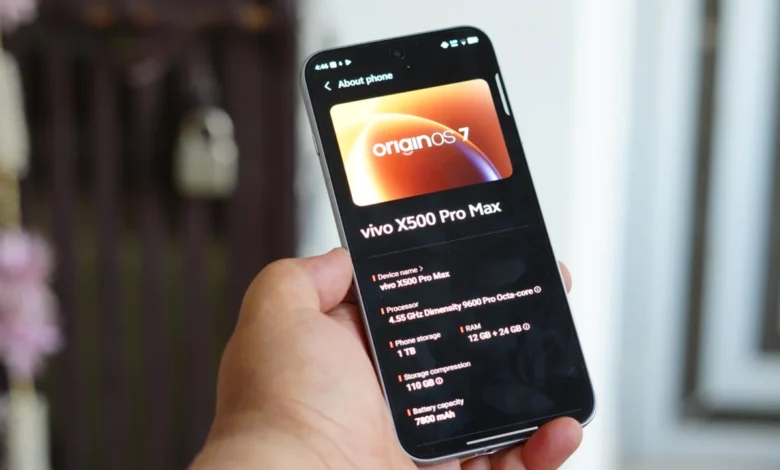
The mobile industry is frequently criticized for incremental innovation, where annual releases often offer little more than marginal clock-speed improvements and superficial aesthetic tweaks. However, Vivo’s unveiling of the X500 series—comprised of the standard X500, the compact X500 Pro, and the flagship X500 Pro Max—marks a departure from this trend. By introducing significant hardware advancements, including the industry’s first 2nm mobile chipset and groundbreaking sensor technology, Vivo is signaling a shift in its competitive strategy for the global market.
The X500 series arrives at a pivotal moment in the smartphone cycle. Following the success of the X300 Ultra, which established Vivo as a formidable player in mobile photography, the X500 Pro Max is positioned to consolidate that reputation while pushing the boundaries of raw computational power. While the Chinese market has already received the device, the global release is currently the subject of intense anticipation, as it introduces international users to a distinct hardware architecture that differentiates each model in the lineup rather than relying on a one-size-fits-all approach.

Chronology and Hardware Diversification
The strategy behind the X500 series is built on functional segmentation. The base X500 is equipped with a 6.59-inch display and the Dimensity 9600M, targeting the mid-to-high-end segment. The X500 Pro focuses on portability, offering a 6.36-inch form factor powered by the flagship Dimensity 9600 Pro. The X500 Pro Max represents the pinnacle of the series, featuring a 6.85-inch AMOLED display and the same flagship silicon, but with superior optics and battery capacity.
This diversification is a strategic move to capture distinct consumer demographics. Historically, manufacturers have struggled to balance the demands of power users who require large, high-resolution screens with those who prefer ergonomic, one-handed devices. By bifurcating the flagship specs between the Pro and the Pro Max, Vivo aims to mitigate the "compromise" that often plagues standard flagship models.
The 2nm Paradigm Shift
At the heart of the X500 Pro Max is the MediaTek Dimensity 9600 Pro, a chipset manufactured on a 2nm process node. This is a critical technological milestone; moving to a 2nm process allows for higher transistor density, which directly translates to better performance-per-watt ratios compared to existing 3nm or 4nm alternatives.

The architecture consists of two ultra-prime cores clocked at 4.55GHz, three performance cores at 4.35GHz, and three efficiency cores at 3.1GHz. MediaTek has reported a 27% increase in peak GPU performance, a figure that is particularly relevant for high-fidelity mobile gaming and AI-driven image processing. This processing headroom is essential for the device’s heavy reliance on real-time computational photography, as the phone performs complex image-stacking and HDR processing without the latency users have come to associate with high-resolution mobile photography.
Innovations in Imaging: The LOFIC Sensor
Perhaps the most significant advancement in the X500 Pro Max is the implementation of Sony’s 50MP LOFIC (Lateral Overflow Integration Capacitor) CMOS image sensor. The sensor, measuring 1/1.28 inches, is designed to solve one of the most persistent issues in mobile photography: high dynamic range (HDR) performance in challenging lighting conditions.
Traditional sensors often rely on "stitching"—capturing multiple exposures at different shutter speeds and merging them—to achieve high dynamic range. This process, while effective, is prone to ghosting when the subject or the camera moves. The LOFIC technology allows the sensor to store more charge per pixel, effectively extending the dynamic range in a single exposure. For creators, this means cleaner highlights and more detailed shadows without the "double exposure" artifacts common in rapid-fire photography. Furthermore, this hardware-level solution reduces the energy consumption required for post-processing, contributing to the overall power efficiency of the device.

The camera array is rounded out by a 200MP periscope telephoto lens and a 50MP ultrawide sensor. The periscope unit, carried over from the X300 Ultra, provides substantial zoom capabilities, supported by optional 200mm and 400mm telephoto extender lenses. This modular approach to mobile photography—where users can add physical optics to augment the internal hardware—suggests that Vivo is targeting the prosumer market, positioning the device as a legitimate alternative to entry-level mirrorless cameras for specific use cases.
Design, Build, and Sustainability
The aesthetic direction of the X500 Pro Max favors a restrained, industrial elegance. The gray variant, which features a matte finish with micro-texturing on the lower panel, moves away from the glossy, fingerprint-prone surfaces common in the flagship category. The upper panel, which houses the camera module, utilizes a distinct texture, creating a visual separation that feels deliberate.
While the device retains a prominent camera island, it is aesthetically integrated with a color-matched ring. Beyond aesthetics, the build quality emphasizes durability, maintaining an IP69 rating for dust and water resistance. This is a crucial metric, as it indicates the device can withstand high-pressure water jets, a significant upgrade over the standard IP68 ratings found in most competing devices.

Regarding internal power, the global model of the X500 Pro Max houses a 7,800mAh battery—a substantial increase over industry standards, which typically hover around 5,000mAh. This capacity, paired with the 2nm chipset’s efficiency, suggests that the device will comfortably exceed the standard "all-day" battery life expectation. The package is rounded out by 90W wired charging and 40W wireless charging, ensuring that despite the massive capacity, downtime is minimized.
Broader Market Implications
The launch of the X500 Pro Max reflects a broader trend in the smartphone market: the pivot toward specialized hardware for content creation. As social media platforms continue to prioritize high-quality video, manufacturers are no longer competing solely on display resolution or raw benchmark scores, but on the ability to replicate professional-grade filming conditions within a portable device.
Industry analysts suggest that Vivo’s move to embrace 2nm silicon ahead of many of its competitors could force other major manufacturers to accelerate their adoption of next-generation fabrication processes. If the 2nm Dimensity 9600 Pro performs as internal benchmarks suggest, it may create a new performance ceiling that incumbents will struggle to match in the upcoming quarter.

However, the transition is not without challenges. The global software experience, handled by OriginOS 7 atop Android 17, remains a point of scrutiny. While the system features sophisticated optimization tools like the "Snap Up Engine" and enhanced AI integration, the global market has historically shown a preference for more "stock" Android experiences. Vivo’s ability to provide timely security updates and maintain software fluidity over the long term will be the ultimate test of the X500 Pro Max’s market viability.
Conclusion and Future Outlook
The Vivo X500 Pro Max is a calculated response to the stagnation of the flagship category. By prioritizing core hardware over superficial software gimmicks, Vivo has created a device that effectively bridges the gap between a consumer smartphone and a specialized imaging tool.
The inclusion of the 2nm chipset and the LOFIC sensor technology provides a tangible technical advantage that is difficult to dismiss as marketing hyperbole. While the final verdict on the device’s success will depend on its real-world battery endurance and software stability during long-term use, the initial data points suggest that the X500 Pro Max is not merely an iterative update. It is a fundamental realignment of what a flagship device can offer, and it presents a significant challenge to the current market hierarchy. For now, the industry must watch how these hardware choices translate into user experience once the global version reaches the hands of consumers. If the performance holds, Vivo will have set a difficult bar for its rivals to clear in the coming year.