Narrative Architecture and Thematic Departure
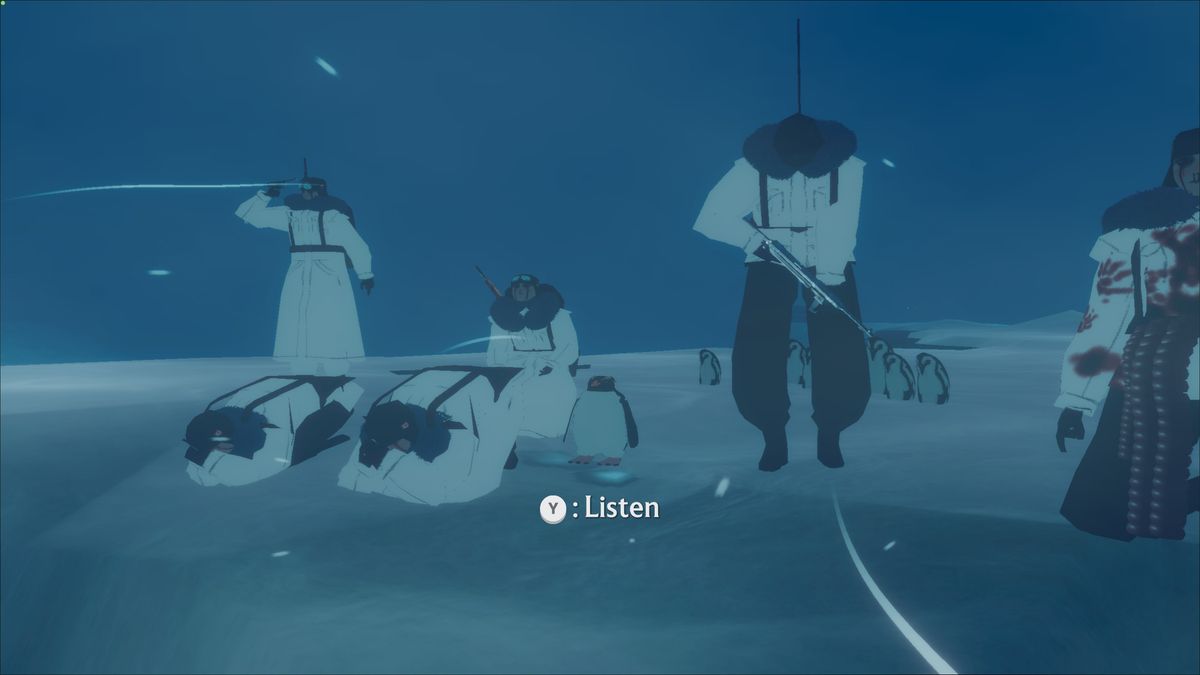
While the game draws its primary inspiration from Lovecraft’s seminal 1936 novella, it represents a significant departure from traditional adaptations. The story centers on an original protagonist, Howard Blakely, voiced by Lenval Brown. Unlike the original text’s William Dyer, Blakely is framed as a deeply flawed, self-indulgent intellectual whose collaboration with a Nazi expedition—nominally searching for occult artifacts—serves as a lens through which the game critiques the historical intersection of 20th-century nationalism and the xenophobic anxieties prevalent in Lovecraft’s own body of work.

The narrative is structured around a dual-perspective framework. Players control a penguin, capable of possessing various species to overcome specific traversal obstacles, while simultaneously navigating the aftermath of an expedition that has awakened ancient, non-human entities. This mechanic functions as a metaphor for the insignificance of the individual within the vast, indifferent landscape of cosmic horror. By stripping the player of human agency and forcing them to inhabit the body of a flightless bird, the game forces an engagement with the environment that is clumsy, sluggish, and inherently fragile.
Structural Chronology and Gameplay Mechanics
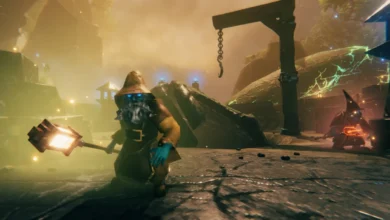
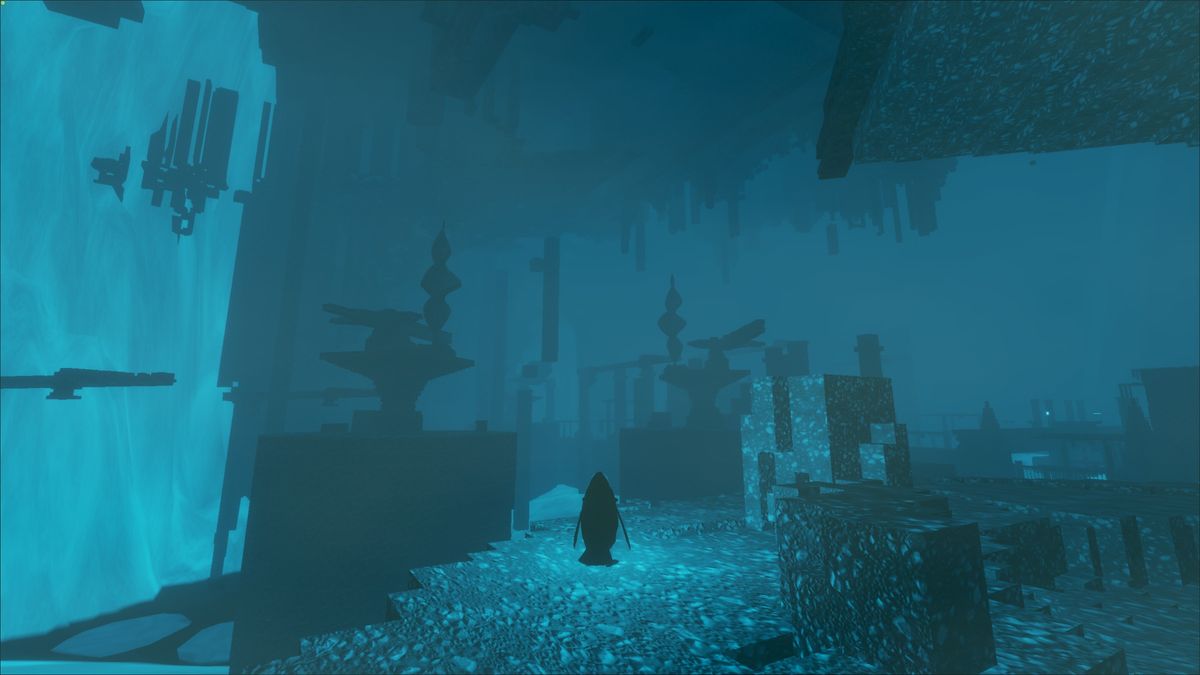
The game’s progression is marked by distinct shifts in environment, moving from the harsh, windswept surfaces of the Antarctic to the labyrinthine, alien megastructures located deep beneath the ice shelf. This transition mirrors the slow descent into madness characteristic of the genre, punctuated by "war party" interludes. These segments shift control to a group of Māori warriors, providing a stark contrast to Blakely’s narrative. These interludes introduce a secondary, proactive faction that seeks to contain the cosmic threat, offering a counter-narrative to the passive, colonialist curiosity of the main expedition.
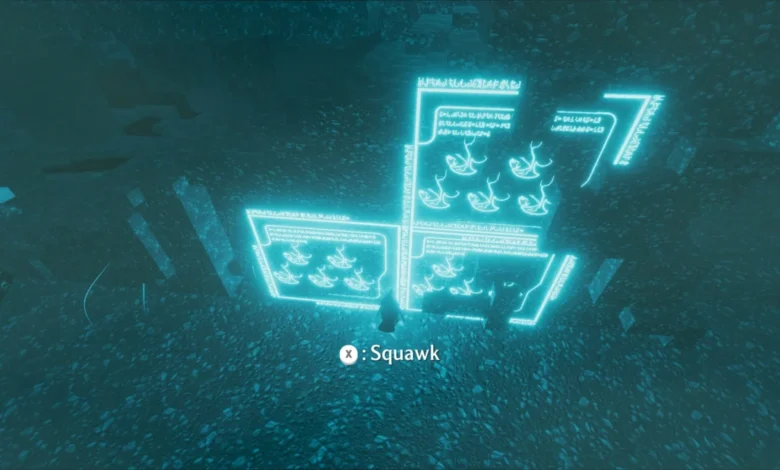
The game utilizes a minimalist UI, with the exception of a persistent, stamina-based meter that dictates movement capabilities. This design choice, while intentionally restrictive, reflects the game’s "Foddian" philosophy, where traversal is presented as a challenge of endurance rather than a fluid, rewarding experience. The inclusion of a custom-designed replacement cipher, utilized throughout the world via cursive hieroglyphs, serves as a secondary layer of engagement, rewarding players who choose to document and decode the game’s deeper lore.
Technical and Critical Analysis
Penguin Colony has been verified for the Steam Deck, and technical performance remains consistent across diverse hardware configurations, including high-end builds utilizing the RX 9070 XT and Core i5 12600K processors. Despite its technical stability, the game features deliberate "unevenness" in its physics and mantling mechanics. Observations suggest that these inconsistencies—where the character may clip through or struggle with certain ledges—are intended to reinforce the sensation of being a small, ill-equipped observer in a world designed for, and dominated by, forces far beyond the creature’s understanding.

The sound design and voice performance are central to the game’s atmosphere. Lenval Brown’s narration provides a sense of continuity and familiarity, grounding the increasingly bizarre events in the recognizable cadence of a classic, albeit neurotic, literary protagonist. This juxtaposition between the familiar tone of the narration and the increasingly incomprehensible visual landscape is a primary driver of the game’s emotional impact.
Broader Context and Industry Implications
The development of Penguin Colony arrives at a time when the gaming industry is increasingly revisiting the works of early 20th-century horror writers through a modern, critical lens. By explicitly addressing the racism inherent in Lovecraft’s personal life and literary output, Origame Digital has positioned the game as a response to the "tribute" style of horror that often glosses over the problematic history of the genre’s origins.
The game’s explicit political messaging, which includes a land acknowledgement and a post-credits condemnation of the ongoing humanitarian crisis in Gaza, marks a significant departure from standard industry practices of neutrality. This decision reflects a broader trend in independent game development, where creators utilize their platforms to link historical and cosmic horror to contemporary political realities. By framing the indigenous characters as the primary defenders against ancient evils, the game inverts the traditional power dynamics of the genre, casting the "enlightened" Western scientist as a facilitator of destruction and the indigenous party as the necessary force of preservation.
Reception and Market Positioning
As of its release window in late 2026, the game occupies a niche but significant space in the independent horror market. Its appeal lies in its willingness to alienate the player through mechanical frustration and its refusal to provide easy, didactic resolutions. Market analysis indicates that titles prioritizing thematic depth and experimental narrative structures—often referred to as "arthouse" horror—have seen a sustained interest from a demographic that values interactive, text-heavy, and intellectually challenging experiences over traditional action-oriented gameplay.

The game’s design philosophy, particularly its emphasis on the "inhuman observer," offers a fresh perspective on cosmic horror. Where most titles in the genre attempt to make the player feel powerful through the acquisition of knowledge or weaponry, Penguin Colony achieves its effect by doing the opposite: it leaves the player with a sense of profound, insurmountable scale. The ancient city beneath the ice, reminiscent of the visual language seen in works like Scorn or the Ash Lake environment in Dark Souls, serves as a silent, monolithic testament to the futility of human, or avian, interference.
Final Assessment
Penguin Colony is a challenging, occasionally frustrating, but ultimately successful experiment in narrative-led game design. It does not seek to provide a comfortable experience; instead, it provides a deeply considered meditation on the nature of horror, the burden of history, and the limitations of human perspective. For those interested in the evolution of the cosmic horror genre, the title offers a compelling, if unconventional, look at how developers can adapt classic literature to comment on modern ethical dilemmas. By successfully balancing its dense, cipher-driven mystery with a straightforward, albeit difficult, traversal system, it establishes itself as a notable entry in the 2026 indie landscape, demonstrating that even the most "sluggish" of mechanical experiences can contribute to a profound sense of atmosphere when executed with intentionality and purpose.