The dawn of the space age in the 1950s and 1960s was characterized by a distinct brand of technological optimism. During this period, the conceptualization of lunar living transcended the boundaries of science fiction, manifesting in serious feasibility studies such as the United States Army’s Project Horizon. At the time, the establishment of a permanent, pressurized lunar outpost was viewed by many as an inevitable milestone in human history. Decades later, that vision has been reinvigorated by a new generation of commercial space entities. However, a rigorous scientific assessment published in the journal Frontiers in Space Technologies challenges these ambitions, suggesting that the fundamental resource requirements for large-scale lunar habitation—specifically water—are drastically underestimated.
The study, titled "No cities on the Moon: a billion tons of water is not enough for sustainability," was authored by Dr. Martin Elvis of the Smithsonian Astrophysical Observatory and Dr. Jonathan McDowell of the Space Research Centre at Durham University. Their work provides a sobering quantitative analysis of lunar resources, effectively deconstructing the assumption that the Moon can support massive, self-sustaining populations akin to those envisioned by modern commercial space proponents.
The Myth of the Eighth Continent
In contemporary discourse, the Moon is frequently described as the "eighth continent," a vast expanse of 37.93 million square kilometers that is approximately 50% larger than North America. Proponents of lunar colonization often argue that this scale implies an abundance of resources sufficient to support industrialization and permanent settlement without significant constraints.
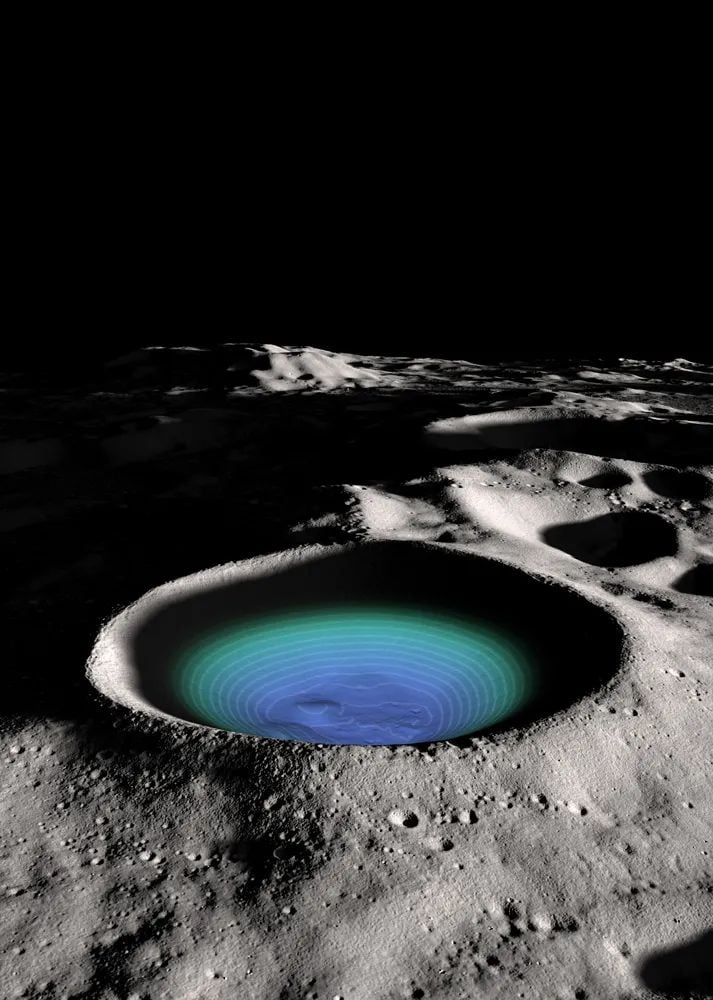
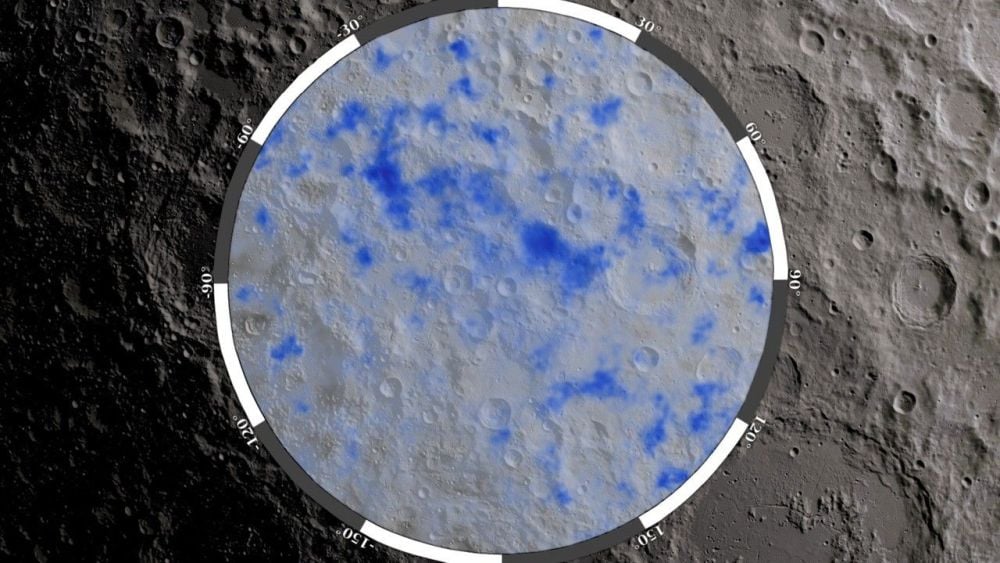
Dr. Elvis and Dr. McDowell argue that this framing is fundamentally flawed. While the Moon possesses valuable minerals and, crucially, water ice located in Permanently Shadowed Regions (PSRs) near the lunar poles, the accessibility and total volume of these resources are finite. When billionaires and aerospace CEOs discuss "self-growing cities" or the relocation of heavy industry to the lunar surface, they often ignore the thermodynamic and material costs of maintaining such infrastructure in a vacuum.
A Chronology of Lunar Exploration and Resource Ambition
The timeline of lunar interest has evolved from geopolitical dominance to commercial expansion:
- 1959–1969: The era of the Apollo program and Soviet Luna missions established the feasibility of reaching the Moon but focused on exploration rather than long-term sustainability.
- 1998: NASA’s Lunar Prospector mission provided early evidence of water ice at the lunar poles via neutron spectrometry, shifting the focus of lunar science toward volatile deposits.
- 2009: The Lunar Crater Observation and Sensing Satellite (LCROSS) confirmed the presence of water ice in the Cabeus crater, solidifying the idea that the Moon could host life-sustaining resources.
- 2020–Present: The Artemis program and commercial entities like Blue Origin and SpaceX have shifted the narrative toward permanent presence. Proposals now include large-scale habitat construction and fuel production using lunar ice.
The Water Bottleneck: Quantitative Analysis
The crux of the Elvis-McDowell study lies in a detailed calculation of water requirements for a hypothetical lunar population. To provide a baseline, the authors utilize an estimate of one billion tons of water ice—a generous figure based on current, though uncertain, mapping of PSRs.
For a population of one million people, the resource depletion rate is staggering. If a lunar inhabitant requires 125 tons of water per year for personal consumption—a baseline derived from U.S. domestic usage—the total consumption would be significant. However, the requirement balloons when accounting for agriculture. According to World Bank data, the water footprint required to sustain human nutrition through food production is between 2,000 and 5,000 liters per person per day. Translated to an annual scale, this is approximately 730 to 1,825 tons of water per person.
Consequently, a city of one million people would consume the entire billion-ton reservoir in roughly 2.4 years if traditional, inefficient agricultural methods were used. Even with advanced recycling, the numbers remain daunting.
Recycling Efficiencies and Sustainability Limits
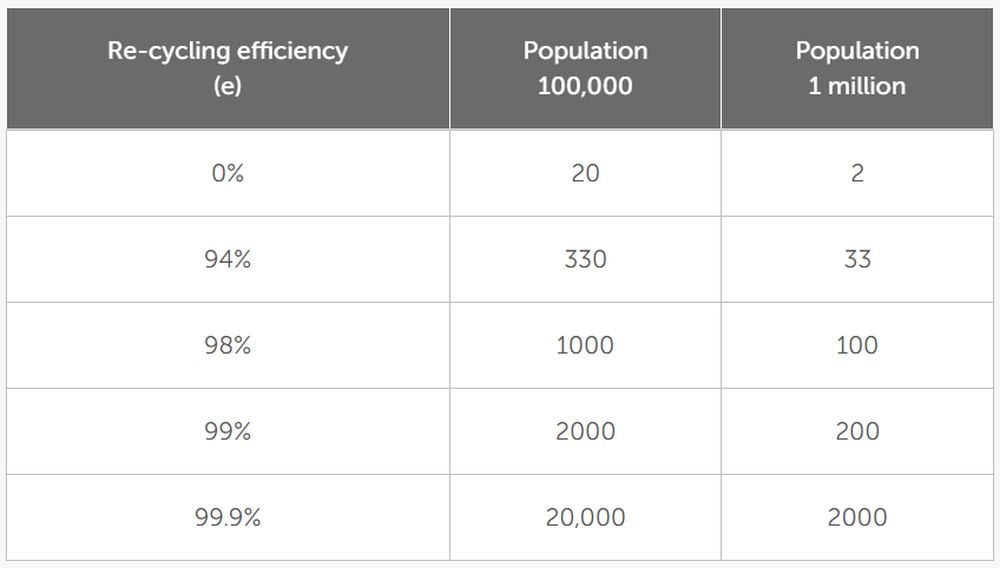
The authors compare potential lunar infrastructure to the International Space Station (ISS). The ISS represents the current gold standard for closed-loop environmental control and life support systems. As of 2023, the ISS achieved a 98% water recovery efficiency rate.
Applying this 98% efficiency to a lunar settlement of one million people, the one-billion-ton reservoir would be exhausted within 100 years. While a century might appear to be a long time in political terms, in the context of building a permanent, multi-generational civilization, it falls short of genuine sustainability. The study concludes that for a population of 100,000, the same reservoir could last 1,000 years, suggesting that a "Moon Village" model—consistent with the scale of scientific outposts in Antarctica—is a far more realistic goal than the sprawling metropolises currently marketed to the public.
Energy as a Secondary Constraint
While water is the limiting factor, energy requirements are also significant. The study examines the logistics of powering a lunar city, noting that the rims of polar craters provide unique advantages for solar energy collection. These regions receive near-constant sunlight, allowing for vertically mounted, rotating solar arrays.
The authors calculate that for a population of one million, energy generation via solar or fission is not a primary constraint, provided that industry energy consumption does not exceed twice the rate of personal consumption. If humanity achieves reliable fusion power, energy becomes even less of a barrier. However, the study emphasizes that energy abundance cannot compensate for the physical scarcity of water.
Governance and Ethical Stewardship
Beyond the engineering hurdles, the researchers raise critical questions regarding the management of lunar resources. They argue against a "first-come, first-served" approach to water extraction, which currently characterizes many private-sector space ventures. The authors call for international regulatory frameworks to govern the use of lunar ice to ensure that these limited resources are not depleted for short-term gain, potentially jeopardizing the long-term feasibility of a permanent human presence.
Implications for Future Space Policy
The findings of Dr. Elvis and Dr. McDowell serve as a necessary corrective to the prevailing narrative surrounding lunar colonization. By grounding the conversation in empirical data, the study forces a reassessment of the "frontier" mentality.
If the ambitious plans for lunar cities are to progress beyond the conceptual phase, scientists argue that the next priority must be the discovery of larger, more accessible water reservoirs—perhaps deep beneath the lunar surface—or the development of technologies that can achieve near-100% water recovery while simultaneously decoupling food production from traditional water-intensive methods.
Without such breakthroughs, the dream of millions living on the Moon remains a high-risk gamble. The shift from "hubristic rambling" to sustainable policy requires acknowledging that the Moon is not a bottomless well of resources, but a finite, delicate environment that requires the same level of careful management as the Earth itself. The "Moon Village" concept, characterized by a modest, sustainable population, appears to be the only path forward that aligns with the current scientific understanding of the lunar environment. For those who envision a bustling, massive population on the lunar surface, the math suggests that the search for water—not just on the Moon, but perhaps from asteroids or other extraterrestrial bodies—must become the primary focus of the next century of space exploration.