The Legend of Jimothy: Seattle’s Viral Raccoon Sparks Urban Mystery and Scientific Inquiry

The city of Seattle is currently grappling with a biological and linguistic conundrum that has captivated the Pacific Northwest: the emergence of Jimothy, a uniquely shaped raccoon whose viral fame has outpaced the internet’s ability to settle on a plural for his name. Whether the city is home to multiple Jimothies, Jimothem, or Jimothi remains a matter of digital debate, but the core of the mystery lies in a more profound question of wildlife biology and urban legend. As residents of the Ballard neighborhood continue to share sightings of the remarkably round, short-statured creature, wildlife experts and local historians are beginning to wonder if the "Jimothy" phenomenon is the story of a single, resilient animal or a lineage of raccoons sharing a rare genetic trait.
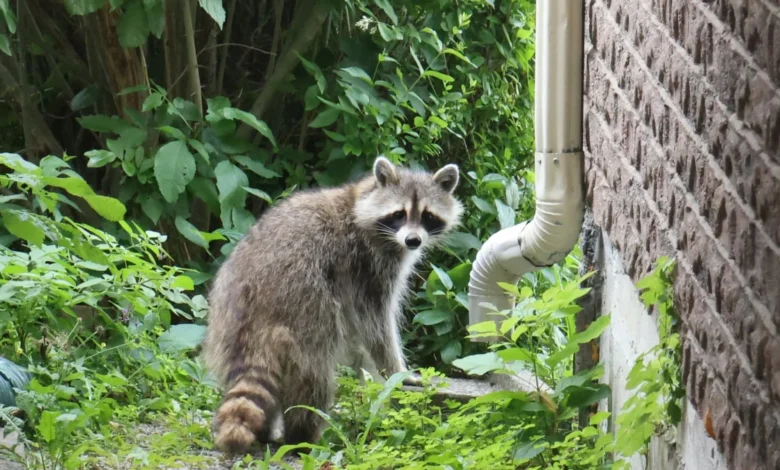
The saga began on July 13, 2024, when Seattle resident Kiana Hall was walking through the Ballard neighborhood, an area known for its maritime history and dense residential streets. Hall encountered an animal tucked beneath a parked car that, at first glance, she mistook for a stray cat. When the creature finally emerged, its identity was revealed as a raccoon, though one with a strikingly unusual silhouette. The animal possessed a severely shortened torso and an almost non-existent neck, giving it a compressed, spherical appearance. Struck by the creature’s quirky gait and distinctive look, Hall recorded a brief video and uploaded it to social media, naming the animal "Jimothy" simply because, in her estimation, he looked like one.
The Rapid Ascent of a Local Icon
The footage of Jimothy quickly transcended local interest, accumulating millions of views across platforms like TikTok, Instagram, and X (formerly Twitter). Within days, Jimothy was no longer just a raccoon; he was a bona fide Seattle celebrity. The "Hot Jimothy Summer" movement saw the creation of fan art, murals, and even permanent tattoos as residents embraced the "trash panda" with the unconventional build. The cultural impact reached institutional levels when the University of Washington issued an honorary "doctorate" to the raccoon, and the Washington State Department of Transportation (WSDOT) utilized his likeness for public service announcements regarding road safety.
The peak of Jimothy’s fame arguably occurred during a Seattle Mariners home game at T-Mobile Park. During the traditional seventh-inning "Salmon Run"—a race featuring oversized fish mascots—a costumed Jimothy made a surprise appearance, defeating the four salmon to the cheers of thousands of fans. Even the global tech giant Google acknowledged the phenomenon; currently, a search for "Jimothy" or "Jimothy the raccoon" triggers an animation of the short-spined creature scurrying across the user’s screen. This level of saturation has turned a local wildlife sighting into a defining moment for Seattle’s 2024 cultural zeitgeist.
Biological Analysis: The Short Spine Theory
While the public celebrated Jimothy’s aesthetic, the scientific community began investigating the potential causes of his appearance. Though the raccoon has not been captured or examined by a veterinarian, wildlife experts believe his build is consistent with a rare congenital condition known as short spine syndrome. This deformity occurs when the vertebrae of the spine are compressed or fused together, leading to a severely shortened back and neck. While the condition is rare, it has been documented in other species, most notably in domestic dogs like the famous "Quasimodo," a German Shepherd who became an advocate for special-needs animals.
Despite the apparent physical limitations of a compressed spine, Jimothy appears to be thriving in the urban environment of Ballard. Analysis of various viral videos shows the raccoon navigating complex terrain, climbing fences, foraging for food, and interacting with his environment with a high degree of mobility. This resilience has endeared him further to a public that views him as an underdog succeeding despite his physical differences.
The Timeline Mystery: One Raccoon or Many?
As Jimothy’s fame grew, so did the archive of sightings. Ballard residents began scouring their doorbell camera footage and old photo albums, leading to a significant complication in the Jimothy narrative. Reports surfaced of similar-looking raccoons being spotted in the same neighborhood as far back as 2017.
Rebecca Sorenson, a Ballard resident, was among the first to raise public doubt regarding the identity of the current Jimothy. In an interview with FOX 13 Seattle, Sorenson noted that the conflicting accounts of the raccoon’s age were difficult to ignore. Some residents claimed to have seen him as a kit (a baby raccoon) only a year ago, while others provided photographic evidence of a short-spined raccoon from seven years prior.
This discrepancy presents a biological challenge. Wendi Mallo, an animal keeper at Northwest Trek Wildlife Park who specializes in raccoon care, noted that a lifespan of three to five years is typical for a wild raccoon. In an urban setting, where animals face constant threats from vehicular traffic, domestic dogs, and diseases like distemper or rabies, reaching the age of five is considered a success. If the raccoon spotted in 2017 is the same Jimothy seen today, the animal would be at least nine years old—an extraordinary feat of survival that would place him in the upper percentiles of raccoon longevity.
"That seems like a very long-lived raccoon to me for the wild," Mallo told local media. However, she left room for the extraordinary, suggesting that "magic in the wild" or exceptional adaptability might account for such an outlier.
The Dynasty Theory and Genetic Lineage
The alternative to the "Super Raccoon" theory is the "Dynasty Theory." This hypothesis suggests that Ballard is home to a family of raccoons carrying a recessive genetic trait for short spine syndrome. If this is the case, the Jimothy seen in 2024 may be the descendant of the Jimothy seen in 2017.
This theory gained traction when a video surfaced on Instagram appearing to show a young, short-spined raccoon living with a mother and normally shaped siblings. The presence of multiple generations with the same rare deformity would suggest a localized genetic cluster in the Ballard area. Without DNA testing or professional tagging, however, this remains speculative. The uncertainty has transformed "Jimothy" from a specific name into a title—a mantle passed down through a lineage of Ballard’s roundest residents.
Urban Ecology and the "Trash Panda" Paradox
The fascination with Jimothy highlights the complex relationship between Seattle residents and their wild neighbors. Raccoons (Procyon lotor) are highly intelligent procyonids that have adapted remarkably well to urban life. Their dexterous front paws allow them to open latches, garbage cans, and even doors, while their omnivorous diet allows them to thrive on everything from fallen fruit to discarded fast food.
In a city like Seattle, where greenbelts and residential gardens provide ample cover, raccoons are ubiquitous. However, they are often viewed as pests or "trash pandas" due to their habit of raiding trash bins and nesting in attics. Jimothy has effectively rebranded the species in the eyes of the public. By personifying a wild animal with a "relatable" physical struggle, the community has moved from a stance of pest management to one of collective stewardship.
Official Responses and Public Safety Guidelines
As the Jimothy craze shows no signs of slowing, wildlife officials have issued reminders to the public regarding the ethics of urban wildlife interaction. The Washington Department of Fish and Wildlife (WDFW) emphasizes that while Jimothy is a local treasure, he remains a wild animal.
Authorities have issued the following guidelines for "Jimothy-spotting":
- Maintain Distance: Residents are urged not to approach the raccoon for photos or videos. Proximity causes stress to the animal and increases the risk of defensive behavior.
- Do Not Feed: Feeding Jimothy—or any wildlife—disrupts their natural foraging habits and can lead to unhealthy dependencies on human food, which often lacks the nutrients they need.
- Avoid Capture: There have been concerns that well-meaning individuals might try to "rescue" Jimothy due to his appearance. Experts stress that unless the animal is visibly injured or in distress, he should be left alone, as he has proven his ability to survive independently.
- Pet Safety: Residents are reminded to keep domestic pets on leashes and to secure pet food indoors to prevent potentially dangerous encounters.
The increased foot traffic in Ballard by those hoping to catch a glimpse of the celebrity raccoon has also raised concerns about traffic safety. Increased vehicular presence in residential areas poses a direct threat to the very animal fans are hoping to see.
The Broader Impact of Viral Wildlife
The Jimothy phenomenon is a case study in the power of social media to shape our perception of the natural world. In an era of rapid information exchange, a single 15-second video can turn an anonymous wild animal into a symbol of community identity. Jimothy has provided Seattle with a rare moment of unified, lighthearted interest, bridging the gap between digital trends and the physical environment.
Whether Jimothy is a single, remarkably old survivor or a member of a unique Ballard bloodline, his impact on the city is undeniable. He has sparked conversations about genetics, urban ecology, and the way we treat the "non-human" residents of our cities. As the sun sets over Ballard and the city’s most famous raccoon emerges for his nightly rounds, he does so under the watchful, protective eyes of a city that has claimed him as its own.
Until a definitive scientific census can be conducted, the mystery of Jimothy will likely endure. For the people of Seattle, perhaps the answer doesn’t matter as much as the story itself—a story of a small, round animal navigating a big city, one waddle at a time. The legend of Jimothy serves as a reminder that even in the most paved and developed corners of the urban landscape, nature still has the capacity to surprise, entertain, and mystify.