Instagram Expands Collaboration Features by Allowing Users to Display Tagged Posts Directly on Their Profile Grids

Instagram is rolling out a significant profile-customization and collaboration feature that permits users to showcase posts in which they have been tagged directly on their main profile grids. This update marks a strategic shift in how digital creators, brands, and everyday users curate their personal spaces on the platform. By streamlining the process of adding tagged content to a profile feed, Instagram is reinforcing its foundational identity as a community-driven social network, even as the broader social media landscape increasingly prioritizes passive video consumption and algorithmic entertainment feeds.
The Mechanics of the New Feature
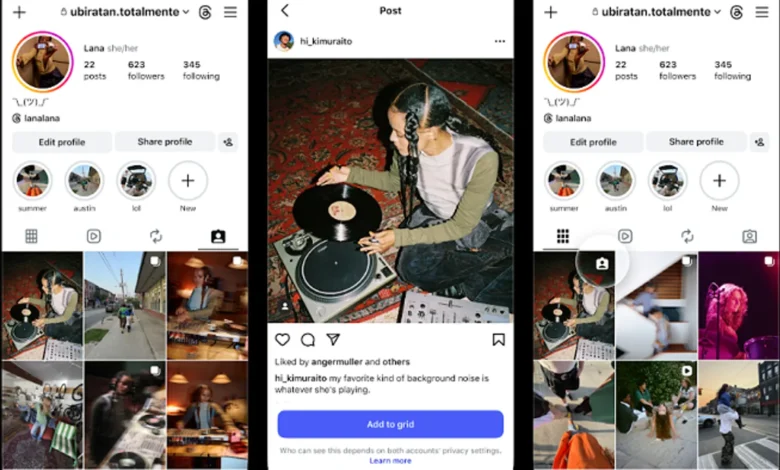
Under the updated interface, when a user is tagged in a post by a collaborator, friend, or brand, they are no longer restricted to keeping that content sequestered within the dedicated "Tagged Posts" tab of their profile. Instead, users can seamlessly transition this content to their primary grid directly from the in-stream view.
When a user views a post in which they have been tagged, a new Add to Grid command becomes available. Once selected, the post is integrated into the user’s primary profile grid. To maintain transparency and help followers distinguish between original uploads and shared collaborative content, these integrated posts feature a subtle tag icon positioned in the top-right corner of the thumbnail.
This enhancement effectively bridges the gap between co-created content and personal profile curation. Previously, users wishing to highlight collaborative work had to rely on workaround methods, such as manually downloading and reposting images or relying entirely on the platform’s formal "Collabs" feature—which requires invitations to be accepted before a post is published to multiple grids simultaneously. The new functionality offers a flexible, retroactive method for creators to build cohesive portfolios, highlight brand partnerships, and amplify community-driven content long after the initial publication date.
A History of Collaborative Evolution on Instagram
To understand the significance of this latest update, it is necessary to examine Instagram’s systematic rollout of collaboration tools over recent years. As competition among social media platforms intensified, Meta recognized that isolated posting models were insufficient to retain active creators and community-oriented users. Consequently, the company embarked on a multi-year campaign to embed collaborative architecture directly into the platform’s core infrastructure.
In mid-2023, Instagram expanded its native post and Reel collaborators feature, allowing multiple accounts to co-author a single piece of content so that it would appear simultaneously on all of their profile grids and share unified engagement metrics, such as likes and comments. This feature quickly became a cornerstone for influencer marketing, enabling seamless cross-promotion between brands and creators without diluting engagement pools.
Parallel to grid-based collaborations, Instagram introduced collaborative Stories and explored various group-story mechanics designed to foster collective participation among friends and niche communities. Furthermore, the platform introduced robust remixing capabilities, giving users the tools to build upon publicly shared photos and video uploads. Although short-lived experiments, such as the temporary deployment and subsequent swift removal of artificial intelligence-powered remix options, demonstrated that Instagram was willing to test aggressive technological boundaries to keep pace with generative AI trends, the platform’s most enduring collaborative tools remained rooted in human-to-human interaction.

By allowing users to curate tagged posts onto their primary grids, Instagram is adding another layer to this evolutionary timeline. It shifts the power of curation from solely the original publisher to the tagged participants, acknowledging that modern digital identity is frequently communal rather than individual.
Navigating the Shift Toward Video and Algorithmic Feeds
While community features remain vital to Instagram’s brand identity, the platform’s overarching usage patterns have undergone a seismic transformation over the past half-decade. The rapid rise of short-form video platforms, spearheaded by TikTok, forced legacy platforms to adapt or face obsolescence. For Instagram, this adaptation manifested as the aggressive prioritization of Reels.
Internal metrics and public statements from Meta executives reveal the extent of this pivot. Approximately fifty percent of the total time spent by users on Instagram is now dedicated to the consumption of Reels. Furthermore, company financial and operational disclosures indicate that virtually all recent net engagement gains across both Facebook and Instagram are directly attributable to the growth of short-form video consumption.
This heavy reliance on algorithmic video feeds has generated strategic anxieties within the company. When an application competes primarily on the basis of video entertainment, its competitive set expands dramatically. Instagram is no longer competing solely against peer-to-peer social networks like Snapchat or X (formerly Twitter). Instead, it finds itself locked in a fierce attention economy alongside TikTok, YouTube, Netflix, mobile gaming ecosystems, and virtually every other digital entertainment option accessible via a smartphone.
The Unique Value Proposition of Community Interaction
Industry analysts frequently point out that if Instagram attempts to out-compete dedicated video-streaming and entertainment platforms solely on the basis of passive algorithmic video delivery, it risks losing its core strategic advantage. The defining characteristic that originally separated Instagram from broadcast-style entertainment platforms was its focus on reciprocal social connections—the ability to engage directly with friends, family, local communities, and identifiable peers.
User retention on Instagram has historically relied heavily on this dual nature: a hybrid space where users consume high-grade entertainment while simultaneously maintaining active social circles and identity-building profiles. When users visit Instagram primarily to communicate, tag, and interact with individuals they know, the platform enjoys a defensive moat that traditional streaming services cannot easily replicate.
By introducing features like the new tagged-post grid integration, Instagram is actively reinforcing this social moat. The update encourages users to engage more deeply with their notifications, check tagged content more frequently, and invest time in curating profiles that reflect real-world collaborations and social circles. It transforms passive tagging notifications into active profile-building opportunities, thereby driving organic engagement loops that do not rely entirely on algorithmic recommendations.
Industry Implications for Creators and Brands

The ability to add tagged posts directly to a profile grid carries profound implications for digital creators, influencers, and corporate brands operating within the ecosystem.
For content creators and independent artists, portfolio management becomes significantly more fluid. Photographers, models, stylists, and makeup artists frequently work on collaborative shoots where only one party acts as the primary publisher. Under the previous framework, if a collaborator forgot to list them as an official co-author using the formal Collabs tool, the artist’s only recourse was to hope viewers clicked over to the tagged tab, or to repost the image natively—a practice that often dilutes feed quality and fragments engagement. The new in-stream grid addition empowers creators to instantly claim and display their contributions on their primary feeds, ensuring that profile visitors see a comprehensive portfolio of their work.
For brands, the update streamlines user-generated content (UGC) strategies. When customers, brand advocates, or micro-influencers post content featuring a brand’s products and tag the corporate account, marketing teams now have a clearer pathway to curate and showcase these endorsements. While brands cannot force a tagged post onto their own grid without being the publisher, the ease with which users can now curate community content creates fertile ground for reciprocal brand-customer relationships and community-led marketing campaigns.
Technical Rollout and User Reception
As with most major interface updates deployed by Meta, the roll-out of the tagged-post grid feature is being executed in a phased manner across global markets. Early reactions from digital marketing professionals and power users have been largely positive, with many praising the update for rectifying a long-standing limitation in Instagram’s profile organization tools.
Usability testing indicates that the feature is intuitive, requiring only a few taps within the media viewer to transition a post from a hidden notification tab to a prominent position on the grid. Privacy controls remain robust; users retain full autonomy over their profiles. If a user prefers not to display a tagged post on their grid, they can simply decline to use the feature, or continue utilizing existing settings that hide tagged posts entirely from profile views. This ensures that personal profile curation remains strictly under the control of the account owner, mitigating potential privacy or branding concerns.
Future Outlook for Profile Customization
Looking ahead, industry observers anticipate that Instagram will continue refining its profile customization architecture to blur the lines between individual and collective content creation. As digital identities become increasingly collaborative and decentralized, platforms that offer flexible curation tools will likely capture higher sustained engagement from younger demographics who view their social media profiles as dynamic, living portfolios rather than static photo albums.
Ultimately, the introduction of the tagged-post grid feature demonstrates Instagram’s ongoing balancing act. Even as the platform pours immense resources into algorithmic video distribution and AI-driven content discovery, it recognizes the existential necessity of preserving human-to-human connectivity. By empowering users to weave the content of others directly into the fabric of their own digital identities, Instagram is taking a pragmatic step toward securing its community-centric roots for the future.