This TikTokker jumps on a trampoline every night. Has she figured out the secret to happiness?

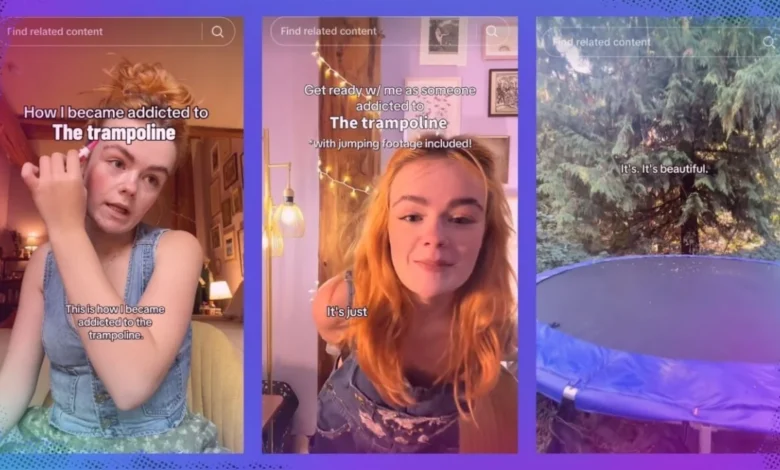
In an era defined by hyper-optimized morning routines, biohacking, and the relentless pressure to monetize one’s leisure time, the digital landscape has recently been captivated by a singular, analog ritual. A TikTok creator known as @whatifimjustagirl has gained significant traction for a practice that defies the modern trend of productivity-focused self-care: jumping on a backyard trampoline in the dead of night. For the past seven years, the creator has maintained this nocturnal habit, typically engaging in the activity between midnight and 3:00 a.m. This ritual, stripped of the performative nature common to social media "hacks," has sparked a broader conversation regarding mental health, the nature of obsessions, and the fading art of doing something purely for the sake of enjoyment.
A Chronology of a Nocturnal Ritual
The habit, which spans nearly a decade, began as a personal outlet and has remained a consistent fixture in the creator’s life since approximately 2019. Unlike fitness trends that emphasize calorie burning or sleep-cycle optimization, the creator describes the routine as a form of sensory regulation and decompression. By documenting her experience on TikTok, she has provided a window into a lifestyle that eschews traditional notions of "productive" nighttime behavior.
The timeline of her content reveals a shift from private activity to public discourse. As the videos gained millions of views, the audience—accustomed to analyzing creator behavior through the lens of psychological diagnostics—began to speculate on the potential underlying reasons for her attachment to the trampoline. The creator has been firm in her response, clarifying that while she manages OCD, her affinity for the trampoline is not a clinical symptom, but rather a deeply personal preference that provides emotional stability.
The Psychology of Repetitive Motion and Sensory Regulation
To understand why a repetitive, physical activity like jumping might hold such profound appeal, one must look at the intersection of sensory input and psychological comfort. Experts in occupational therapy and behavioral psychology often note that rhythmic, repetitive movements—such as swinging, rocking, or bouncing—can have a grounding effect on the nervous system.

While the creator has explicitly stated she does not have autism, the sensory seeking behavior she describes is often discussed in neurodivergent circles as "stimming." Stimming, or self-stimulatory behavior, serves as a method of self-regulation. Even for neurotypical individuals, the act of rhythmic movement in the quiet of the night can act as a meditative practice. The lack of external stimuli—darkness, silence, and the isolation of the late-night hours—likely enhances the "flow state" she achieves, allowing her to disconnect from the stressors of the digital and professional world.
Data on Modern Leisure and the "Productivity Trap"
The viral nature of this story reflects a growing cultural fatigue with the "hustle culture" of wellness. According to recent surveys on digital consumption, audiences are increasingly favoring "low-stakes" content that emphasizes authenticity over curation. A 2026 report on digital habits suggests that 68% of Gen Z and Millennial social media users feel overwhelmed by "optimization culture," leading to a trend of "anti-productivity" content.
In this context, the trampoline routine functions as a form of rebellion. When most influencers are selling morning routines involving ice baths, green juices, and early-morning workouts, a woman jumping in the dark—without gear, sponsors, or a step-by-step guide—becomes a symbol of radical autonomy. She is not performing wellness; she is simply living it. This shift in content consumption highlights a psychological pivot toward activities that provide genuine joy rather than measurable outcomes.
Public Reception and the Burden of Diagnosis
The discourse surrounding the creator’s videos serves as a case study in the "armchair psychology" that often permeates social media comment sections. When a creator displays a unique or repetitive behavior, users frequently attempt to assign a medical or diagnostic label to the individual. In this instance, the repeated suggestions of autism forced the creator to address the medicalization of her hobbies.
Her response—"I don’t think there needs to be a diagnosis for it"—resonated with a significant portion of her audience. It underscores a growing tension between the internet’s desire to categorize individuals and the individual’s right to define their own experiences. By rejecting the need for a clinical explanation, she reinforces the idea that hobbies do not require a social or medical justification to be valid.

Broader Implications for Digital Culture
The phenomenon of the "nighttime jumper" suggests that society is reaching a breaking point with the commodification of private life. When every hobby is viewed as a potential side hustle, the act of doing something "useless" becomes a radical assertion of humanity.
Furthermore, the physical logistics of her routine—the requirement for a backyard, the potential for noise complaints, and the dedication required to maintain a seven-year streak—add a layer of grit to the story that is often absent from polished influencer content. She is not presenting a version of her life meant to be imitated; she is presenting a life that is fundamentally her own.
The Future of Analog Hobbies in a Digital World
As artificial intelligence and automated content continue to saturate our feeds, the value of raw, human-centric behavior is likely to increase. The creator’s routine is a stark reminder that happiness often lies in the mundane and the physical. Whether it is gardening, hiking, or jumping on a trampoline, the activities that bring the most long-term satisfaction are frequently those that require us to step away from the screen and engage with the immediate, physical environment.
The lasting impact of this viral moment may not be a new wave of trampoline sales, but rather a shift in how we view the personal habits of strangers. As we continue to navigate a world that demands constant connectivity and self-improvement, the sight of a person embracing a nocturnal, repetitive, and deeply personal ritual offers a quiet, defiant promise: that it is entirely possible to find contentment in the shadows, away from the gaze of the algorithm, provided one is willing to simply jump.
Ultimately, the story of the trampoline-jumping creator is a testament to the resilience of human individuality. In a world that seeks to explain, diagnose, and monetize every aspect of our existence, there remains a small, protected space for the things that we do simply because we can. For this creator, that space is a trampoline at 2:00 a.m., and in that, she has inadvertently provided a blueprint for a more authentic, albeit unconventional, form of happiness.
Related posts: