NASA Calls on University Innovators to Solve Critical Lunar Communications Challenges for the 2027 Human Lander Challenge

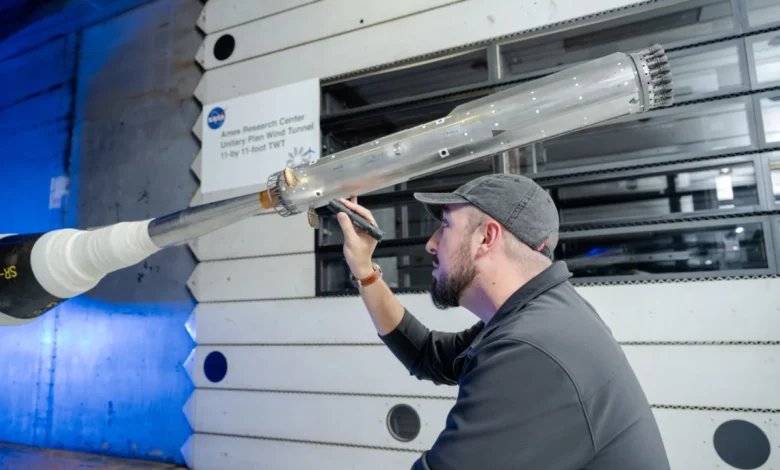
As NASA accelerates its ambitious timeline for the Artemis program, the agency has officially opened the call for the 2027 Human Lander Challenge, a high-stakes competition aimed at solving one of the most complex engineering hurdles of deep-space exploration: reliable, persistent communications in the lunar environment. By soliciting systems-level solutions from university and college students across the United States, NASA is tapping into the next generation of aerospace engineers to ensure that future astronauts, landers, and lunar habitats remain connected in a landscape where signal degradation and terrain-induced interference are constant threats.
The transition from short-term lunar visits to a sustained human presence—a cornerstone of the Moon Base program—requires a fundamental shift in how space agencies approach data transmission. Unlike low-Earth orbit missions, where satellite constellations and ground stations provide near-constant connectivity, the lunar surface presents a unique set of variables. Signal latency, shadowing caused by craters, and the extreme thermal environment of the Moon necessitate a communications architecture that is as resilient as the life-support systems protecting the astronauts themselves.
The Technological Imperative of Lunar Connectivity
The need for a robust lunar communications network is not merely a matter of convenience; it is a critical safety requirement. For astronauts operating thousands of miles from Earth, the ability to coordinate complex surface operations depends on the integrity of data streams between the Lunar Gateway, surface rovers, and terrestrial mission control. Current projections for the Artemis era suggest that surface operations will involve multiple landers and automated assets, all of which must synchronize their movements to avoid collision and maximize scientific yield.
NASA’s Human Landing System (HLS) program, which serves as the primary sponsor for this competition, is currently navigating the technical challenges of landing humans on the lunar South Pole. This region, characterized by deep, permanently shadowed craters and significant topographical variation, makes traditional line-of-sight communication highly unreliable. Students participating in the 2027 challenge are tasked with developing solutions that can be prototyped and implemented within a three-to-five-year window, bridging the gap between theoretical research and operational deployment.
A Structured Path to Innovation: Competition Chronology
The 2027 Human Lander Challenge is organized into a rigorous two-phase structure designed to foster both creative ideation and technical feasibility. The timeline for the current competition is as follows:
- October 15, 2026: Deadline for the submission of non-binding notices of intent. This early registration allows organizers to gauge the scale of participation and prepare for the evaluation process.
- March 4, 2027: The submission deadline for full proposal packages. These packages must include a comprehensive five-to-seven-page proposal and a two-minute video pitch, detailing the technical merits and potential impact of the proposed communications solution.
- Phase 1 Evaluation: A panel of experts from NASA and the National Institute of Aerospace will evaluate the submissions based on technical innovation, project feasibility, and alignment with NASA’s long-term lunar architecture.
- June 21–24, 2027: Up to 12 finalist teams will be selected to participate in the final design review held at NASA’s Marshall Space Flight Center in Huntsville, Alabama. During this phase, finalists will compete for a share of $18,000 in prize money.
Expert Insights on the Future of Lunar Operations
Jeremy Del Greco, the communications integration lead for the Human Landing System program at the Marshall Space Flight Center, has emphasized that this competition is not a peripheral academic exercise but a vital component of the agency’s strategic roadmap. "Reliable communications will be at the heart of our ability to explore and operate on the Moon," Del Greco noted. "As Artemis and Moon Base missions expand our presence beyond Earth, we will need dependable connections across the lunar surface and beyond. The 2027 Human Lander Challenge gives students the opportunity to help shape the communications capabilities of tomorrow."
This sentiment is echoed by broader industry observers who note that space-based infrastructure is increasingly reliant on decentralized, automated, and high-bandwidth networks. By inviting collegiate teams to tackle this, NASA is effectively "crowdsourcing" research and development, allowing the agency to examine a wider array of technologies—such as laser communications, mesh networking, and AI-driven signal optimization—that might not have been prioritized under standard procurement cycles.
Broader Implications for Mars and Beyond
The outcomes of this challenge will have immediate applications for the Moon, but the implications extend far beyond the lunar orbit. NASA’s ultimate objective with the Artemis program is to establish the infrastructure and protocols necessary for the first human missions to Mars. The communication architectures developed for lunar surface operations serve as the "testbed" for the much more difficult task of establishing a Mars-to-Earth link, where signal latency can reach up to 20 minutes depending on the orbital positions of the planets.
If a team can solve the problem of signal shadowing in a lunar crater, they have effectively solved a core logistical barrier to any future planetary exploration. The focus on systems-level integration—ensuring that a lander’s transmitter, a rover’s receiver, and a lunar habitat’s antenna can function as a cohesive whole—is the exact type of systems engineering required for multi-planetary human migration.
Analysis of Technical Hurdles and Market Needs
For the competing university teams, the challenge will likely focus on three core areas: bandwidth capacity, signal resilience, and power efficiency. Because energy on the Moon is a finite and highly managed resource, any proposed communications system must balance high data throughput with low power consumption. Furthermore, the harsh environment of the Moon—where temperatures can fluctuate by hundreds of degrees and lunar dust poses a constant threat to sensitive hardware—means that solutions must be ruggedized beyond traditional terrestrial standards.
Historically, NASA has successfully utilized such collegiate competitions to drive innovation in areas as diverse as planetary rover mobility, oxygen production, and waste management. The National Institute of Aerospace (NIA), which administers the challenge on behalf of NASA, plays a pivotal role in ensuring that these academic projects are aligned with the technical standards required by NASA’s Human Spaceflight Mission Directorate. By facilitating this bridge between academia and the space industry, the NIA ensures that the brightest young minds in the country are working on problems that directly support the future of human spaceflight.
Conclusion and Participation Details
As the 2027 deadline approaches, interest in the competition is expected to grow, particularly as NASA releases further documentation on specific focus areas and technical requirements. The challenge represents a unique opportunity for students to contribute to the Artemis program, which is tasked with the monumental goal of returning humans to the lunar surface for scientific discovery and economic development.
For institutions looking to participate, the process begins with the submission of the notice of intent. The subsequent proposal phase will require a deep dive into the constraints of lunar physics and the specific operational requirements of the Human Landing System. All interested faculty and students are encouraged to review the official documentation provided by the NIA. By fostering this collaborative ecosystem, NASA is not only solving the technical problems of today but is also cultivating the next generation of engineers, scientists, and mission architects who will eventually carry humanity to the red sands of Mars.
For further information, technical specifications, and registration details, interested parties should visit the official program portal at https://hulc.nianet.org/. As the agency moves closer to the next crewed lunar landing, these student-led innovations may well provide the connective tissue that keeps future explorers safe and in contact with the world they left behind.
Related posts: