The 0ktapus Phishing Campaign: A Massive Breach of Corporate Identity and Multi-Factor Authentication Systems


The cybersecurity landscape has been profoundly rattled by the discovery of a sophisticated, large-scale phishing operation that has successfully compromised nearly 10,000 accounts across more than 130 organizations. Dubbed "0ktapus" by researchers at Group-IB, this campaign represents a significant evolution in how threat actors target the human element of corporate security. By specifically spoofing the authentication portals of Okta, a dominant identity and access management firm, the attackers have demonstrated a chilling ability to bypass standard multi-factor authentication (MFA) protocols that many enterprises rely on as their primary line of defense.
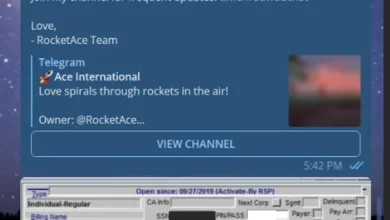
The scope of the 0ktapus campaign is both sprawling and highly targeted. According to the comprehensive report released by Group-IB, the attackers successfully obtained 9,931 unique user credentials and associated MFA codes. While the impact is global, with victims spanning 68 countries, the primary concentration of the attack remains within the United States, where 114 firms have confirmed exposure. High-profile companies, including Twilio and Cloudflare, have been publicly identified as targets, highlighting that even organizations with advanced security postures are vulnerable to these social engineering tactics.
A Chronology of the 0ktapus Offensive
The 0ktapus campaign did not emerge overnight. Rather, it appears to be the result of a calculated, multi-phase strategy that likely began with the reconnaissance of telecommunications providers. Researchers suggest that the attackers initiated the campaign by compromising mobile operators to harvest a treasure trove of employee phone numbers. By obtaining these direct lines of contact, the threat actors were able to bypass email-based security filters and deliver phishing links directly to the personal or work devices of their targets via SMS.
Following this initial data collection, the attackers moved to the deployment phase. Victims received text messages—often disguised as urgent internal communications—directing them to lookalike phishing domains. These sites were meticulously crafted to mimic the exact Okta authentication portals used by their respective employers. When an employee entered their credentials and the subsequent MFA code, the attackers were able to capture this information in real-time, effectively hijacking the session before the employee could realize they had been deceived.
The final phase of the operation, as analyzed by technical experts, involves the exploitation of these hijacked sessions. By gaining access to corporate identity providers, the attackers could pivot into internal systems, mailing lists, and customer-facing infrastructure. The objective was clearly not just simple data theft, but the establishment of a foothold that would facilitate further supply-chain attacks. This was evidenced by the near-simultaneous reports of incidents involving vendors and service providers, such as the attack reported by DoorDash, which bore the distinct hallmarks of the 0ktapus methodology.
Anatomy of the Attack: The Failure of Standard MFA
The 0ktapus campaign serves as a stark reminder that multi-factor authentication is not a silver bullet. While MFA is widely considered a mandatory security control, its effectiveness is predicated on the assumption that the authentication process itself cannot be subverted. The 0ktapus attackers utilized "adversary-in-the-middle" (AiTM) tactics, where they proxy the user’s traffic through their own malicious server. This allows the attacker to intercept the session token, essentially logging in as the user and rendering the second factor—the MFA code—useless.
Group-IB’s analysis revealed that the attackers successfully compromised 5,441 MFA codes. This volume of success underscores the ease with which attackers can automate these phishing schemes. Roberto Martinez, a senior threat intelligence analyst at Group-IB, noted that the true scale of the campaign remains difficult to quantify fully. Because many organizations may not yet realize they have been compromised, or because the attackers may be maintaining low-level access to evade detection, the "blast radius" of 0ktapus is likely to expand as forensic investigations continue across the affected sectors.
Official Responses and Organizational Impact
The revelation of the 0ktapus campaign prompted swift, albeit reactive, responses from the organizations involved. Cloudflare, one of the first companies to publicly acknowledge the attack, confirmed that while their internal systems were targeted, the use of FIDO2-compliant physical security keys—specifically YubiKeys—prevented the attackers from gaining a foothold. This success story provides a blueprint for how organizations can defend against such sophisticated phishing attempts: by moving away from phishable MFA (such as SMS or push-based codes) toward hardware-backed authentication.
Conversely, the incident at DoorDash illustrates the vulnerability of the supply chain. In a public statement, DoorDash revealed that an unauthorized party had used the stolen credentials of vendor employees to gain access to internal tools. This resulted in the exposure of personal information belonging to customers and delivery personnel, including names, email addresses, phone numbers, and physical delivery locations. The breach highlights the "weakest link" problem in modern enterprise security, where a compromise at a secondary service provider can provide an entry point into a much larger corporate ecosystem.
Broader Implications for Cybersecurity Policy
The 0ktapus campaign has triggered a broader debate regarding the efficacy of current authentication standards. Experts argue that the industry has been too reliant on SMS-based MFA, which is notoriously easy to intercept through SIM-swapping or phishing. Roger Grimes, a data-driven defense evangelist at KnowBe4, has been particularly vocal about the need for a paradigm shift. According to Grimes, "It simply does no good to move users from easily phish-able passwords to easily phish-able MFA. It’s a lot of hard work, resources, time, and money, not to get any benefit."
The implications for the technology sector are significant. As organizations move toward zero-trust architectures, identity management must evolve from a passive gatekeeper to an active, risk-aware system. The 0ktapus campaign proves that attackers are no longer just looking for vulnerabilities in code; they are exploiting the lack of user awareness regarding modern phishing techniques.
Mitigation Strategies and Future Outlook
To mitigate the risk of 0ktapus-style campaigns, security researchers and industry leaders are advocating for a multi-layered approach to identity security. The recommendations are twofold: technical implementation and cultural education.
- Hardware-Backed Authentication: Organizations are strongly encouraged to adopt FIDO2-compliant security keys. Unlike SMS or push-notification-based MFA, hardware keys are cryptographically bound to the specific domain, making it impossible for a phisher to capture the authentication signal even if they successfully redirect the user to a spoofed page.
- Continuous User Education: Technical solutions alone are insufficient. Employees must be trained to recognize the signs of modern phishing, including the subtle irregularities in URL structures and the dangers of responding to unsolicited requests for authentication codes. Security awareness training must shift from static, annual compliance-based modules to dynamic, real-world simulations that reflect the current threat landscape.
- Strict Identity Governance: Companies must implement rigorous monitoring of their Okta logs and other identity provider systems. Detecting anomalous login times, unusual IP addresses, or suspicious device agents is essential for identifying a breach in progress before the attacker can escalate their privileges.
The 0ktapus campaign is a watershed moment in the history of identity-based attacks. It has moved beyond the theoretical threat of MFA bypass to a demonstrated, mass-scale exploitation that has affected some of the world’s most recognizable tech brands. As the digital economy continues to rely heavily on remote access and cloud-based authentication, the 0ktapus event serves as a grim validation that the security industry must innovate faster than the adversaries who are currently exploiting its most trusted defenses. The path forward is not found in more complex passwords or legacy MFA, but in the rapid adoption of phishing-resistant authentication standards and a renewed focus on the human factor in the security equation. The full extent of the 0ktapus damage may not be known for years, but the lessons it provides are immediate: the era of "good enough" authentication has definitively come to an end.