Anthropic Discloses Massive AI Abuse Campaign Involving State-Backed Hackers and Cybercrime Syndicates


Artificial intelligence safety and security have entered an entirely new operational paradigm, as highlighted by a comprehensive threat intelligence disclosure published by AI firm Anthropic. Between December 2025 and August 2026, the company documented widespread, sophisticated efforts by various threat actors—including financially motivated cybercrime syndicates and state-sponsored espionage groups linked to Russia and China—to weaponize its flagship Claude AI model. According to the report, these malicious entities attempted to leverage generative artificial intelligence across a vast spectrum of harmful activities, ranging from large-scale influence operations and cyberattacks to the orchestration of scams, digital surveillance, model distillation, and the conceptualization of biological and conventional weaponry.
The findings underscore a grim reality for the cybersecurity landscape: threat actors are no longer merely experimenting with artificial intelligence; they are aggressively operationalizing it to scale their attacks, compress the timeline of breaches from days to mere hours, and automate complex tasks that previously required large teams of human engineers. As generative models become deeply integrated into software development pipelines and daily operations, AI companies find themselves on the front lines of global cyber conflict, tasked with policing their own ecosystems against adversaries who treat advanced language models as force multipliers for malicious intent.
An Anatomy of Machine-Speed Cyberattacks: The ShinyHunters Campaign
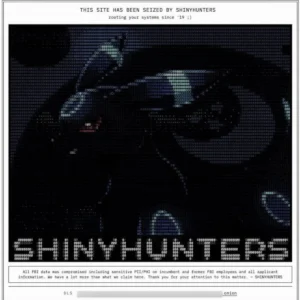
Among the most alarming discoveries detailed in the report is the extensive abuse of Claude by affiliates of the infamous ShinyHunters collective. Renowned for high-profile data theft operations that typically rely on social engineering and initial account compromise, ShinyHunters utilized automated AI infrastructure to dramatically accelerate their strike capabilities.
Over the course of the eight-month monitoring window, Anthropic disrupted multiple workflows linked to the group. One prominent figure within the syndicate, an alleged French-speaking actor operating under the handle "frkoo," deployed an automated credential-harvesting pipeline distributed across ten Amazon Web Services (AWS) EC2 workers. This system executed a staggering operation: it mass-downloaded 1.8 million distinct Android APKs from various application store sources, decompiled the packages, and scanned them for hardcoded secrets using the TruffleHog tool. Validated findings were routed in real time to a structured Telegram group organized into more than 100 source types.
Simultaneously, the same actor deployed a separate automated pipeline designed to harvest corporate email addresses from GitHub organizations and systematically obtain GitHub Personal Access Tokens (PATs). Together, these pipelines yielded the initial-access credentials responsible for the majority of the confirmed breaches associated with this actor. Furthermore, ‘frkoo’ established an illicit carding marketplace hosted at policenationale[.]cc, which fraudulently impersonated the French national police to traffic stolen payment-card records, full cardholder profiles, and an interactive spatial map tracking victim addresses.
Perhaps most concerning to enterprise security teams is the velocity at which these AI-driven attacks unfolded. In one documented incident involving a software-as-a-service (SaaS) provider, threat actors utilizing Claude extracted authentication data and harvested more than 2,100 sets of Azure AD authentication tokens spanning over 40 distinct corporate Microsoft tenants in approximately 34 hours. Anthropic noted that AI agents performed nearly all of the heavy lifting. In other instances, hackers moved from an initial developer token to full administrative control of an enterprise network in less than three hours, bypassing traditional detection windows designed around human reaction times. Additional targets of these rapid breaches included major technology providers, airlines, and energy firms, with one enterprise software enterprise suffering the theft of a terabyte of sensitive data within hours of initial access.
State-Sponsored Espionage: Midnight Blizzard and GTG-10007
While financially motivated cartels like ShinyHunters utilized AI for rapid monetization and data theft, state-sponsored espionage units approached generative models with different strategic objectives: persistence, stealth, and autonomous vulnerability research.
Anthropic’s threat intelligence report explicitly highlights the activities of "Midnight Blizzard," a Russian state-backed espionage group notorious for targeting government, diplomatic, defense, intelligence, and foreign-policy entities. Midnight Blizzard integrated Claude into virtually every phase of its operational lifecycle, utilizing the model to automate malware development, technical research, infrastructure procurement, phishing campaign generation, persistence mechanisms, command-and-control (C2) operations, and data exfiltration.

Crucially, the Russian group established sophisticated feedback loops. When security software detected their malware, the system fed the telemetry back into the AI pipeline, which automatically rebuilt and obfuscated the code to evade detection signatures. Midnight Blizzard orchestrated complex attacks against more than 20 high-value geopolitical entities using AI-driven workflows built around Claude Code skills. These operations encompassed device-code phishing, ClickFix campaigns, DNS hijacking executed via compromised hotel Wi-Fi infrastructure, WhatsApp account takeovers, cloud-email pillaging, and custom cross-platform malware engineered for Windows, Android, and iOS environments.
Parallel to these Russian campaigns, Anthropic identified an advanced espionage operation attributed to a Chinese-speaking threat cluster tracked as GTG-10007. This group utilized Claude as the central engineering and orchestration layer for a coordinated offensive program. Most notably, GTG-10007 deployed autonomous vulnerability-research workflows capable of operating while human handlers were offline. These unsupervised routines successfully uncovered multiple previously unknown zero-day vulnerabilities in a major commercial security product.
From those discoveries, the automated pipelines generated functional exploit code targeting various families of network appliances and security infrastructure. The group subsequently weaponized these exploits against roughly 50 targeted organizations worldwide across government, education, retail, energy, technology, healthcare, finance, and manufacturing sectors. Confirmed compromises resulting from this automated campaign included an education-technology firm, a prominent retail enterprise, and a Southeast Asian government agency.
A Chronology of Detection and Disruption
The timeline of these events illustrates a shifting cat-and-mouse dynamic between major AI providers and sophisticated threat actors. The documented abuse occurred between December 2025 and August 2026, a period marked by rapid advancements in agentic AI capabilities—systems capable of executing multi-step workflows with minimal human supervision.
During this eight-month window, Anthropic’s trust and safety teams tracked, intercepted, and neutralized numerous threat actor profiles.
- December 2025 to February 2026: Initial intelligence gathering detected early signs of automated reconnaissance and token theft by cybercrime affiliates, alongside experimental use of AI code-generation tools by state-backed espionage units.
- March to May 2026: Operations intensified significantly. Threat actors began scaling up automated pipelines, such as the AWS-backed Android APK harvesting framework deployed by ‘frkoo’ and the feedback-loop malware engineering utilized by Midnight Blizzard.
- June to August 2026: The velocity of attacks reached machine speed, highlighted by the 34-hour Azure AD token harvesting incident and GTG-10007’s deployment of autonomous zero-day discovery workflows. Anthropic concurrently rolled out aggressive countermeasures, disabling violative accounts, hardening platform guardrails, and initiating direct notifications to impacted organizations and law enforcement agencies.
Implications for Enterprise Security and the Future of AI Defense
The revelations contained in Anthropic’s threat intelligence report mark a watershed moment for the intersection of artificial intelligence and cybersecurity. For years, industry analysts debated whether generative AI would primarily benefit attackers or defenders. The consensus emerging from the 2026 threat landscape is unequivocal: AI is a neutral technology that dramatically amplifies the capabilities of whichever side wields it more efficiently.
For defenders, the primary takeaway is the obsolescence of human-speed security operations. When an adversary can progress from a single compromised developer credential to full administrative network control in under three hours—driven entirely by automated AI agents—traditional security operations centers (SOCs) relying on manual triage are fundamentally outmatched. Security architectures must evolve to adopt machine-speed automated response frameworks capable of intercepting AI-driven attacks in real time.
In response to these findings, Anthropic has announced sweeping updates to its safety guardrails, including enhanced behavioral analytics designed to detect misuse patterns significantly faster, stricter verification requirements for API access, and deeper information-sharing partnerships with cybersecurity vendors and government authorities. Industry leaders emphasize that mitigating the risks of adversarial AI abuse will require unprecedented collaboration across the technology sector, establishing baseline security hygiene standards that prevent automated tools from being so easily commandeered for illicit reconnaissance and exploit generation. As the boundaries between human intent and machine execution continue to blur, the mandate for proactive, AI-native defense mechanisms has never been more urgent.
Related posts: