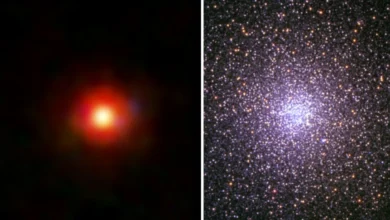
Hubble Space Telescope captures stunning cosmic portrait of globular cluster Messier 30 revealing deep galactic history

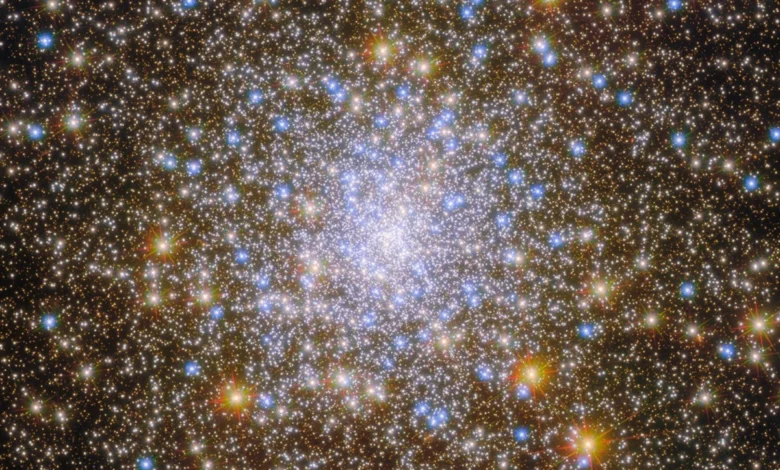
The NASA/ESA Hubble Space Telescope has delivered a breathtaking new perspective on one of the most ancient structures in our galaxy, releasing a high-definition image of the globular cluster known as Messier 30 (M30). Unveiled on November 5, 2026, this visual record serves as more than just a stellar portrait; it acts as a time capsule, allowing astrophysicists to peer back into the formative years of the Milky Way. Located approximately 27,500 light-years from Earth in the constellation Capricornus, M30 is a densely packed spherical collection of hundreds of thousands of stars, offering a unique laboratory for studying stellar evolution and the dynamic interactions within crowded gravitational environments.
Historical Context and the Messier Catalog
The object now known as Messier 30 was first discovered by the French astronomer Charles Messier in 1764. During the 18th century, Messier’s primary objective was the discovery and tracking of comets. However, his work was frequently hampered by the presence of "fixed" nebulae—fuzzy, cloud-like objects that appeared stationary in the night sky and could easily be mistaken for comets. To streamline his search and aid other astronomers, Messier compiled a definitive catalog of these deceptive objects.
M30 was recorded as the 30th entry in this list. While Messier’s primitive telescopes could only resolve the cluster as a faint, blurry patch of light, modern technology—specifically the Hubble Space Telescope—has stripped away the ambiguity, revealing a brilliant, sprawling metropolis of stars. Today, we understand that M30 is a globular cluster, a stable, tightly bound group of stars that orbit the galactic center, serving as some of the oldest remnants of the universe’s early assembly.
The Anatomy of M30: A Stellar Population Study
The latest image of M30 is remarkable for its clarity, showcasing the distinct color variations that delineate the age and life cycles of the stars within the cluster. Astronomers categorize the stars in M30 into two primary groups based on their visual characteristics: blue stars and yellow-to-orange stars.
The blue stars, which appear predominantly in the dense, brilliant core of the cluster, are of particular interest. In a typical stellar environment, these blue stars would be short-lived, high-mass entities; however, in the context of an ancient globular cluster, they often represent "blue stragglers." These are stars that appear younger and hotter than their peers due to stellar mergers or mass transfers within binary systems. The prevalence of these stars in the core suggests a high rate of gravitational interaction, where stars are frequently nudged into one another by the extreme density of the cluster’s heart.
Conversely, the yellow and orange stars scattered toward the outskirts of the cluster represent the older, more evolved population. These stars have depleted their hydrogen fuel and have expanded into red giants, characterizing the aging process of the cluster’s original inhabitants. By mapping the spatial distribution of these different stellar types, researchers can reconstruct the "mass segregation" of the cluster—the process by which heavier stars migrate toward the center over billions of years, while lighter stars are pushed to the periphery.
Chronology of Discovery and Observation
The study of M30 has spanned centuries, marking a steady progression in human understanding of the cosmos:
- 1764: Charles Messier formally catalogs M30, identifying it as a static object distinct from the comets he sought.
- 19th and Early 20th Centuries: As telescope technology improved, astronomers began to identify the nature of globular clusters as gravitationally bound systems, though distance measurements remained highly speculative.
- 1990s: The launch of the Hubble Space Telescope revolutionized the field. For the first time, researchers were able to resolve individual stars within the dense core of M30, enabling precise photometry.
- 2000s–2020s: Subsequent surveys using Hubble’s Advanced Camera for Surveys (ACS) and Wide Field Camera 3 (WFC3) allowed for multi-wavelength analysis, refining our understanding of the cluster’s chemical composition and orbital velocity.
- November 2026: The release of the current high-resolution imagery marks a milestone in deep-field imaging, providing unprecedented detail that supports current models of stellar dynamics and galactic formation.
Scientific Data and Structural Analysis
M30 is classified as a "core-collapsed" globular cluster. This is a significant finding in galactic dynamics. Over eons, the core of M30 has undergone a gravitational contraction, leading to an exceptionally high density of stars at its center. This process is essentially an "evolutionary end-point" for globular clusters.
Data derived from Hubble’s observations suggest that M30 contains a mass equivalent to approximately 160,000 times that of the Sun. Its metallicity—the abundance of elements heavier than hydrogen and helium—is extremely low, which is consistent with its status as one of the oldest objects in the Milky Way. Most of the stars in M30 were formed nearly simultaneously, roughly 12 to 13 billion years ago, not long after the Big Bang. This makes M30 a fossil record of the conditions present in the early universe.
Official Perspectives and Academic Impact
Researchers associated with the recent imaging project, including M. Libralato, G. Piotto, and A. Sarajedini, have emphasized that the data provided by this image is critical for refining stellar evolution models. By comparing the observational data of M30 against computer simulations, astrophysicists can test the accuracy of how we calculate the "clock" of the universe.
"The beauty of this image is matched only by the precision of the data," noted an astrophysicist familiar with the Hubble mission. "When we look at M30, we are looking at the fundamental building blocks of our galaxy. The way these stars interact, the way they age, and the way they move within this cluster gives us a template for how the Milky Way itself was constructed."
Broader Implications for Galactic Archaeology
The study of globular clusters like M30 is central to the field of "galactic archaeology." Just as an archaeologist digs through layers of sediment to understand human history, astronomers look at these ancient clusters to understand the history of the Milky Way. Many of the stars in M30 are thought to be among the first generation of stars to form in the galaxy. By analyzing their chemical makeup and orbital paths, scientists can determine if these clusters were formed within the Milky Way or if they were captured from smaller, dwarf galaxies that the Milky Way cannibalized early in its history.
Furthermore, the study of the cluster’s core-collapse provides insights into the existence of potential intermediate-mass black holes. While the presence of such a black hole in M30 remains a subject of intense scientific debate, the precision of Hubble’s recent imagery provides the raw data necessary to model the gravitational potential of the center with greater accuracy than ever before.
Conclusion: A Legacy of Light
The November 2026 release of the M30 image by the NASA/ESA partnership serves as a testament to the enduring value of the Hubble Space Telescope. Despite the arrival of newer, more powerful observatories, Hubble continues to provide the high-resolution, long-term observational consistency required for complex stellar studies.
As humanity looks toward the next generation of space exploration, the lessons learned from M30 remain fundamental. The cluster acts as a bridge between the infancy of the cosmos and the structured, spiral galaxy we inhabit today. Every blue straggler, every red giant, and every subtle shift in the gravitational dance of these hundreds of thousands of stars contributes to a narrative that began billions of years ago. Through the lens of Hubble, M30 is no longer just a smudge in a 1764 catalog; it is a profound testament to the complexity, age, and violent beauty of the universe. As data analysis of this latest imagery continues, the scientific community expects to uncover even more details regarding the star-formation history of the early Milky Way, further cementing M30’s place as one of the most important subjects in modern observational astronomy.