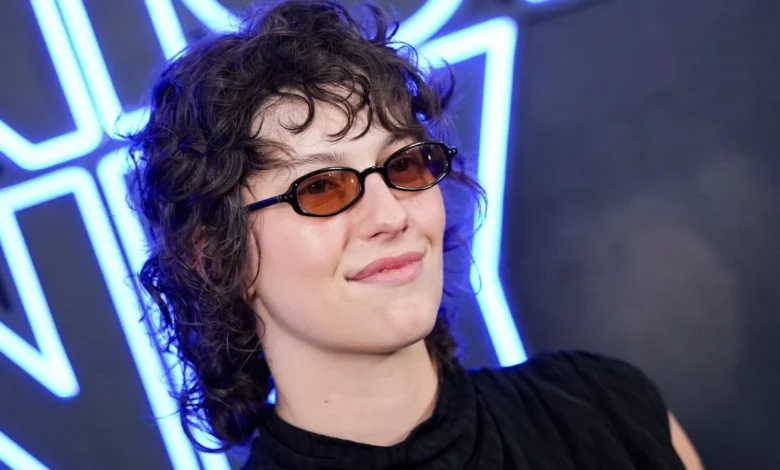
The intersection of celebrity culture, personal identity, and the digital public square has once again converged on the topic of sexual orientation, this time centered on singer-songwriter King Princess. Following a resurfaced clip from a November 2024 appearance on the podcast Celebrity Book Club with Steven & Lily, the artist—who has long identified as a lesbian—found herself at the heart of a significant social media controversy. During the conversation, the musician noted that she has engaged in sexual encounters with men, stating, "I’ve taken a lot of dick" and "I’m not bi, but why would I exclude myself?" These remarks, which were widely circulated throughout September 2026, sparked an intense debate regarding the definitions of "lesbian" and "bisexual" within the contemporary LGBTQ+ community.
A Chronology of the Controversy
The discourse began in earnest in mid-September 2026, when a social media user rediscovered the podcast episode. By the end of the month—coinciding with Bisexual Visibility Month—the sentiment surrounding the clip had moved from niche podcast discourse to mainstream social media platforms, including Reddit, X (formerly Twitter), and TikTok.
The timeline of the incident reflects the rapid velocity of modern digital criticism:
- November 2024: The original recording of the Celebrity Book Club with Steven & Lily is published.
- September 2026: A clip of the episode circulates, causing a viral reaction across platforms.
- Late September 2026: King Princess issues, and subsequently deletes, several TikTok responses attempting to clarify her stance.
- September 30, 2026: The controversy peaks as the public debate settles into a broader conversation regarding "gatekeeping" versus "label accuracy."
Within various online communities, such as r/lesbiangang and r/lesbianactually, users expressed concern that the singer’s self-identification contradicted traditional understandings of lesbianism. Critics argued that by openly discussing sexual encounters with men while maintaining a "lesbian" label, the artist was diluting the definition of the term. Conversely, supporters maintained that sexual orientation is an internal experience and that the "gold star" standard—a controversial term referring to a lesbian who has never had a sexual encounter with a man—is an outdated and exclusionary benchmark.
The Dynamics of Modern Identity Labels
The core of the issue lies in the tension between fluid sexual expression and established terminology. Historically, the label "lesbian" has been defined as a woman who is attracted exclusively to other women. When an individual who identifies as a lesbian acknowledges regular sexual activity with men, it creates a linguistic and cultural dissonance for many in the queer community.
King Princess, in her deleted social media responses, asserted that her lack of romantic or emotional attraction to men, despite physical encounters, precluded the "bisexual" label. She argued that her sexual life does not dictate her identity, stating, "The amount that I actually care about men romantically or sexually is so small… it would be inappropriate to call myself bisexual."
This perspective challenges the traditional binary of sexual orientation, which typically relies on a combination of behavior and attraction. By emphasizing attraction over behavior, the artist aligns herself with a growing movement that views labels as tools for self-description rather than rigid sociological categories.
Data and Societal Stigma
The reluctance to adopt the "bisexual" label, which some observers suggest may be at play in this controversy, is often tied to the unique social stigma faced by bisexual individuals. Data from research organizations, including YouGov and Pew Research Center, highlights a persistent friction between bisexuals and the broader population.
According to a 2026 study by YouGov, approximately two-thirds of straight women expressed an unwillingness to date a bisexual man. The same study indicated that one-third of straight men are unwilling to date a bisexual woman, and notably, one in five lesbians reported similar hesitations. The reasoning provided by respondents often centers on stereotypes regarding fidelity and the perception that bisexual individuals are "confused" or "in transition" toward a different identity.
This environment of skepticism, where bisexual individuals are frequently subject to external doubt, creates a landscape where some queer-identifying people may prefer to avoid the label entirely to circumvent the associated prejudice. However, as noted by researchers, bisexuals represent the largest demographic within the U.S. LGBTQ+ community, meaning that any perceived distance from the label carries significant weight in the broader political and social discourse of the community.
Broader Implications for Queer Media
The backlash against King Princess is not an isolated event; it is part of a larger, ongoing shift in how the public perceives the "fluidity" of celebrity identities. Figures such as Jojo Siwa and Reneé Rapp have also navigated public scrutiny regarding their shifting labels. When celebrities change, redefine, or appear to contradict their previously stated sexual orientations, it often triggers a "whiplash" effect among their fanbases, who may have invested in that identity as a form of representation.
Furthermore, the secondary controversy stemming from the artist’s suggestion that other "pop divas" were lying about their sexual orientation in favor of being "on the DL" (down-low) with men has expanded the scope of the debate. By casting doubt on the honesty of her peers, the conversation moved from a debate about definitions to a speculative search for "hidden" realities among public figures. This creates a culture of suspicion that many community advocates argue is detrimental to the overall goal of LGBTQ+ acceptance.
Analysis of the Public Reaction
The intensity of the response to King Princess serves as a case study in how the digital age has transformed identity into a communal asset. Because fans often view their favorite artists as representatives of their own lived experiences, a shift in that artist’s self-identification is often felt as a personal betrayal or a validation of one’s own struggles.
The discourse also underscores a fundamental disagreement on the purpose of labels. One school of thought suggests that labels should be descriptive—reflecting patterns of behavior and attraction that remain consistent over time. The opposing school of thought argues that labels should be aspirational or identity-based, reflecting the internal sense of self, regardless of temporary actions.
In the case of King Princess, the public’s insistence on categorizing her experience demonstrates a desire for coherence in a world where human sexuality is increasingly viewed as a spectrum. While the singer remains steadfast in her identification, the controversy proves that the "lesbian" label, in particular, remains a highly protected and fiercely debated term within the queer community.
Conclusion: The Future of Labeling
As we move further into the decade, the friction between rigid labels and individualistic self-identification is likely to persist. The incident with King Princess highlights a maturing, albeit painful, process of re-evaluating what it means to be queer in the public eye.
Whether the consensus eventually shifts toward a more flexible definition of lesbianism or toward a more rigorous adherence to the traditional definitions of monosexual orientations remains to be seen. What is clear, however, is that the debate is no longer just about the individual; it is about the power of language, the weight of historical prejudice, and the struggle to maintain communal boundaries in an era where, for many, the only constant is the evolution of the self. As the digital dust settles, the conversation serves as a reminder that the definition of identity is rarely static, and the public’s interest in policing these boundaries is as strong as ever.
Related posts: