GitHub Introduces Native Stacked Pull Request Workflow with gh-stack CLI Extension, Addressing Complex Code Review Challenges

GitHub has officially unveiled a native stacked pull request workflow, integrated through a new CLI extension dubbed gh-stack. This significant development aims to bridge a long-standing gap in its platform, a space previously occupied by a multitude of third-party solutions designed to streamline the code review process for complex features. The primary impetus behind this innovation is to mitigate the persistent problems associated with large pull requests (PRs), which are notoriously difficult to review, slow to merge, and highly susceptible to merge conflicts. According to GitHub, such unwieldy PRs lead to reviewers losing context, a tangible decline in feedback quality, and a noticeable slowdown across development teams.
Understanding Stacked Pull Requests: A Paradigm Shift in Code Review
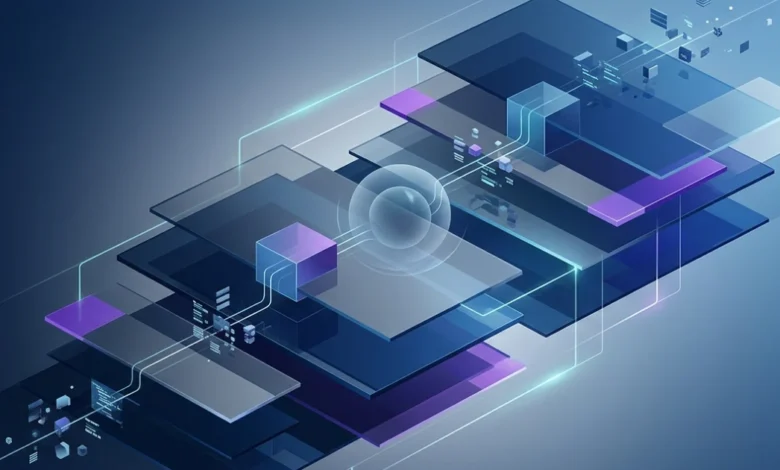
Stacked pull requests, often referred to as dependent or chained PRs, represent a sophisticated code-review pattern that fundamentally alters the traditional approach to integrating new features. Instead of each development branch directly targeting the main branch, a stacked workflow sees each subsequent branch targeting the branch immediately preceding it in a logical series. This hierarchical structure allows developers to segment a large feature into smaller, more manageable, and logically independent units. The profound benefit of this approach is that it enables developers to continue work on later layers of a feature even while earlier, foundational layers are still undergoing critical review. This concurrent development model significantly reduces idle time and accelerates the overall development cycle.
The concept itself is not novel; it has been a cornerstone of development practices within large-scale engineering organizations for nearly a decade. Evan Priestley, co-creator of Phabricator Differential, a pioneering tool in this domain, eloquently articulated the motivation behind such systems: "I was spending a lot of time waiting for code review to happen, which was a major motivator for building the tool." This sentiment resonates deeply with developers globally, highlighting a universal pain point in software development workflows. The introduction of gh-stack by GitHub signifies a mainstream validation of this powerful pattern, bringing it to a wider audience of developers who might not have had access to such specialized tooling previously.
The Measurable Benefits: Data-Driven Insights
The launch announcement for gh-stack is underpinned by compelling research that underscores the measurable benefits of adopting a stacked workflow. An extensive analysis of 1.5 million pull requests revealed a striking correlation between PR size and various development metrics. Specifically, pull requests ranging between 200 and 400 lines of code exhibited a remarkable 40% reduction in defects and were approved three times faster compared to their larger counterparts. This empirical evidence provides a robust justification for the stacked approach, which is inherently designed to keep individual PRs within this optimal size range, even when the underlying feature is substantial and complex.
The rationale behind these statistics is rooted in cognitive psychology and software engineering best practices. Smaller PRs reduce the cognitive load on reviewers, allowing them to focus more intently on a limited scope of changes. This focused attention leads to more thorough reviews, higher quality feedback, and a greater likelihood of catching subtle bugs or design flaws. Conversely, large PRs often overwhelm reviewers, leading to superficial scrutiny, increased risk of missed issues, and prolonged review cycles. By breaking down large features into these digestible segments, gh-stack directly addresses these challenges, fostering a more efficient and effective code review ecosystem.
gh-stack Mechanics: Simplifying the Complexities of Stacked Workflows
The gh-stack extension seamlessly integrates with the existing GitHub CLI, acting as a powerful orchestrator for the intricate mechanics that have historically rendered manual stacked workflows painful and error-prone. The centerpiece of its functionality is the gh stack sync command. This command is designed to automate the cascading rebase process across an entire stack of dependent branches. When a change is made to an earlier layer in the stack – for instance, in response to reviewer feedback – gh stack sync intelligently rebases all subsequent branches in the series. Crucially, it then force-pushes each branch atomically, ensuring that the integrity and relationships within the stack are maintained without manual intervention, a task that would otherwise be arduous and error-prone for developers.
Beyond the command line, GitHub’s native integration extends to its pull request interface. A new "stack map" feature is introduced, providing reviewers with a clear visual representation of the dependency chain. This intuitive map allows reviewers to effortlessly navigate between different layers of the stack, understanding the context and relationships of each PR within the larger feature. Furthermore, a critical aspect of gh-stack‘s design is how it handles branch protection rules. These rules are enforced against the final target branch (typically the main branch) rather than the immediate base of each individual PR in the stack. This ensures that the entire feature adheres to the same stringent quality gates as a traditional PR. Similarly, Continuous Integration (CI) pipelines are configured to run as if each PR in the stack were directly targeting the main branch, providing comprehensive validation at every stage.
The extension also features an innovative AI agent integration, reflecting GitHub’s broader strategy to incorporate artificial intelligence into developer workflows. By running gh skill install github/gh-stack, developers can "teach" compatible AI coding agents how to create and manage stacks. This capability opens up exciting possibilities, allowing AI to assist in breaking down a large diff into logical layers or even to guide developers in initiating projects with a stacked workflow from the outset. This could revolutionize how developers approach large feature development, leveraging AI to optimize the structuring of work.
Despite the sophisticated CLI capabilities, GitHub emphasizes accessibility. Sameen Karim from GitHub noted, "The CLI is completely optional, you can create stacked PRs purely via the UI." This statement highlights GitHub’s commitment to making this powerful workflow available to all users, regardless of their comfort level with command-line tools. The ability to manage stacks through the GitHub UI or API directly ensures a lower barrier to entry and promotes broader adoption.
Historical Context and Community Perspectives
The stacked diff pattern, while now gaining native GitHub support, has a rich history in software development. Tech giants like Meta and Google independently adopted similar workflows nearly a decade ago, necessitated by the scale and complexity of their internal development efforts. These companies invested heavily in custom tooling, giving rise to systems like Meta’s Phabricator and Google’s Gerrit. These platforms became integral to their engineering culture, proving the efficacy of the stacked approach in high-velocity development environments.
Even prior to GitHub’s official entry, independent developers and third-party tools had been adapting the stacked PR concept for GitHub’s platform. Simohamed Marhraoui, writing in LogRocket as early as 2021, highlighted the applicability of stacked pull requests to GitHub. However, he also underscored a critical challenge: the nuances of Git merge strategies. Squash and rebase merges, commonly used on GitHub, rewrite commit hashes. This rewriting breaks the identity tracking essential for linking branches in a stack, posing a significant hurdle for maintaining dependency chains. Marhraoui’s observation that only a standard merge commit should be used for intermediate PRs in a chain remains a practical concern with any stacked workflow on GitHub, including potentially gh-stack if not carefully managed.
Alan West, a developer documenting his experiences on dev.to shortly after the gh-stack launch, further elaborated on the inherent difficulties of managing dependent branches with vanilla Git. "When you rebase the first branch, every downstream branch needs to be rebased too, manually," West wrote. He described a laborious, multi-step process that developers must repeat each time a reviewer requests a change on an early PR in a stack. West’s practical experience suggested a ceiling of three to four PRs for a stack, beyond which "the cognitive overhead of tracking dependencies starts to outweigh the review benefits." This highlights the very problem gh-stack aims to solve through automation.
The Competitive Landscape: Graphite and Beyond
GitHub’s foray into native stacked PRs places it directly into a competitive arena that has seen significant innovation from dedicated startups. Graphite, founded by former Meta engineers and now available without a waitlist, stands out as a prominent competitor. Graphite offers a comprehensive suite of tools built specifically around the stacked workflow, including a stack-aware merge queue, a sophisticated web-based review interface, VS Code integration, and its own CLI. Its business model includes a free tier that encompasses the CLI and stacking workflow, with paid plans starting at $20 per user per month for advanced features. Joe Buza, a proponent of efficient code review, noted on LinkedIn in February 2026 that he had been leveraging AI coding agents to break features into Graphite-style stacked PRs, imposing constraints such as keeping each PR under 200 lines and ensuring each layer "do one logical thing and make sense on its own." This demonstrates the growing trend towards automated assistance in structuring development work.
The community reaction to GitHub’s announcement has been notably mixed, as evidenced by discussions on platforms like Hacker News, where a thread on the launch garnered over 500 points and nearly 300 comments. One segment of the discussion enthusiastically welcomed the move, viewing it as a long-overdue mainstream validation of a pattern previously confined to large, custom-tooled engineering organizations. Comments such as "Stacked diffs have existed at Meta for a decade, glad GitHub is joining 2016" captured this sentiment.
However, a skeptical contingent questioned the fundamental applicability of the workflow within GitHub’s existing infrastructure. Critics argued that either changes are genuinely independent, warranting separate PRs, or they are interdependent, in which case reviewing them in isolation might be counterproductive. A further line of criticism, summarized by ByteIota, pointed to unresolved technical challenges that competitors like Graphite have had years to refine. These include issues around squash-merge compatibility (as noted by Marhraoui) and the complexities of cascading rebase conflicts, which, despite gh-stack‘s automation, could still present edge cases or require careful developer oversight. The concern is that while gh-stack automates the process of rebasing, the resolution of conflicts during those rebases remains a developer responsibility, potentially becoming more complex across multiple dependent branches.
GitHub’s Unique Advantage and Future Implications
Despite the competition and lingering technical concerns, GitHub’s entry into the stacked PR space possesses a distinct and compelling advantage that third-party tools cannot replicate: native integration within the GitHub platform itself. The stack map and enforcement logic reside directly inside the pull request UI, eliminating the need for reviewers to install separate extensions, create additional accounts, or navigate to external interfaces to understand the context of a stacked PR. This seamless user experience significantly lowers the barrier to adoption for review teams and ensures a consistent experience across all GitHub users. The official documentation further reinforces this by stating that the CLI is "entirely optional," underscoring the platform’s commitment to UI-driven accessibility.
The ultimate success of gh-stack will hinge on several factors. Foremost among them is how effectively GitHub addresses the complex edge cases, particularly those related to merge strategies and conflict resolution, during its private preview period. The ability to gracefully handle these scenarios will be crucial for attracting teams already invested in solutions like Graphite, as well as for convincing developers who have never experienced the benefits of stacking to adopt this new workflow.
The feature entered a private preview on April 13, 2026, with developers required to join a waitlist to gain access for their repositories. This phased rollout allows GitHub to gather critical feedback and iterate on the tool before a broader public release. The launch of gh-stack aligns with a broader trend in software development towards enhancing developer experience and optimizing the code review process. Related coverage, such as InfoQ’s February 2026 piece on GitHub’s reworked layered defenses for infrastructure policy enforcement and an April 2026 article on Anthropic’s agent-based code review for Claude Code, highlights the industry’s focus on leveraging advanced tooling and AI to improve code quality and development efficiency. The Claude Code review study, for instance, found that substantive review comments on PRs exceeding 1,000 lines increased dramatically from 16% to 84% following the adoption of automated review tooling, underscoring the transformative potential of such innovations.
In conclusion, GitHub’s gh-stack represents a pivotal moment in the evolution of code review on the platform. By bringing a native, integrated solution for stacked pull requests, GitHub is directly addressing a major pain point for developers and signaling a commitment to modernizing its core workflows. While challenges and competition remain, the promise of faster, higher-quality code reviews, coupled with the power of native integration and AI assistance, positions gh-stack as a significant advancement for the global developer community.