Microsoft Azure Databricks Delivers Unprecedented Value, Forrester Study Reveals 331% ROI and Sub-Six-Month Payback

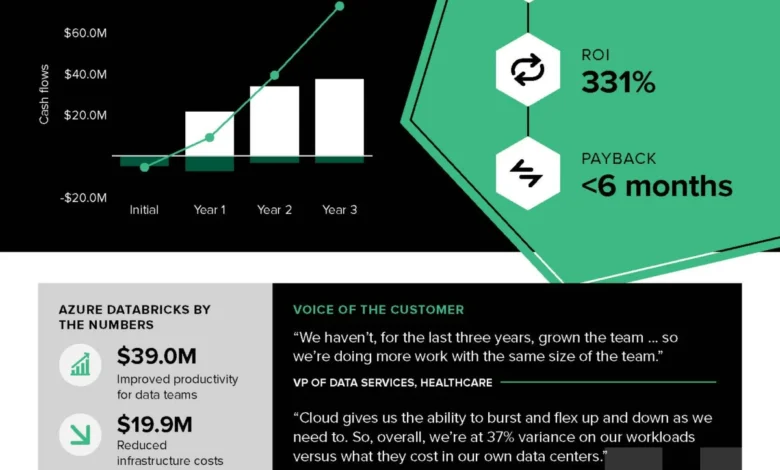
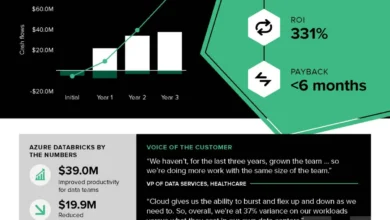
Microsoft Azure Databricks, a deeply integrated platform co-engineered by Microsoft and Databricks, is demonstrating significant, measurable value for organizations, according to a comprehensive Total Economic Impact™ (TEI) study commissioned by Microsoft and conducted by Forrester Consulting. The report quantifies substantial financial benefits, including a 331% return on investment (ROI) and a net present value (NPV) of $58.1 million over three years for a composite organization. Crucially, the study found that organizations can expect to recoup their investment in Azure Databricks in less than six months, underscoring the platform’s rapid and impactful deployment.
This first-party advantage of Databricks on Azure is not merely a theoretical benefit; it translates into tangible operational efficiencies and cost savings. The platform is identical to the standalone Databricks offering, but its native integration within the Azure ecosystem means it seamlessly aligns with existing Microsoft tools, identity management systems, and governance frameworks. This inherent synergy eliminates the complexities and costs associated with retrofitting disparate technologies, offering a streamlined and unified experience for technical and business teams alike.
The co-engineering efforts between Microsoft and Databricks have resulted in a shared integration roadmap that spans Microsoft’s extensive data and AI stack. This unified approach simplifies go-to-market strategies, providing customers with a single point of contact for procurement, billing, and support. For IT departments, this translates to deeper native integration and enhanced performance. For the business, the implications are a reduction in overall costs, a mitigated risk profile, and a significantly accelerated time to realize business value from data initiatives.
The strategic partnership between Microsoft and Databricks is characterized by an accelerated integration roadmap and a relentless pursuit of continuous optimization to boost performance. However, the perennial question for decision-makers revolves around the concrete business value derived from these advancements. To address this critical inquiry, Microsoft commissioned the Forrester TEI study, which focused on quantifying these economic benefits.
Forrester Total Economic Impact™ Study: Key Findings
The Forrester TEI study, conducted in June 2026, analyzed the experiences of Azure Databricks customers to construct a composite organization representative of interviewed clients. This composite entity was depicted as a $6 billion company operating within a regulated industry, managing approximately 10 petabytes of data. Prior to adopting Azure Databricks, this organization grappled with a fragmented, costly, and unreliable data estate that proved difficult to govern at scale.
Following the implementation of Azure Databricks, the study identified a total of $75.6 million in benefits realized over a three-year period, against a total cost of $17.5 million. This substantial net benefit of $58.1 million, when calculated on a net present value basis, highlights the significant financial upside of the platform. The rapid payback period of less than six months further emphasizes the immediate impact Azure Databricks can have on an organization’s bottom line.
The study broke down the quantified benefits into four key areas:
- Increased Productivity: This category likely encompasses improvements in data engineering, data science, and analytics workflows. With a unified platform and native integrations, teams can reduce time spent on data preparation, model development, and insight generation.
- Cost Savings: This benefit stems from the elimination of redundant infrastructure, reduced operational overhead, and optimized resource utilization inherent in a well-integrated cloud-native solution.
- Enhanced Business Value: This broad category would include the financial gains derived from improved decision-making, faster product innovation, and more effective customer engagement enabled by timely and accurate data insights.
- Reduced Risk: The enhanced governance capabilities, particularly through features like Unity Catalog, contribute to significant risk mitigation, especially in regulated industries. This includes improved data security, compliance adherence, and reduced potential for data breaches.
Beyond these quantifiable benefits, Forrester also identified several unquantified advantages that contribute to Azure Databricks’ overall value proposition. These include the seamless integration with native Azure services, leading to faster insights and broader data accessibility. The robust governance provided by Unity Catalog ensures that data access is controlled and auditable, which is paramount for organizations in regulated sectors. These qualitative benefits, while not assigned a direct monetary value in the study, are critical drivers of the quantifiable financial outcomes.
Understanding the Source of Value: A Deep Dive into Azure Databricks Integration
The impressive financial returns detailed in the Forrester study are intrinsically linked to Azure Databricks’ fundamental nature as a true first-party Azure service. This close co-engineering between Microsoft and Databricks ensures that the platform integrates effortlessly with the tools and workflows that teams already utilize. This deep integration is instrumental in eliminating the costly inefficiencies associated with maintaining separate data silos, managing multiple toolchains, and undertaking extensive integration efforts that often plague other data platforms.
A prime example of this deep integration is the Azure Databricks Genie functionality, which seamlessly interfaces with Microsoft Copilot Cowork. This synergy allows organizations to imbue their existing productivity tools with business-specific context and intelligence. Genie empowers any user to query their lakehouse using natural language, directly within applications such as Microsoft Teams and Microsoft 365 Copilot. More recently, this capability has been extended to Copilot Cowork, where tasks are grounded in trusted data through Genie Ontology. Critically, every response is meticulously scoped by Unity Catalog, ensuring that users only access data to which they are explicitly permitted. This approach democratizes data access while upholding stringent governance standards, bringing valuable intelligence directly into the flow of work without compromising security or compliance.
The platform’s comprehensive integration extends across the entire Azure ecosystem, providing a unified experience for data management and analytics. This includes:
- Azure Active Directory (now Microsoft Entra ID) Integration: Provides seamless, secure access control and identity management, leveraging existing organizational credentials for simplified user onboarding and robust security.
- Azure Synapse Analytics Integration: Enables powerful, scalable data warehousing and analytics capabilities, allowing for the seamless movement and processing of data between the lakehouse and dedicated analytical stores.
- Azure Machine Learning Integration: Facilitates the end-to-end machine learning lifecycle, from data preparation and model training to deployment and monitoring, within a governed and scalable environment.
- Azure Data Factory Integration: Simplifies the orchestration and automation of complex data pipelines, enabling efficient data ingestion, transformation, and loading from diverse sources into the Azure Databricks environment.
- Azure DevOps Integration: Supports robust CI/CD practices for data and AI projects, enabling teams to build, test, and deploy their solutions with greater speed and reliability.
- Power BI Integration: Allows for the creation of compelling interactive dashboards and reports directly from Azure Databricks data, enabling business users to derive actionable insights.
These integrations, while not always explicitly priced in the Forrester study, are fundamental to the productivity gains and cost efficiencies that were quantified. They represent the core of Azure Databricks’ value proposition, enabling organizations to unlock the full potential of their data without the typical friction and overhead.
Independent Validation of Performance and Speed
Beyond economic impact, the performance and scalability of Azure Databricks have also been validated by independent benchmarks. Principled Technologies, a reputable independent firm, conducted a decision-support benchmark, akin to the industry-standard TPC-DS, on a 10-terabyte dataset. The results demonstrated a clear performance advantage for Azure Databricks. In single-query stream tests, Azure Databricks completed queries up to 21.1% faster than Databricks on AWS (when autoscale was disabled). Furthermore, when running four concurrent query streams, Azure Databricks outperformed its AWS counterpart by over nine minutes, highlighting its superior efficiency and responsiveness under load. This independent validation provides further confidence in the platform’s ability to deliver consistent performance, even as data volumes and query complexity increase.
Implications for Businesses: A Strategic Data Foundation
The decision of selecting a data and AI platform is a strategic one with long-term implications for an organization’s ability to innovate and compete. Azure Databricks offers a cohesive and reinforcing ecosystem where each component amplifies the value of the others. The deep integrations drive the cost savings identified by Forrester, while the robust performance ensures that these gains are sustained as data usage and analytical demands grow.
At its core, Azure Databricks is built upon a foundational partnership that brings the combined engineering prowess, strategic roadmaps, and dedicated support of both Microsoft and Databricks to bear on an organization’s data estate. The value proposition is not merely a marketing claim; it is a statistically validated reality, as evidenced by the 331% three-year ROI and the rapid payback period of under six months. This compelling combination of performance, integration, and economic efficiency is why a growing number of teams are choosing to build and manage their lakehouses on Azure Databricks.
Looking Ahead: Continued Innovation and Strategic Partnerships
The ongoing collaboration between Microsoft and Databricks promises further advancements in data and AI capabilities. As organizations navigate an increasingly data-driven landscape, the need for powerful, integrated, and cost-effective platforms will only intensify. Azure Databricks, with its proven track record of delivering tangible business value and its commitment to continuous innovation, is well-positioned to meet these evolving demands. The platform’s ability to seamlessly integrate with emerging Microsoft technologies and its focus on democratizing AI and data insights ensure its relevance and impact for years to come.
For businesses seeking to harness the full potential of their data, the Forrester TEI study provides a compelling case for Azure Databricks. It underscores the platform’s ability to deliver not only significant financial returns but also to empower organizations with the tools and capabilities necessary to drive innovation, optimize operations, and maintain a competitive edge in the modern economy.
Explore Further:
- Download the Forrester Total Economic Impact™ Study: [Link to the study]
- Learn more about Microsoft Azure Databricks: [Link to Azure Databricks product page]
- Discover Databricks on Azure: [Link to Databricks on Azure solution page]
- Explore Azure Data and AI Services: [Link to Azure Data and AI hub]
Related posts: