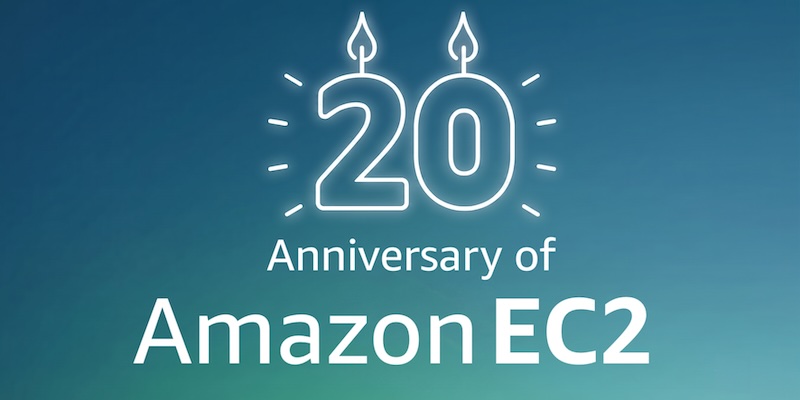
Amazon Elastic Compute Cloud Marks Two Decades of Revolutionizing Global IT Infrastructure


Two decades ago, a pivotal announcement by Amazon Web Services engineer Jeff Barr on a modest corporate blog fundamentally altered the trajectory of global information technology. The debut of the Amazon Elastic Compute Cloud (EC2) Beta introduced the concept of resizable Linux virtual servers delivered via the cloud, operating on a flexible, pay-by-the-hour pricing model. At its inception, the service offered a single instance type—designated as m1.small—within a solitary geographic region in US East. Despite its minimalist architecture, this foundational release dismantled the traditional, capital-intensive paradigm of corporate hardware procurement, introducing an elastic model of computing that allowed developers to provision infrastructure in minutes rather than weeks.
The launch of EC2 arrived at a time when enterprise computing was bound entirely to physical data centers. Companies had to accurately forecast their peak compute requirements years in advance, leading to immense capital expenditures on underutilized hardware or catastrophic outages during unexpected traffic surges. By abstracting physical servers into software-defined instances, AWS created a utility model for computing power. Over the subsequent twenty years, this modest beta release evolved into the invisible engine powering a massive share of the modern internet, transforming how startups, multinational enterprises, and government agencies build and deploy applications.
A Chronology of Innovation: Two Decades of EC2 Milestones
To understand the scale of Amazon EC2 today, industry analysts often look back at the steady, methodical rollout of foundational capabilities that transformed a basic virtual server into a comprehensive, enterprise-grade cloud ecosystem.
The early years of EC2 focused on establishing parity with traditional on-premises data center reliability. In 2008, AWS introduced Amazon Elastic Block Store (EBS), providing persistent, low-latency block storage volumes that could be attached to running EC2 instances, decoupling compute from storage and allowing data to survive instance termination. The following year, 2009, marked a massive expansion in application architecture capabilities with the simultaneous launch of Elastic Load Balancing, Auto Scaling, and Amazon CloudWatch. These services enabled workloads to dynamically scale up or down based on real-time traffic demands while providing continuous performance monitoring and high availability.
Security and network isolation emerged as critical enterprise requirements as adoption accelerated. In 2009, AWS released Amazon Virtual Private Cloud (VPC), granting customers the ability to provision logically isolated sections of the cloud where they could launch resources in a virtual network of their own design, complete with custom IP address ranges, subnets, and route tables.
As the underlying hardware demands grew more complex, AWS shifted toward hardware-accelerated virtualization. The 2017 introduction of the AWS Nitro System marked a major engineering breakthrough. By offloading virtualization functions—traditionally handled by the hypervisor and host operating system—onto dedicated hardware and software modules, Nitro delivered near-bare-metal performance, enhanced security, and rapid innovation cycles for new instance types.
A year later, in 2018, AWS diversified its processor architecture by launching A1 instances powered by custom, ARM-based AWS Graviton processors. Designed specifically for cost-sensitive, scale-out workloads, the Graviton line challenged the prevailing x86 monopoly and set a new industry benchmark for energy-efficient, high-performance cloud computing.
Scaling Globally and Beyond the Data Center
From its single-region beginning, Amazon EC2 has expanded to span 39 geographic regions across the globe, orchestrating hardware housed in hundreds of availability zones. The portfolio of available instance types has similarly exploded, growing from one original configuration to more than 1,200 distinct instance types. These specialized configurations are tailored to specific workloads, categorized across general-purpose, compute-optimized, memory-optimized, storage-optimized, accelerated computing (featuring advanced GPUs for machine learning), and high-performance computing families.
Furthermore, AWS systematically dismantled the physical boundaries of the traditional cloud region. In 2018, the introduction of AWS Outposts brought native AWS infrastructure and operating models directly to on-premises data centers and edge locations. This was followed in 2019 by the deployment of AWS Local Zones, which placed compute, storage, and database services closer to large population and industry centers to support ultra-low-latency applications. Simultaneously, the launch of AWS Wavelength embedded EC2 computing power directly inside 5G telecommunications carrier networks, enabling real-time mobile edge computing use cases such as autonomous vehicle processing, smart manufacturing, and immersive augmented reality.

The Engine Behind the Modern Cloud Stack
While Amazon EC2 began as a raw infrastructure-as-a-service offering, it has over time solidified its position as the foundational bedrock of the entire AWS product ecosystem. Modern higher-level services—including Amazon ECS, Amazon EKS, AWS Lambda, AWS Fargate, AWS Batch, Amazon EMR, Amazon SageMaker AI, and Amazon Bedrock—ultimately rely on EC2 capacity to execute their operations.
Whether an enterprise is running a lightweight corporate website, orchestrating microservices across a global Kubernetes cluster, or training trillion-parameter artificial intelligence foundation models, the underlying computational architecture traces directly back to an EC2 instance launch. This architectural consistency has allowed organizations to abstract away the underlying infrastructure while retaining granular control when needed.
Industry Analysis: Economic and Technological Implications
Economists and technology strategists note that the introduction of EC2 fundamentally democratized technological entrepreneurship. By eliminating the high initial cost of purchasing physical servers, the cloud model lowered the barrier to entry for software startups, sparking the modern Software-as-a-Service (SaaS) boom. Companies that previously would have spent months securing venture capital simply to purchase hardware racks could now launch globally scalable applications with a corporate credit card.
In the enterprise sector, EC2 catalyzed digital transformation by allowing legacy organizations to decouple IT modernization from hardware refresh cycles. Rather than waiting years to depreciate physical assets, businesses could dynamically test new software iterations, scale operations globally in minutes, and shift capital expenditure budgets to operational expenditure models.
Looking toward the next two decades, the rise of generative artificial intelligence and high-throughput machine learning workloads has placed unprecedented demands on cloud infrastructure. Modern EC2 fleets now incorporate advanced accelerators and custom-built silicon designed to handle massive neural network training and inference tasks at scale—a requirement that was entirely unforeseeable when the service debuted in 2006.
The Ongoing Strategic Vision of AWS Leadership
Reflecting on the milestone, AWS leadership emphasizes that the core tenets established two decades ago continue to guide the platform’s engineering philosophy. The primary value proposition—delivering secure, resizable compute capacity on demand with transparent, pay-as-you-go pricing—remains unchanged.
By maintaining a strategy rooted in minimal-yet-useful initial releases, rapid iteration, and continuous adaptation to customer feedback, AWS has positioned EC2 to absorb the next wave of technological evolution. As cloud computing steps into its third decade, facing workloads and architectural demands that are still in their infancy, Amazon EC2 remains the structural anchor upon which the digital world builds its future.