Spacemanic and Simera Sense Partner to Launch High-Performance Dual-Use CubeSats for Commercial and Defense Markets

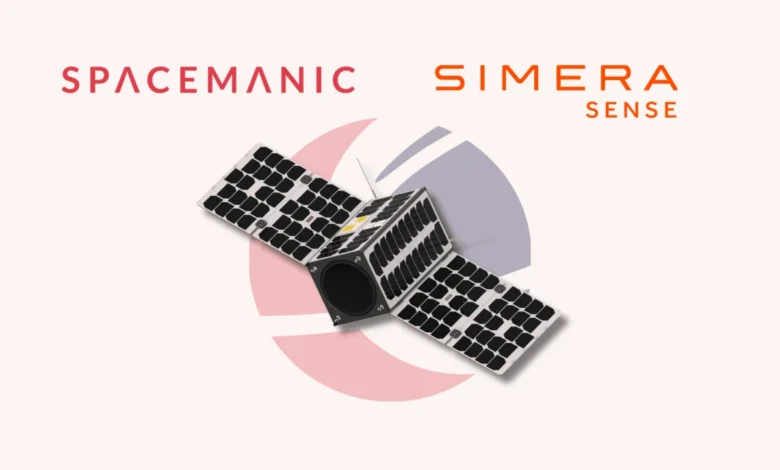
The small satellite industry is undergoing a paradigm shift as commercial agility converges with defense-grade capabilities. In a strategic alliance designed to disrupt traditional aerospace markets, Czech nanosatellite mission provider Spacemanic and Belgian optical payload specialist Simera Sense have joined forces to introduce an advanced dual-use satellite solution. By pairing Simera Sense’s high-resolution xScape200 Dual-Use (DU) optical camera with Spacemanic’s robust 16U CubeSat platform and proprietary SPACE CANNON deployer, the companies are delivering a compact spacecraft capable of rivaling the performance of traditional, heavier Earth observation satellites at a fraction of the cost and complexity.
This collaboration addresses a long-standing challenge in the aerospace sector: bridging the gap between low-cost, rapidly deployable small satellites and the high-resolution imaging requirements demanded by modern commercial and defense customers. Traditionally, securing high-resolution optical data meant investing in large, expensive, and heavy satellites that required dedicated heavy-lift launch vehicles and lengthy development cycles. The Spacemanic-Simera Sense partnership bypasses these limitations, offering a streamlined, standardized, and cost-effective alternative that empowers organizations to deploy agile constellations for both civilian monitoring and defense reconnaissance.
Engineering the xScape200 DU and 16U Platform Integration
At the heart of this new dual-use capability is the Simera Sense xScape200 DU, a sophisticated optical payload engineered specifically to deliver high-resolution imagery while maintaining a low Size, Weight, and Power (SWaP) profile. Incorporating a compact 12U form factor, the camera is designed to fit seamlessly into standardized small satellite architectures without demanding excessive power or complex thermal management systems. However, integrating a high-performance optical payload into a small satellite is rarely straightforward; optical instruments require precise alignment, stable thermal environments, and robust mechanical support to ensure image clarity.
To overcome these engineering hurdles, Spacemanic leverages its vertically integrated business model. Unlike many small satellite providers that outsource component manufacturing or rely on off-the-shelf buses that force payloads to conform to rigid geometric constraints, Spacemanic designs and builds its satellite platforms, core subsystems, and deployers entirely in-house. This comprehensive control over the manufacturing chain enables the engineering team to shape the spacecraft around the camera itself, rather than forcing a high-performance optical instrument into a generic, ill-fitting box.
This design philosophy dictates every aspect of the satellite’s architecture, including its structural envelope, mechanical mounting points, electrical buses, thermal dissipation pathways, and high-speed data interfaces. By tailoring the 16U CubeSat platform specifically to the operational profile of the xScape200 DU, Spacemanic ensures optimal alignment, reduced mechanical stress during launch, and maximized power generation capabilities for the imaging payload. The result is a highly stable, highly responsive orbital photography platform that maximizes the scientific and tactical return on investment for end-users.
The SPACE CANNON Deployer and Launch Flexibility
A satellite platform is only as effective as its ability to reach orbit safely and efficiently. Recognizing the logistical bottlenecks often associated with custom payloads, Spacemanic developed the SPACE CANNON deployer—a versatile and expansive deployment system specifically engineered to accommodate complex 16U CubeSat configurations.
The SPACE CAN年モデルfeatures an expanded integration envelope designed to support payloads with unconventional geometries, including protruding elements on the satellite’s sides and a cylindrical "tuna can" configuration at the base. This structural flexibility provides the necessary physical clearance to house the advanced optics of the xScape200 DU camera without compromising the structural integrity of the spacecraft or the safety of the launch vehicle.
Furthermore, operational efficiency is heavily emphasized in the SPACE CANNON design. The deployer incorporates removable side panels across all four outer faces, granting technicians direct physical and electronic access to the satellite even after it has been fully integrated into the deployment canister. This critical feature allows engineers to perform final diagnostic checks, software updates, and last-minute hardware adjustments right up until the moments before final integration with the rocket fairing—greatly reducing pre-launch risks and schedule delays.

Versatility in launch options is another cornerstone of the Spacemanic-Simera offering. The SPACE CANNON deployer is designed for universal compatibility with a wide array of contemporary and next-generation launch vehicles. This broad manifest includes industry workhorses such as SpaceX’s Falcon 9, Arianespace’s Ariane 6, and Avio’s Vega-C, alongside emerging commercial launchers like HyImpulse’s SL1, InnoSpace’s Hanbit, Isar Aerospace’s Spectrum, Rocket Factory Augsburg’s (RFA) RFA ONE, and HyPrSpace’s Baguette One. This multi-vehicle compatibility ensures that customers can secure launch slots flexibly, mitigating the impact of industry-wide launch congestion.
Chronology of the Partnership and Strategic Evolution
The collaboration between Spacemanic and Simera Sense did not happen overnight; it represents the culmination of years of parallel maturation within the European New Space ecosystem.
- Early Development Phase (2020–2022): Both companies established themselves independently as reliable innovators in their respective domains. Spacemanic focused on building dependable, modular CubeSat platforms for academic and commercial clients across Europe, while Simera Sense carved out a dominant niche in space-grade optical payloads, supplying high-performance cameras for various international missions.
- Initial Technical Interfacing (2023): As market demand shifted toward dual-use capabilities—where commercial earth observation data finds parallel utility in defense, intelligence, and border security—engineers from both firms began exploring loose integrations. Recognizing that mutual client demands called for tightly coupled optical and platform solutions, discussions escalated regarding a formal, pre-integrated product offering.
- System Optimization and Deployer Maturation (2024–2025): The partnership solidified as Spacemanic scaled its SPACE CANNON deployer architecture to safely house larger optical payloads. Joint testing cycles verified that the thermal, structural, and electrical interfaces between the 16U platform and the xScape200 DU could meet rigorous space-qualification standards.
- Commercial Rollout and Market Debut (Late 2026): The formal introduction of the integrated dual-use solution marks a pivotal milestone. By presenting the market with a complete turnkey system—comprising the camera, tailored platform, and certified deployer—the companies have effectively removed the traditional friction associated with multi-vendor satellite procurement.
Market Implications for Commercial and Defense Sectors
The convergence of high-resolution imaging and smallsat architecture carries profound implications for the global space economy. For decades, high-resolution Earth observation was the exclusive domain of institutional space agencies and multi-billion-dollar defense contractors operating massive, geostationary or heavy low-Earth orbit (LEO) satellites. While these spacecraft delivered exceptional imagery, their high cost and long development timelines made rapid constellation replenishment or localized tasking nearly impossible for mid-tier commercial operators or sovereign defense agencies with constrained budgets.
The Spacemanic and Simera Sense partnership democratizes access to tactical-grade orbital imagery. By packing advanced optical capabilities into a lightweight 16U form factor, the companies are enabling customers to build and maintain large constellations of high-resolution imagers at a fraction of traditional capital expenditures.
In the commercial sector, such constellations enable high-frequency monitoring for agriculture, maritime tracking, infrastructure inspection, and environmental disaster response. Satellites can pass over specific areas of interest multiple times a day, providing near-real-time data analytics that drive business decisions.
Simultaneously, the "dual-use" nature of the xScape200 DU addresses a surging demand within the defense sector. Modern geopolitical landscapes require resilient, disaggregated architectures. Instead of relying on a few vulnerable, high-value spy satellites that represent attractive targets for anti-satellite capabilities, defense organizations are increasingly turning toward disaggregated constellations of numerous, low-cost smallsats. If a single satellite in a constellation fails or is compromised, the broader network remains fully operational, ensuring continuous situational awareness, border monitoring, and reconnaissance capabilities.
Future Outlook
As Spacemanic and Simera Sense begin offering their unified mission solution to the global market, the aerospace industry will be closely watching to see how quickly commercial and defense buyers adopt pre-integrated, modular spacecraft. By collapsing the complex supply chain of satellite manufacturing into a cohesive package—spanning payload engineering, custom bus design, structural deployment, and multi-rocket compatibility—the two European firms have established a formidable benchmark for the future of small satellite missions.
The success of this alliance underscores a broader industry truth: the future belongs to modularity, vertical integration, and cross-border collaboration. As demand for rapid, resilient, and high-performance orbital assets continues to accelerate, the Spacemanic and Simera Sense partnership provides a blueprint for how small and mid-sized aerospace companies can combine their strengths to compete effectively against industry goliaths.