USS Silversides Returns to Muskegon Following Historic Multi-Million Dollar Restoration Effort

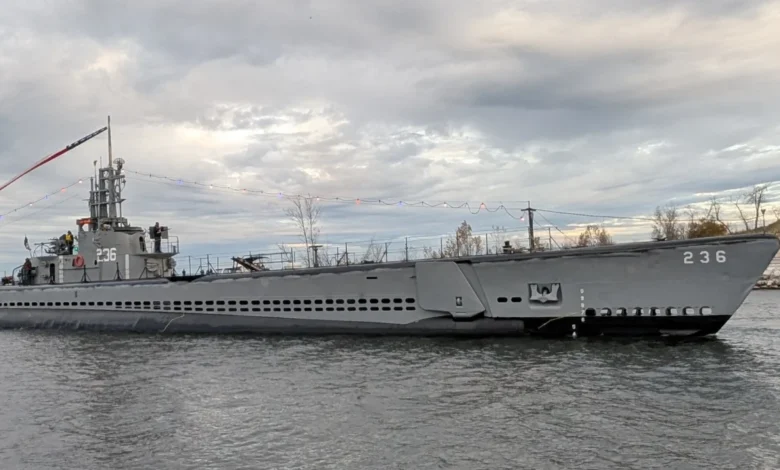
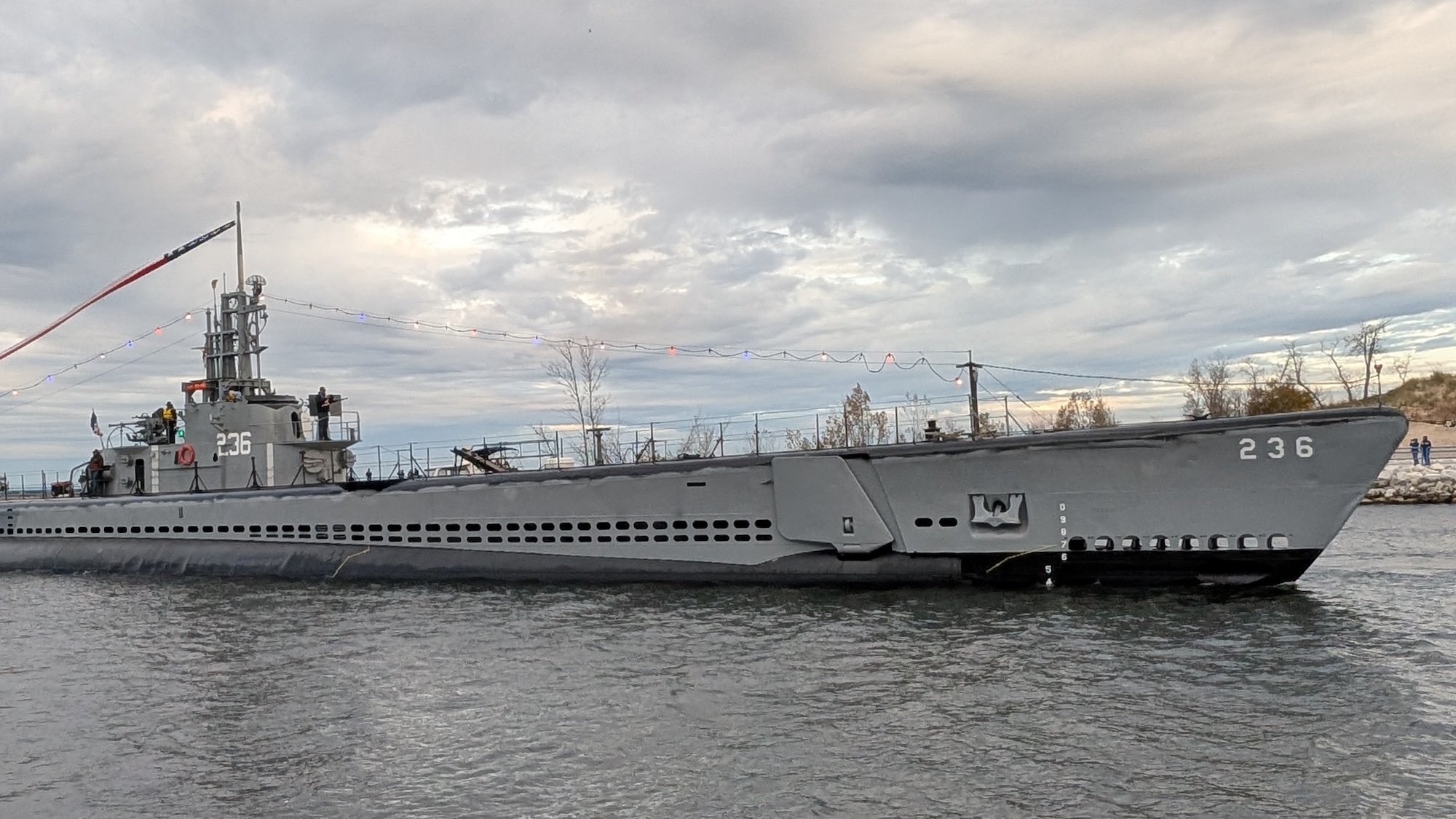
The USS Silversides, a storied Gato-class submarine that played a pivotal role in the Pacific Theater during World War II, has officially returned to its permanent berth at the USS Silversides Submarine Museum in Muskegon, Michigan. The vessel’s homecoming on October 31 concluded a high-stakes, 15-hour maritime transit across Lake Michigan, marking the end of an intensive three-month dry dock restoration project in Wisconsin. This endeavor, the first of its kind for the submarine in over half a century, serves as a critical milestone in the ongoing preservation of one of the United States Navy’s most decorated combat vessels.
A Legacy Forged in Steel and Conflict
Commissioned on August 21, 1941, at the Mare Island Navy Yard in California, the USS Silversides (SS-236) was a technological marvel of its era. Stretching nearly 312 feet in length, the submarine was designed for long-range patrols and was equipped with a formidable arsenal, including ten 21-inch torpedo tubes, a 4-inch deck gun for surface engagements, and an array of anti-aircraft weaponry, specifically 40 mm and 20 mm cannons.
The submarine’s combat record is nothing short of legendary. Over the course of the Pacific War, the Silversides was credited with sinking 23 enemy ships, totaling over 90,000 long tons of shipping—a statistic that ranks it among the top ten most successful American submarines of the war in terms of tonnage destroyed. Following the cessation of hostilities in 1946, the vessel was decommissioned by the U.S. Navy and transitioned into a secondary role as a Naval Reserve training ship based in Chicago. It remained in that capacity until 1987, when it was eventually relocated to Muskegon, becoming the centerpiece of the Great Lakes Naval Memorial & Museum.
The Engineering Challenges of Preservation
The decision to send the USS Silversides to a dry dock was not made lightly. Given the vessel’s advanced age—now entering its ninth decade—structural fatigue, particularly along the lower hull, had become a primary concern for museum curators and maritime engineers. The $3.5 million restoration project was a necessity to ensure the submarine’s long-term structural integrity.
The dry dock process required the complete removal of the 1,500-ton vessel from the water. This allowed engineers to perform a comprehensive, bottom-to-top inspection that would have been impossible while the ship was moored. According to museum curator Scott Hardin, the primary objective was to reinforce the steel hull, which had begun to show signs of corrosion after decades of exposure to the freshwater environment of Lake Michigan. Workers successfully welded significant reinforcements to the underside of the hull, effectively stabilizing the structural foundation of the ship.
"Literally, from top to bottom, she got refurbished," Hardin remarked following the return. While the vessel’s overall condition was described by technical crews as "better than anticipated," the scope of the work was comprehensive. Beyond the hull repairs, the team addressed mechanical vulnerabilities across various compartments, ensuring that the external appearance remains as faithful as possible to its 1940s configuration.
An Unintended Historical Discovery
One of the most remarkable outcomes of the dry dock operation was the discovery of a long-lost piece of naval history. While conducting routine inspections of the ship’s plumbing and valve systems, restoration workers identified a flood valve clearly stamped with the name "Trigger." Subsequent investigation revealed that this component did not belong to the Silversides, but was instead an original part from the USS Trigger (SS-237).
The Trigger, a sister ship of the Silversides, was also constructed at the Mare Island Navy Yard during the same production cycle. The two submarines were built in adjacent slips, leading to a high degree of parts interchangeability. The Trigger was lost in action in 1945, and for decades, this valve remained hidden in the bowels of the Silversides, likely swapped during a maintenance period during the war. This "orphan" part is now recognized as the only surviving remnant of the ill-fated USS Trigger, adding an unexpected layer of historical significance to the Silversides’ collection.
Chronology of the Restoration Effort
The logistics behind the restoration were complex and required months of coordination between the museum, maritime contractors, and local authorities.
- Pre-Restoration Phase (Early 2026): Museum leadership finalized the $3.5 million funding goal and secured a contract for dry dock services in Wisconsin.
- Transit to Wisconsin (August 2026): The USS Silversides was towed across Lake Michigan, a delicate operation requiring precise weather conditions and specialized maritime support.
- Dry Dock Operations (August – October 2026): The vessel was placed on land, where a team of welders, marine engineers, and historians performed the core structural reinforcements and deep-hull cleaning.
- Homecoming (October 31, 2026): The return journey was completed on Halloween, with the ship arriving in Muskegon to a local reception, marking the end of the most intensive repair cycle in the ship’s museum history.
- Public Reopening (November 7, 2026): Following a final interior cleaning and safety inspection, the submarine was cleared to welcome the general public once more.
Economic and Cultural Implications
The preservation of the USS Silversides represents more than just the maintenance of a historical artifact; it is an economic driver for the Muskegon region and a cultural touchstone for American naval history. As World War II veterans pass away, the physical machines they operated become the primary conduits for telling their stories to future generations.
"World War II vets in general are few and far between," Hardin stated, emphasizing the urgency of the preservation mission. "What we have left from that generation are some of the machines that these guys used. It served the entire length of World War II. A man died on board, and it’s a piece of American history that we have a duty to protect."
The financial burden of the project remains a focal point for the museum. While the $3.5 million goal was aggressive, the total cost—including unforeseen repairs and the logistical overhead of the tow—continues to exert pressure on the museum’s operational budget. The museum has launched an ongoing fundraising campaign to cover the remaining deficit, appealing to maritime enthusiasts and veterans’ groups to contribute to the "Dry Dock" fund.
Looking Toward the Future
With the USS Silversides back at its mooring, the museum is now transitioning into a phase of routine maintenance and educational outreach. The successful restoration provides a template for how other Gato-class submarines—and similar aging naval vessels—can be preserved for the next century.
The implication of this project is clear: the physical history of the Second World War is fragile and subject to the ravages of time and the elements. Without such interventions, these vessels would eventually succumb to structural failure. By investing in the Silversides, the Muskegon community has ensured that one of the most effective hunter-killers of the Pacific War remains a tangible classroom for students of history, engineering, and naval strategy.
As visitors return to the ship on November 7, they will find a vessel that is not only a monument to the past but a testament to the modern commitment to maintaining the material culture of the Greatest Generation. The museum continues to encourage the public to participate in the ongoing care of the submarine through its online donation portal, ensuring that the legacy of the USS Silversides—and the unexpected, salvaged history of the USS Trigger—remains on display for years to come.