Marine ecosystems are defined by complex, often hidden, symbiotic relationships where one organism utilizes another for survival, transport, or habitat. While the scientific community has long documented the phenomenon of epibionts—organisms that live on the surface of another living thing—new research published in the journal Ecology and Evolution has shed light on a curious and unexpected biological interaction between coastal crabs and yellow-bellied sea snakes. The study, led by researchers at the Florida Museum of Natural History, details how juvenile crabs, specifically in the megalopae life stage, are hitching rides on sea snakes in the Pacific waters off the coast of Costa Rica, a discovery that challenges previous assumptions about marine crustacean behavior.
The phenomenon of marine hitchhiking is typically associated with larger, slower-moving hosts. Sea turtles, for instance, are well-known mobile ecosystems, frequently hosting algae, barnacles, and various species of the crab genus Planes. These crabs are specialized to live in the crevices between a turtle’s shell and its body, benefiting from the protection and the transport provided by the reptile. However, the discovery that sea snakes serve a similar, if unintended, purpose for a different group of crabs highlights an evolutionary miscalculation rather than a refined symbiotic strategy.
A Decade-Long Scientific Journey
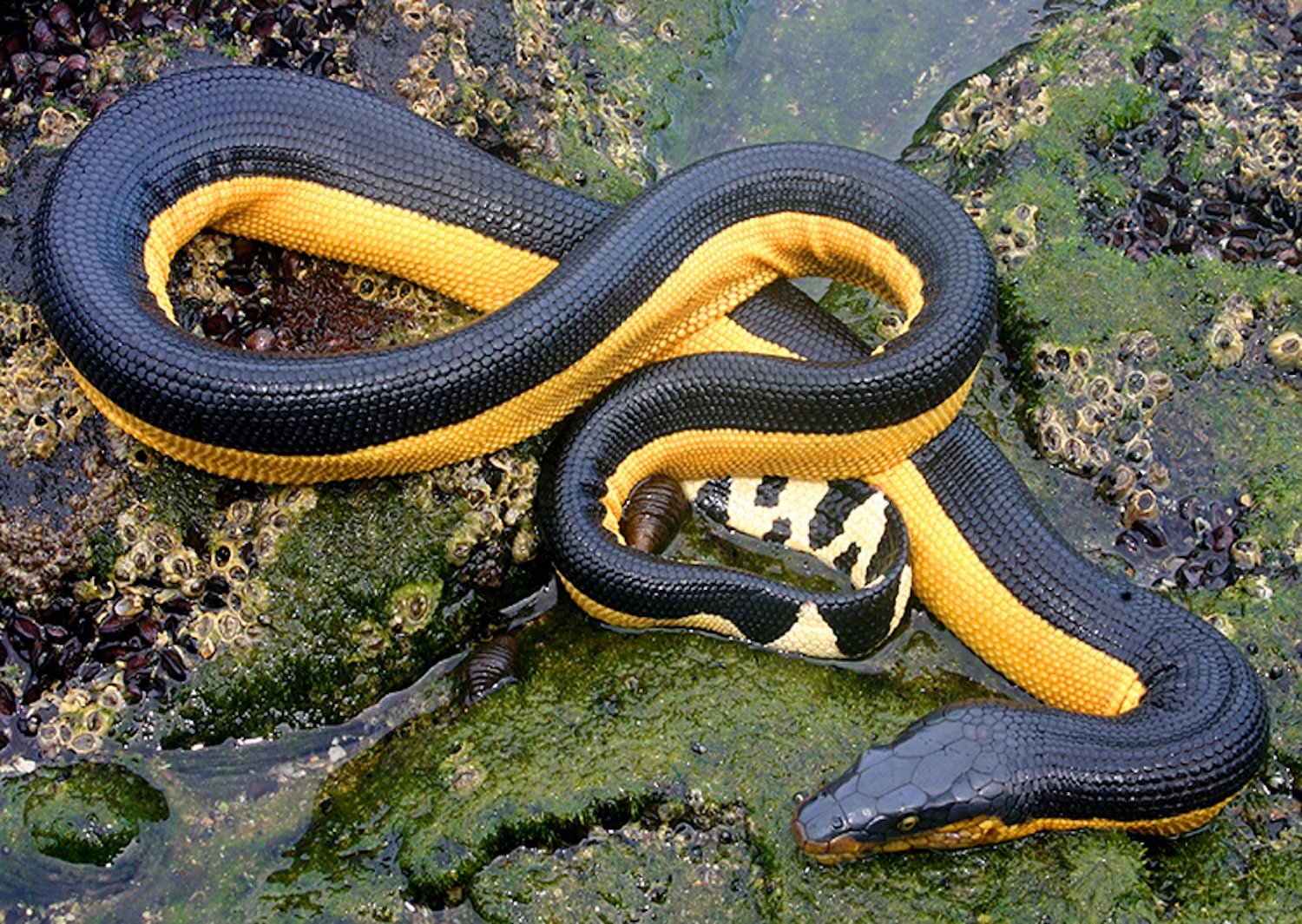
The investigation began in 2012, when marine herpetologist Joseph Pfaller, then conducting extensive field research, observed an unusual occurrence while studying the yellow-bellied sea snake (Hydrophis platurus). These reptiles are known for their unique shedding process; unlike land snakes that rub against abrasive surfaces to slough off dead skin, sea snakes must coil their bodies into intricate, tight loops to generate the necessary friction to remove their epidermal layers in the open water.

During his field collections, which eventually totaled 371 specimens, Pfaller noticed that these knotted, discarded skins were frequently accompanied by small crustaceans. More notably, he observed live crabs detaching from the bodies of the snakes. Recognizing that this was an anomaly in marine biology, Pfaller began to document the presence of not only crabs but also shrimp, snails, and clingfish residing on or near the snakes. The data remained within the Florida Museum of Natural History’s archives for nearly a decade as Pfaller shifted his research focus toward the conservation of sea turtles.
The project was revitalized when Pfaller shared his observations with Robert Lasley, a crustacean expert at the University of Guam. The conversation, which jokingly referenced the film Snakes on a Plane, led to a formal collaboration involving DNA sequencing and a thorough taxonomic analysis of the collected specimens.
The Megalopae Stage: A Critical Life Phase
A significant finding of the study is that the crabs discovered on the snakes were primarily in the megalopae life stage. In the life cycle of many crustaceans, the megalopa represents the transitional period between the free-swimming larval phase and the juvenile/adult form. During this stage, the organisms are physiologically driven to transition from the open ocean to a solid substrate.
The research indicates that these specific crabs belong to the family Grapsidae, a group that typically populates coastal trees and rocky intertidal zones as adults. When these larvae are released into the water, they are biologically programmed to seek out a surface to settle upon once they reach the megalopae phase. In the coastal waters of Costa Rica, where these snakes are frequently found, the sea snakes essentially serve as "false targets." The crabs, lacking the sensory discrimination to differentiate between a floating log or a piece of drift debris and a swimming reptile, latch onto the sea snakes as a temporary refuge.
Data and Biological Implications
The study involved the examination of 371 yellow-bellied sea snakes, a sample size robust enough to provide a clear picture of the frequency of these interactions. While the researchers initially hypothesized that the crabs might be members of the Planes genus, genetic analysis proved otherwise. None of the collected specimens belonged to the genus known for specialized turtle-hitching. Instead, the crabs were found to be accidental passengers—members of the Grapsidae family that were simply "in the wrong place at the wrong time."
From an evolutionary standpoint, the researchers conclude that this behavior is a failed strategy. While a crab hitching a ride on a sea turtle might eventually reach a reef or a favorable coastal environment, a crab on a sea snake is essentially taking a trip to nowhere. The sea snakes swim in open waters and do not provide the necessary environment for the crabs to reach adulthood. Once these megalopae drift into the open ocean, their chances of survival are significantly reduced.
"The snakes are just there, and the crabs don’t know the difference," Pfaller noted. This interaction serves as a prime example of evolutionary "noise"—behaviors that arise from a general instinct (the drive to settle on a surface) but which, in certain contexts, lead to a dead end.
Expert Perspectives and Scientific Context
The publication of this study provides a new framework for understanding the mortality and dispersal patterns of coastal crustacean larvae. By identifying these crabs as victims of a "poor decision" rather than participants in a mutually beneficial symbiosis, the research team has corrected a potential misconception regarding the role of sea snakes as hosts.

Soma Elefánti, an invertebrate researcher at the Florida Museum of Natural History and a co-author of the study, emphasized the importance of the DNA results in clarifying the nature of the relationship. "The thought that we could name this study ‘Planes on a Snake’ was enough to get me motivated, but when we got the results, it was evident that something weird and interesting was going on," Elefánti stated. The genetic data not only identified the species but also confirmed that the crabs were not adapted for life on the snakes, unlike the specialized epibionts found on sea turtles.
Broader Impact on Marine Biology
The discovery carries implications for how biologists study the dispersal of marine life. It suggests that researchers should look closer at the "hitchhikers" found on marine vertebrates, as these associations can reveal much about the life history and environmental pressures facing coastal species. The fact that such a discovery went unnoticed for years highlights a potential bias in marine biology: the tendency to focus on the charisma of the host—in this case, the yellow-bellied sea snake—rather than the smaller, more transient organisms that share its environment.
Furthermore, this study underscores the necessity of interdisciplinary collaboration. By combining herpetological field data with crustacean genetics, the researchers were able to synthesize a narrative that bridged the gap between larval behavior and adult survival. As global ocean temperatures shift and coastal habitats face increased pressure from climate change, understanding these minute, often overlooked interactions becomes essential for mapping the health and connectivity of marine ecosystems.
The case of the crabs on the snakes serves as a cautionary tale of biological evolution: instincts that work well in a stable, familiar environment can lead to unforeseen consequences when an organism encounters a novel or atypical host. As Pfaller and Lasley concluded, while the "planes" (or in this case, the crabs) might attempt to make a home on the snake, the lack of evolutionary synergy ensures that these passengers are ultimately destined for a difficult journey. This research adds a unique chapter to the study of marine epibionts, reminding us that nature is full of unintended consequences, where even the most basic survival instincts can result in a remarkable, if futile, hitchhiking journey across the open sea.
Related posts: