Astronomers Map the Invisible Magnetic Skeleton of the Abell 2255 Galaxy Cluster for the First Time

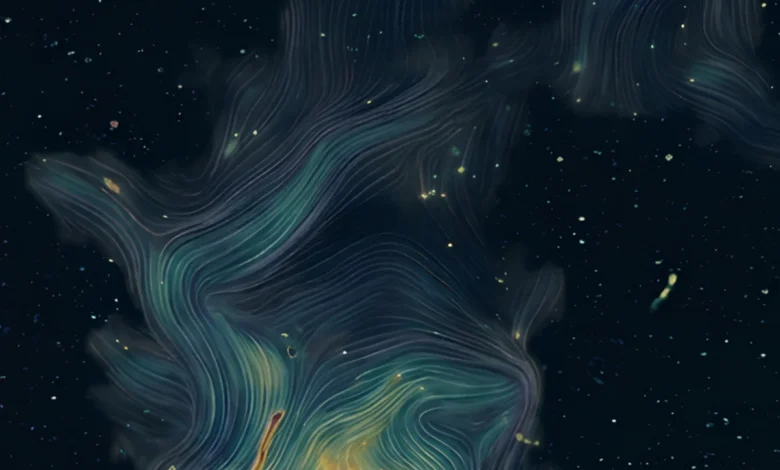
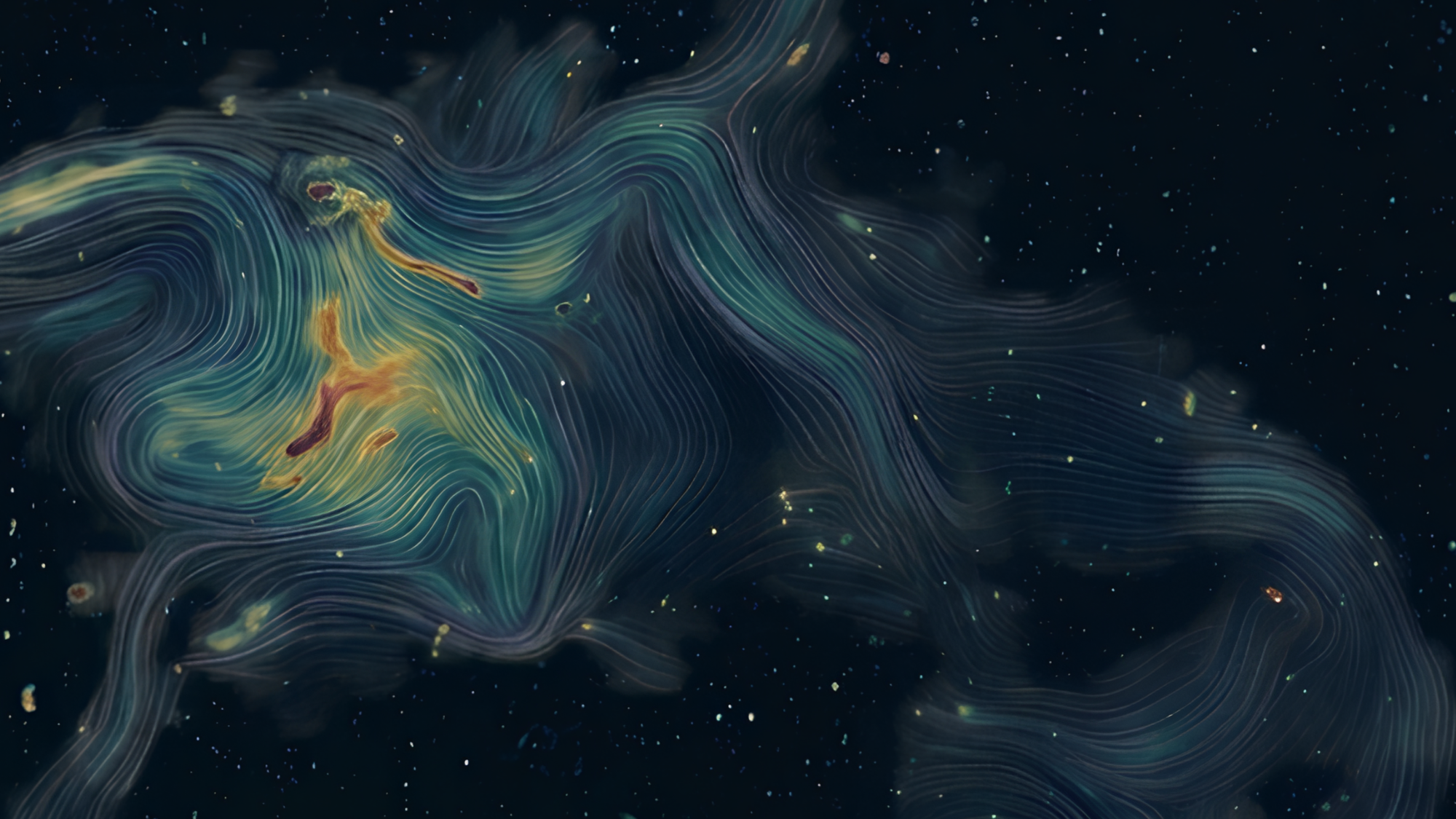
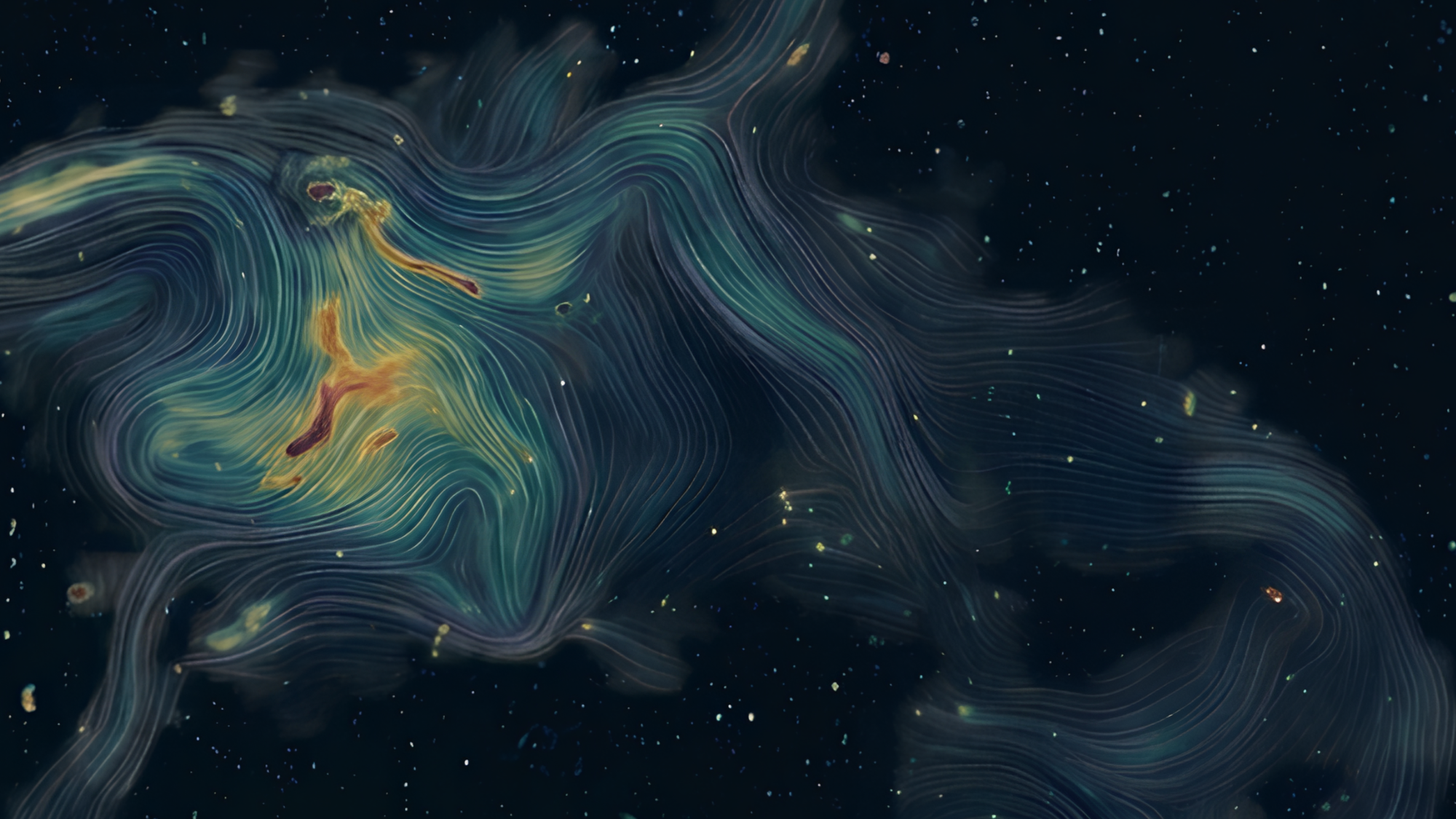
In a landmark achievement for observational cosmology, an international team of researchers has successfully reconstructed the magnetic field of an entire galaxy cluster, spanning from its dense core to its furthest peripheral reaches. This unprecedented mapping of the Abell 2255 cluster, located approximately one billion light-years from Earth, provides the most detailed look yet at the "invisible" forces that govern the evolution of the universe’s largest structures. The breakthrough was made possible by the Low Frequency Array (LOFAR), a pan-European radio telescope network, through the deepest radio observations ever conducted on a galactic group.
Galaxy clusters are the largest gravitationally bound structures in the cosmos, containing hundreds or even thousands of galaxies embedded in a vast reservoir of hot, ionized gas known as the intracluster medium (ICM). While the galaxies themselves are visible to optical telescopes, the magnetic fields that permeate the space between them have remained largely elusive. These fields are not merely passive bystanders; they play a critical role in the transport of energy, the acceleration of cosmic rays, and the overall thermal history of the cluster. By visualizing these fields across Abell 2255, astronomers are beginning to decode the complex history of how these massive cosmic assemblies are built.
The Cosmic Laboratory of Abell 2255
Abell 2255 has long been a subject of intense interest for the scientific community. Known for its high level of activity and complex radio emissions, the cluster serves as a premier cosmic laboratory for studying high-energy astrophysics. The diffuse radio signals detected from the cluster are the result of synchrotron radiation, produced when relativistic electrons—particles moving at nearly the speed of light—spiral around magnetic field lines.
Until now, capturing the full extent of these fields was a monumental challenge. The magnetic fields in the intracluster medium are incredibly weak, often thousands of times weaker than the magnetic field of the Earth. Detecting the faint radio "glow" from these regions requires telescopes with extreme sensitivity and the ability to resolve large-scale structures without losing the fine details of the nucleus.
The LOFAR Galaxy Cluster Ultra-Deep Field project addressed this challenge by dedicating 224 hours of observation time to Abell 2255. This massive dataset allowed researchers to peel back the layers of the cluster, revealing a magnetic architecture that is far more organized than previously theorized.
Technical Innovation in Radio Astronomy
The success of the study relied on more than just long exposure times. The team, led by Andrea Botteon of the Italian National Institute for Astrophysics (INAF), utilized innovative data analysis techniques to translate radio signals into a visual representation of magnetic field lines.
LOFAR operates at very low radio frequencies, between 10 and 240 MHz, which is the ideal regime for detecting the "old" populations of electrons that have been accelerated by cluster-scale shocks and turbulence. Because these low-frequency signals are easily distorted by the Earth’s ionosphere and local radio interference, the researchers had to employ sophisticated calibration algorithms to ensure the clarity of the final images.
"Obtaining very sensitive images of galaxy clusters at radio wavelengths is crucial to understanding how electrons are accelerated to relativistic speeds and magnetic fields are amplified on large cosmic scales," Botteon stated. He emphasized that the elusiveness of the signals from weak magnetic fields has historically been the primary barrier to this type of research. By combining deep observations with new reconstruction models, the team was able to show how the field is "stretched" and "compressed" by the violent motions of gas during the cluster’s formation.
Gas Dynamics and Magnetic Alignment
One of the most significant findings of the study is the non-random nature of the magnetic fields within Abell 2255. The mapping revealed that the orientation of the magnetic field lines is intimately tied to the motion of the hot gas within the cluster.
In certain regions, the magnetic fields appear to follow specific radial directions, stretching out along extended radio filaments. This suggests that as the cluster grows by accreting surrounding matter, the inflow of gas drags and aligns the magnetic fields. Conversely, in areas dominated by massive shock waves—often caused by the merger of smaller sub-clusters—the magnetic fields are oriented at tangents to the shock fronts.
This observation provides the first direct evidence that the same physical mechanisms driving the growth of the largest structures in the universe are also responsible for shaping their magnetic environments. It confirms a long-standing theory in magnetohydrodynamics: that the kinetic energy of gas motions in the early universe was converted into magnetic energy through a process known as the "turbulent dynamo."
The Chronology of Cluster Formation
The data from Abell 2255 allows astronomers to reconstruct a timeline of the cluster’s evolution. Galaxy clusters do not appear fully formed; they grow over billions of years through the hierarchical merging of smaller groups of galaxies and the accretion of gas from the "cosmic web"—the vast network of dark matter and gas that connects the entire universe.
- Initial Accretion: In the early stages, gravity pulls gas and dark matter toward a common center. This inflow begins to "seed" the region with weak magnetic fields.
- Turbulent Amplification: As the gas falls into the gravitational well, it becomes turbulent. This turbulence twists and stretches the magnetic field lines, increasing their strength.
- Cluster Mergers: When two clusters collide, they create gargantuan shock waves that ripple through the gas. These shocks accelerate electrons to relativistic speeds, making the magnetic fields "light up" in radio waves.
- Steady State and Filamentation: Over time, the cluster reaches a more stable state, though it continues to be fed by filaments of the cosmic web. The LOFAR images of Abell 2255 show these filaments clearly, marking the boundaries where the cluster ends and the intergalactic void begins.
Implications for the Cosmic Web
The ability to map magnetic fields on such a massive scale has profound implications for our understanding of the cosmic web. While dark matter provides the gravitational scaffolding for the universe, and baryonic (normal) gas provides the fuel for star formation, magnetic fields act as the connective tissue that influences how energy is distributed.
If magnetic fields are as organized and widespread as the Abell 2255 data suggests, they may play a larger role than previously thought in the evolution of galaxies within clusters. For example, strong magnetic fields can suppress star formation by preventing gas from cooling and collapsing, or they can facilitate the "stripping" of gas from galaxies as they fall into the cluster core.
Furthermore, this research sets the stage for future studies of the even fainter magnetic fields that exist in the vast spaces between galaxy clusters. Detecting these "primordial" fields is one of the "holy grails" of modern cosmology, as they could provide clues about the state of the universe shortly after the Big Bang.
Future Outlook and the SKA Era
The study of Abell 2255 is a precursor to the next generation of radio astronomy. The techniques developed by Botteon and his team will be vital for the Square Kilometre Array (SKA), an intergovernmental radio telescope project currently under construction in Australia and South Africa. Once completed, the SKA will be the largest and most sensitive radio telescope in the world, capable of mapping the magnetic fields of thousands of galaxy clusters across the observable universe.
For now, the Abell 2255 results stand as a testament to the power of existing arrays like LOFAR. The research, which has been accepted for publication in the journal Astronomy & Astrophysics, marks a transition from simply detecting radio sources to performing "magnetic tomography" of the cosmos.
As astronomers continue to analyze the 224 hours of data, they hope to refine their models of particle acceleration. The question of how electrons reach such extreme speeds in such weak fields remains a topic of debate. Whether the acceleration is caused by the shocks themselves or by a "re-acceleration" of pre-existing particles, the detailed maps of Abell 2255 provide the empirical evidence needed to test these theories.
The reconstruction of Abell 2255’s magnetic field is more than a technical feat; it is a visual confirmation of the dynamic and interconnected nature of the universe. It reminds us that even in the seemingly empty reaches of space, there is a complex, invisible architecture shaping the destiny of galaxies and the very fabric of the cosmos.
Related posts: