NASA Seeks Commercial Solutions to Extend the Scientific Lifespan of the Hubble Space Telescope

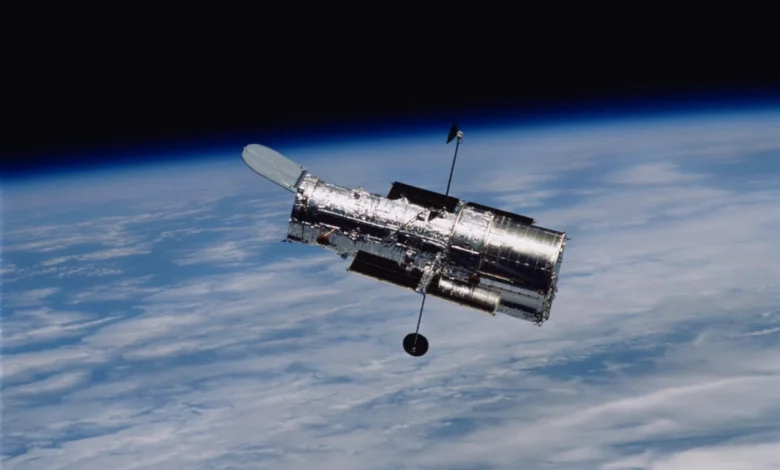
The National Aeronautics and Space Administration (NASA) officially issued a formal Request for Information (RFI) on October 29, 2026, signaling a pivotal shift in the agency’s strategy for the long-term stewardship of the Hubble Space Telescope. By inviting commercial aerospace entities to propose innovative concepts for in-space servicing, orbital re-boosting, or eventual controlled atmospheric disposal, NASA is attempting to secure the future of one of the most significant scientific instruments in human history. With Hubble’s operational altitude currently decaying due to atmospheric drag, the agency is racing against a timeline that suggests the iconic observatory could face re-entry into Earth’s atmosphere as early as 2033 or 2034.
A Legacy of Discovery
Launched in April 1990 via the Space Shuttle Discovery, the Hubble Space Telescope has spent more than 35 years fundamentally altering humanity’s understanding of the cosmos. From providing the first definitive measurements of the universe’s expansion rate to capturing high-resolution images of distant galaxies, nebulae, and planetary phenomena, Hubble has been the cornerstone of modern astrophysics. It is a collaborative triumph between NASA and the European Space Agency (ESA), managed primarily by the Goddard Space Flight Center in Greenbelt, Maryland.
However, the instrument was designed for an era of human-led maintenance. During the Space Shuttle era, astronauts conducted five distinct servicing missions between 1993 and 2009. These missions replaced gyroscopes, upgraded camera systems, and repaired failing hardware, effectively keeping the observatory at the cutting edge of science. Since the retirement of the Space Shuttle fleet in 2011, Hubble has been without a human-tended maintenance capability, forcing NASA to rely on remote operational workarounds to sustain its scientific output.
The Looming Challenge of Orbital Decay
The primary technical constraint facing the telescope is its location in low Earth orbit (LEO). Unlike satellites equipped with active propulsion systems—which allow them to periodically fire thrusters to compensate for orbital decay—Hubble is a passive craft in this regard. Even at an altitude of approximately 540 kilometers (335 miles), the telescope is subjected to the infinitesimal but persistent drag of the Earth’s upper atmosphere.
Over time, this drag leeches kinetic energy from the spacecraft, causing it to gradually spiral inward toward the planet. NASA’s current orbital modeling suggests that without an external intervention to provide a boost, the inevitable re-entry will occur within the next eight to nine years. The RFI issued by NASA serves as a reconnaissance mission for the agency: it seeks to identify whether modern commercial spacecraft, which have advanced significantly in the realms of automated docking and robotic manipulation, possess the capability to perform an "orbital boost" mission.
Commercial Innovation and the New Space Paradigm
The RFI represents a major pivot in how NASA approaches aging assets. Administrator Jared Isaacman emphasized that the goal is to leverage the rapid evolution of the private sector. "Hubble still has important science ahead of it, and we should be looking at every reasonable opportunity to keep it delivering for as long as possible," Isaacman stated. "If there are innovative and cost-effective ways to extend the life of an asset already on orbit, we owe it to the American taxpayer and the scientific community to explore them."
The commercial sector has recently demonstrated significant success in satellite servicing, ranging from Northrop Grumman’s Mission Extension Vehicles (MEVs), which have successfully docked with aging commercial communications satellites to provide new propulsion, to emerging robotic assembly startups. NASA is testing the waters to see if these technologies can be adapted for a non-cooperative, high-value asset like Hubble, which was never designed for modern autonomous docking interfaces.
The Scope of the Request for Information
NASA’s RFI is not a binding contract but rather a formal inquiry to assess the feasibility and cost-effectiveness of three specific mission archetypes:

- Orbital Re-boost: Utilizing a commercial vehicle to dock with Hubble and physically maneuver the telescope to a higher, more stable altitude, thereby delaying atmospheric re-entry by a significant margin.
- Capability Enhancement: Evaluating whether a commercial mission could potentially install new instruments or repair aging components, similar to the legacy Shuttle-era servicing missions, though potentially through autonomous robotic means.
- Controlled Disposal: Developing a safe, terminal plan for the telescope’s end-of-life to ensure that it does not pose a threat to populated areas or critical orbital infrastructure upon re-entry.
The deadline for industry responses is set for November 30, 2026, at 3 p.m. EST. Interested parties must demonstrate technical maturity, safety protocols, and a clear understanding of the risks associated with approaching a massive, high-value asset that is not equipped with modern docking features.
Broader Scientific and Strategic Implications
The push to extend Hubble’s life is not merely about sentimentality or preserving an icon; it is about maintaining scientific continuity. While the James Webb Space Telescope (JWST) and the upcoming Nancy Grace Roman Space Telescope provide complementary data, Hubble remains the only major observatory capable of high-resolution observations in the ultraviolet spectrum. The ultraviolet range is critical for studying the birth of stars, the atmospheres of exoplanets, and the evolution of galaxies—areas where Hubble remains peerless.
Furthermore, a successful mission to boost Hubble would set a powerful precedent for the "Space Sustainability" initiative. If NASA can prove that legacy assets can be salvaged or boosted via commercial partnerships, it could fundamentally change the economics of satellite disposal and orbital debris mitigation. Instead of allowing aging satellites to become "space junk," future missions could focus on active life extension, turning the orbital graveyard into a sustainable environment for long-term research.
Chronology of the Hubble Mission
- April 1990: Hubble is deployed into orbit by the Space Shuttle Discovery.
- December 1993: Servicing Mission 1 (SM1) corrects the telescope’s mirror aberration and replaces solar arrays.
- February 1997: SM2 upgrades the Spectrograph and Near Infrared Camera.
- December 1999: SM3A replaces faulty gyroscopes and the onboard computer.
- March 2002: SM3B installs the Advanced Camera for Surveys.
- May 2009: SM4, the final human-servicing mission, installs the Wide Field Camera 3 and repairs the Space Telescope Imaging Spectrograph.
- 2011–2026: Hubble continues science operations autonomously, overcoming hardware failures through remote software patches and redundant systems.
- October 2026: NASA issues RFI for commercial servicing to mitigate orbital decay.
- 2032: Target date for a potential commercial intervention mission.
Technical Challenges and Risks
The primary challenge in any potential mission is the lack of a "docking port" on the Hubble. When the telescope was built, the engineers designed it to be captured by the Space Shuttle’s Remote Manipulator System (the "Canadarm"). Any commercial spacecraft attempting to assist Hubble would likely need to develop a "capture tool" that can securely latch onto the existing grapple fixtures or interface with the telescope’s structure without causing structural damage or inducing excessive vibration that could misalign its sensitive optical mirrors.
Additionally, because Hubble is a high-value asset, the risk profile is extremely high. Any error during a docking or maneuvering attempt could permanently disable the telescope or create a cloud of debris. Consequently, NASA is expected to prioritize proposals that utilize high-fidelity simulation and "low-risk" proximity operations.
Looking Ahead
The scientific community, represented by organizations like the Space Telescope Science Institute (STScI) in Baltimore, remains optimistic but cautious. The institute, which manages the telescope’s science operations, continues to coordinate with international partners, including the European Space Agency, to ensure that every remaining year of Hubble’s operation is maximized for scientific return.
"Commercial industry has rapidly evolved in recent years to offer new capabilities for in-space satellite capture and servicing," noted Nicky Fox, associate administrator of the Science Mission Directorate. "Given the time we have until Hubble’s anticipated re-entry, we are eager to explore the breadth of possibilities."
As NASA moves through this RFI process, the global space community is watching closely. If a private company can successfully secure the future of the Hubble Space Telescope, it will mark the beginning of a new era in space exploration—one defined not by the retirement of old hardware, but by the commercial ability to maintain, improve, and extend the life of humanity’s most important eyes in the sky. The final decision on whether to proceed with a formal procurement will depend on the strength of the responses received by the end of November and the alignment of these proposals with the agency’s broader flagship mission objectives.