JAXA Hayabusa2 Spacecraft Completes Daring Ultra Close Flyby of Contact Binary Asteroid Torifune Marking Breakthrough for Planetary Defense

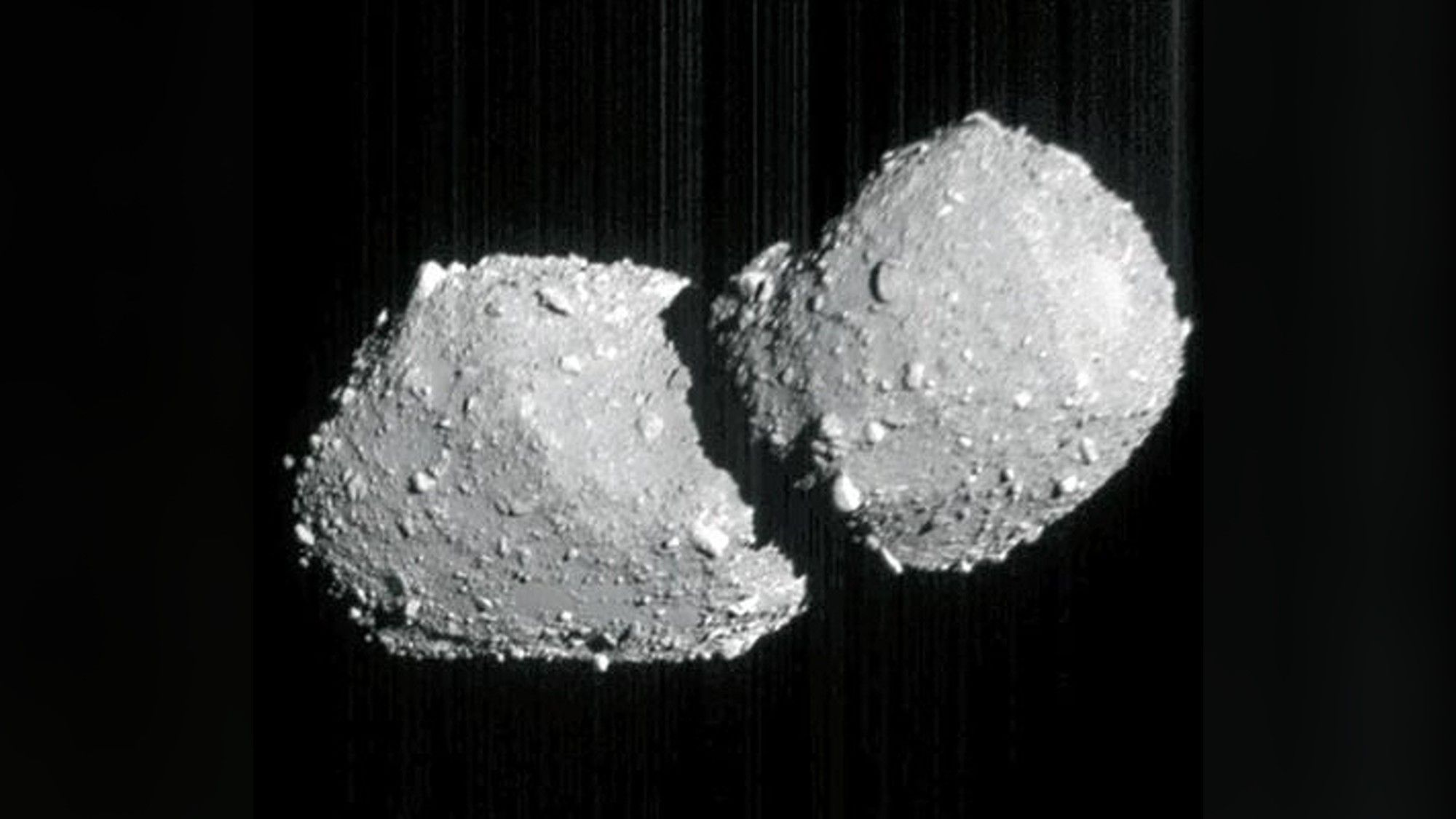
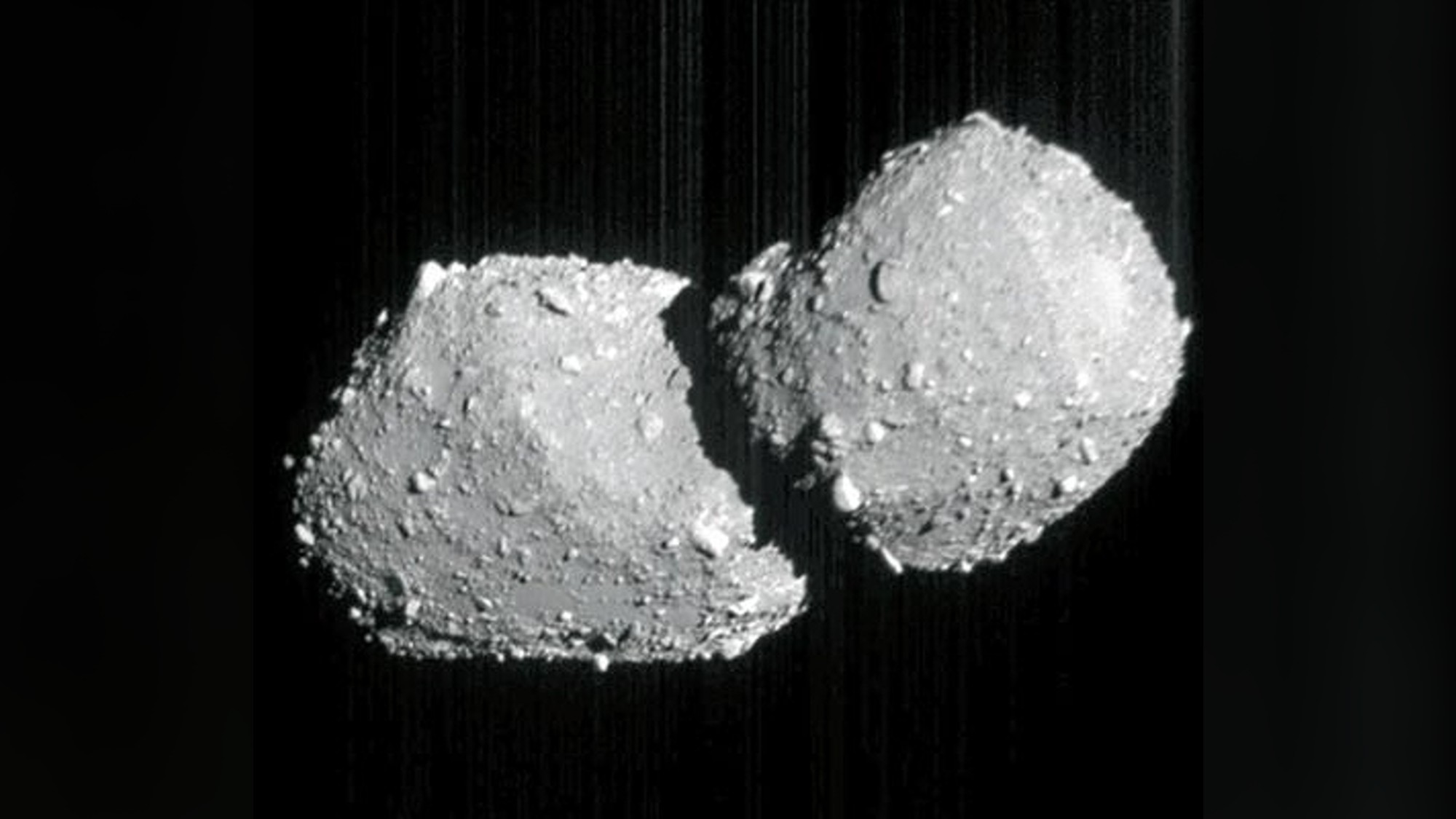
The Japan Aerospace Exploration Agency (JAXA) has achieved a significant milestone in deep-space exploration following a high-stakes, high-speed flyby of the near-Earth asteroid Torifune. On July 5, 2026, the Hayabusa2 spacecraft successfully navigated a path just hundreds of meters from the asteroid’s surface, returning imagery and data that have both surprised the global scientific community and validated new autonomous navigation technologies. The mission, which pushed the aging spacecraft to the absolute limits of its design, revealed that Torifune is a "contact binary"—a celestial structure consisting of two distinct lobes of rock fused together by gravity.
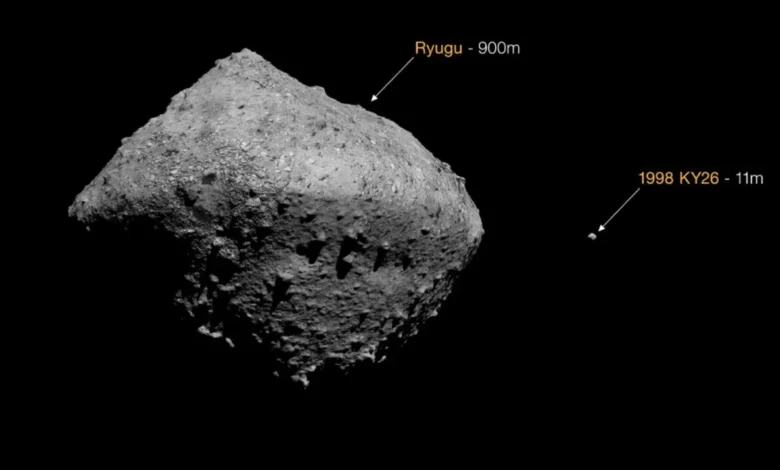
The success of the flyby was the culmination of months of intense internal deliberation within JAXA. While the primary mission of Hayabusa2 concluded in 2020 with the successful delivery of samples from the asteroid Ryugu, the spacecraft’s extended mission, dubbed "Hayabusa2#," is designed to test the limits of long-term spaceflight and rapid reconnaissance. The encounter with Torifune serves as a critical bridge toward the mission’s ultimate destination: a rendezvous with the rapidly rotating asteroid 1998 KY26 in 2031.
A High-Stakes Engineering Debate
The decision to bring Hayabusa2 so close to Torifune was not made lightly. According to Makoto Yoshikawa, the former mission manager for Hayabusa2, the project was characterized by a "heated discussion" between the science and engineering cohorts. In typical asteroid flyby missions, a "safe" distance is generally considered to be approximately 100 kilometers (62 miles). At this range, the risk of collision with debris or the asteroid itself is minimized, but the resolution of captured images is often insufficient for detailed geological analysis.
From a scientific perspective, a 100-kilometer pass would have yielded little more than a blurry silhouette of Torifune. The science team initially pushed for a 10-kilometer approach, which engineers eventually deemed feasible. However, as confidence in the spacecraft’s remaining systems grew, the engineering team, led by extended mission leader Yuya Mimasu, proposed an even more daring trajectory: a pass just 800 meters (2,625 feet) from the asteroid’s center of mass.
This proposal met with significant resistance. The primary concern was the lack of precise data regarding Torifune’s actual size. Ground-based observations had suggested a worst-case scenario where the asteroid could be up to 1,400 meters long. If these estimates were accurate, an 800-meter flyby would essentially place the spacecraft on a collision course with the asteroid’s outer edges. Furthermore, Hayabusa2 was never designed for high-speed flybys; its original mission profile involved slow, methodical rendezvous and proximity operations at Ryugu. Traveling at a relative velocity of 5.3 kilometers per second (approximately 11,855 mph), the spacecraft’s cameras would have to slew—or rotate—at extreme speeds to keep the target in frame, a maneuver the hardware was not specifically built to execute.
Technical Obstacles and Autonomous Navigation
Beyond the physical geometry of the flyby, the Hayabusa2 team had to contend with the "wear and tear" of a decade in space. The spacecraft’s optical systems had been slightly degraded by dust kicked up during the 2019 sampling operations at Ryugu. To compensate for these challenges and the inherent delay in Earth-based communications, JAXA developed and uploaded specialized autonomous navigation software just weeks before the encounter.
While the spacecraft relied on ground-based guidance until three hours before the flyby, the final approach was handled entirely by the onboard computer. This system used the Optical Navigation Camera Telescope (ONC-T) to track the asteroid in real-time, adjusting the spacecraft’s orientation to ensure the instruments remained pointed at the target during the fleeting seconds of closest approach.
The gamble paid off. On the morning of July 6, Japan time, the first images arrived at JAXA’s control center. The resolution was far superior to what the team had anticipated. Instead of a single, uniform rock, the images revealed a classic contact binary structure, resembling a "two-headed" peanut. This configuration is common among near-Earth asteroids and provides vital clues about the collisional history and gravitational evolution of the solar system’s smaller bodies.
Scientific Results and Instrument Performance
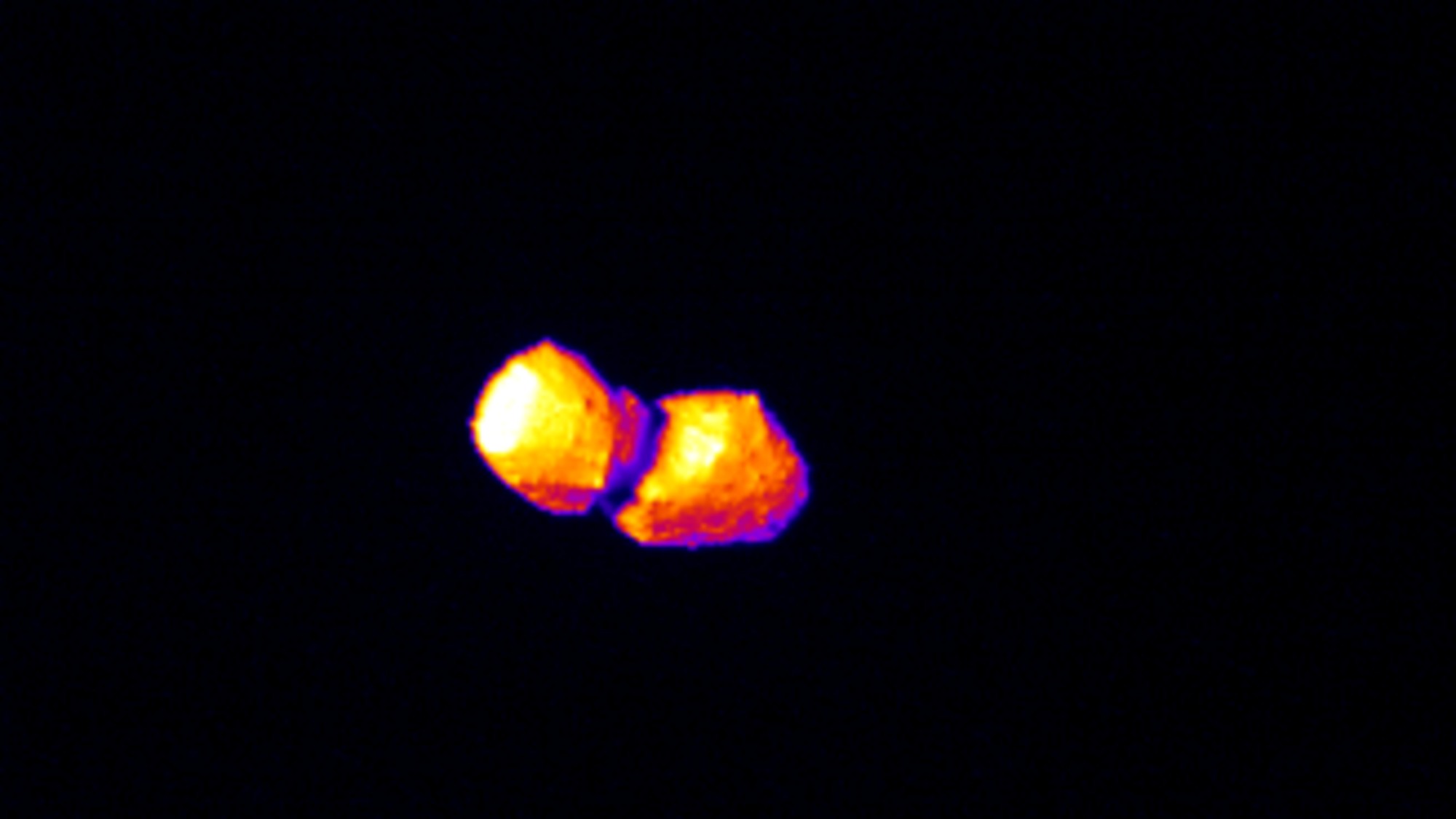
While the stunning visual images from the ONC-T captured the public’s imagination, Hayabusa2 utilized its full suite of scientific instruments to characterize Torifune. The Thermal Infrared Imager (TIR) operated for a critical nine-second window during the closest approach. By measuring the heat emission from the asteroid’s surface, the TIR provided independent confirmation of the binary structure and offered data on the "thermal inertia" of the rocks, which helps scientists determine whether the surface is composed of fine dust, coarse regolith, or solid boulders.
The Near Infrared Spectrometer (NIRS3) was also active, gathering data on the mineral composition of the asteroid. Preliminary analysis suggests Torifune may belong to a class of asteroids different from the carbonaceous Ryugu, potentially offering a comparative look at the diversity of objects in near-Earth space.
Perhaps most impressively, the spacecraft’s laser altimeter (LIDAR) successfully recorded ranging measurements during the pass. Makoto Yoshikawa noted that this may be the first time a LIDAR instrument has successfully provided ranging data during a high-speed asteroid flyby. Obtaining a "ping" from a laser at such high relative velocities and close proximity requires extreme precision in both timing and pointing.
Despite the wealth of data collected, the scientific community will have to exercise patience. Due to the energy requirements of the spacecraft’s ion engine system, which resumed operation on July 9 to propel the craft toward its next trajectory, the high-gain antenna cannot be fully utilized for data transmission at this time. Only about 25 megabytes of the most critical data have been downlinked so far. The remaining 275 megabytes of science data are stored on the spacecraft’s internal memory and will not be fully transmitted to Earth until the ion engines complete their current four-month firing cycle.
A Chronology of the Hayabusa2 Mission
To understand the significance of the Torifune flyby, it is essential to view it within the context of Hayabusa2’s twelve-year journey:
- December 2014: Hayabusa2 launches from the Tanegashima Space Center in Japan.
- June 2018: The spacecraft arrives at the C-type asteroid Ryugu after a three-and-a-half-year journey.
- 2018–2019: Hayabusa2 deploys multiple rovers (MINERVA-II) and a lander (MASCOT) to the surface. It performs two successful touchdown maneuvers to collect samples, including a sub-surface sample obtained by firing a copper kinetic impactor into the asteroid.
- December 2020: The sample return capsule successfully lands in Woomera, Australia, delivering 5.4 grams of pristine asteroid material to Earth.
- 2020–2026: The spacecraft begins its "Extended Mission," utilizing remaining xenon propellant to visit new targets.
- July 5, 2026: The ultra-close flyby of asteroid Torifune is completed.
- 2027–2028: Hayabusa2 is scheduled to perform two gravity-assist flybys of Earth to adjust its orbit.
- July 2031: The final rendezvous with asteroid 1998 KY26, a fast-rotating "micro-asteroid" only 30 meters in diameter.
Implications for Planetary Defense
The Torifune flyby was more than a secondary scientific objective; it was a practical demonstration of "fast reconnaissance" technology. This concept is a cornerstone of planetary defense strategies. In a scenario where an unknown asteroid is discovered on a potential collision course with Earth, space agencies would need to rapidly characterize the object’s size, shape, mass, and composition before launching a mitigation mission, such as a kinetic impactor.
Yoshikawa emphasized that the success of this flyby proves JAXA’s ability to intercept and precisely track a small celestial body at high speeds. This capability is directly analogous to the requirements for a mission like NASA’s Double Asteroid Redirection Test (DART), which successfully altered the orbit of the asteroid moonlet Dimorphos in 2022. By proving that an aging spacecraft can be repurposed for an ultra-close, autonomous flyby, JAXA has demonstrated a cost-effective method for rapid asteroid assessment.
The "contact binary" nature of Torifune also provides critical data for impact modeling. A kinetic impactor hitting a single solid rock behaves differently than one hitting a loosely bound binary system. Understanding the internal structure and surface cohesion of such objects is vital for ensuring that a deflection attempt does not inadvertently shatter the asteroid into multiple, equally dangerous fragments.
The Future of Hayabusa2
As Hayabusa2 continues its trek through the inner solar system, its journey remains a testament to Japanese engineering and international scientific cooperation. The data retrieved from Torifune will be analyzed by teams across the globe, contributing to a broader understanding of the "rubble pile" nature of many near-Earth objects.
The mission now turns its focus toward the 2031 rendezvous with 1998 KY26. This target represents a class of very small, rapidly spinning asteroids that have never been studied up close. These objects are particularly interesting because their high rotation speeds (1998 KY26 rotates once every 10.7 minutes) suggest they must have significant internal strength to avoid flying apart, challenging the "rubble pile" model seen in larger asteroids like Ryugu and Bennu.
With the successful completion of the Torifune flyby, Hayabusa2 has once again exceeded expectations. It has transitioned from a sample-return specialist into a pioneer of deep-space navigation and planetary defense, proving that even a decade into its mission, it still has the capacity to surprise and inform the world about the neighborhood of rocks we share with the stars.
Related posts: