The electronics under the hood of space networking: Inside Innoflicks vision for the future of space architecture


The modern space domain is undergoing a profound paradigm shift, transitioning from bespoke, exquisitely crafted spacecraft toward high-volume, mass-produced architectures. At the heart of this transformation is the electronics that govern space networking, data routing, and onboard processing. In a recent episode of the SpaceNews podcast Space Minds, host Mike Gruss sat down with Jeff Janicik, founder and chairman of Innoflight, to unpack the complex realities of building scalable, resilient networks for the modern orbital economy. Their discussion illuminated the unprecedented manufacturing scales required by agencies like the Space Development Agency (SDA), the strategic importance of initiatives like the Golden Dome framework, and the enduring engineering hurdles of supporting deep space exploration through programs such as Artemis.
The Evolution of Space Networking and Processing
For decades, space electronics were defined by extreme specialization. Satellites were treated as unique works of art, outfitted with radiation-hardened components that took years to design, test, and manufacture. However, the emergence of proliferated low Earth orbit (pLEO) constellations has entirely upended this philosophy. Modern military and commercial architectures now demand hundreds, and eventually thousands, of interconnected spacecraft capable of sharing tactical data in real-time.
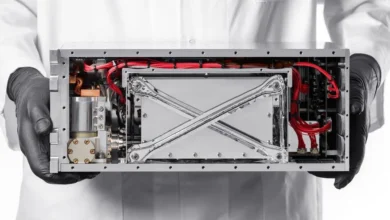
During the Space Minds interview, Jeff Janicik emphasized that the fundamental bottleneck in modern space networking is no longer simply getting hardware into orbit, but rather managing the colossal influx of data once it is up there. Traditional processors are ill-equipped to handle the routing demands of a mesh network operating hundreds of miles above the Earth at high orbital velocities. Innoflight, known for its high-performance space processors, cryptographic modules, and networking cards, has found itself at the epicenter of this technological pivot. By leveraging commercial-off-the-shelf (COTS) methodologies combined with high-reliability engineering, companies like Innoflight are bridging the gap between consumer-grade processing power and the unforgiving radiation environment of space.
Scaling Up for the Space Development Agency
One of the central themes of the discussion between Gruss and Janicik was the logistical and cultural challenge of working with big numbers. Historically, the aerospace industry operated on a low-volume, high-margin model. Today, organizations like the Space Development Agency are spearheading a transition toward volume-driven acquisition strategies, most notably through the construction of the Proliferated Warfighter Space Architecture (PWSA).
The PWSA is designed to provide resilient, low-latency communication and missile tracking capabilities to warfighters globally. To achieve this, the SDA routinely procures batches of satellites numbering in the dozens or hundreds from various prime contractors. For suppliers in the electronics supply chain, this shift requires a complete reimagining of production lines, quality assurance pipelines, and supply chain resiliency. Janicik noted that scaling up manufacturing to meet these demands requires predictable cadence and close collaboration between government customers and commercial suppliers. Without a steady, high-volume demand signal, component manufacturers cannot justify the capital expenditure necessary to modernize their assembly facilities and secure long-term semiconductor supplies.
Golden Dome, Artemis, and the Expanding Horizon

Beyond low Earth orbit, the conversation explored the broader geopolitical and exploratory frameworks shaping the aerospace sector, including the Golden Dome concept and NASA’s Artemis campaign. As orbital congestion increases and space becomes an increasingly contested domain, resilient networking architectures are vital not just for communication, but for space domain awareness and defensive posture.
Concurrently, the Artemis program aims to establish a sustainable human presence on and around the Moon, ultimately laying the groundwork for crewed missions to Mars. Supporting these distant outposts requires entirely new paradigms in deep space networking. Unlike satellites in low Earth orbit, which maintain continuous, high-bandwidth links with ground stations, lunar and deep space assets face massive signal propagation delays, intermittent connectivity lines, and extreme thermal and radiation profiles. Janicik highlighted how the technological building blocks developed for pLEO networking—such as modular software-defined radios and autonomous routing algorithms—form the critical foundation for future interplanetary communication grids.
The Backbone of Support: Industry Partnerships
The episode was sponsored by Frontgrade, a company with a storied history supporting U.S. crewed space missions dating back to Apollo 11. Frontgrade’s involvement underscores the continuous thread connecting historical milestones with contemporary commercial innovation. Modern space architectures rely heavily on advanced radio frequency (RF) systems, microelectronics, and motion control technologies provided by legacy suppliers who have successfully adapted to the demands of modular, scalable architectures. By providing foundational components that help customers integrate critical capabilities faster, firms like Frontgrade and Innoflight illustrate how collaboration across the supply chain accelerates mission readiness.
Broader Industry Implications and Future Outlook
The implications of this shift toward high-volume, networked space architectures extend far beyond defense acquisition. As space becomes increasingly commercialized, the technologies designed to meet military standards are frequently trickling down into commercial applications, ranging from global broadband delivery to earth observation analytics.
However, significant challenges remain. The industry continues to grapple with vulnerabilities in the global microelectronics supply chain, stringent cybersecurity requirements for networked space assets, and the ongoing need to mitigate orbital debris through automated collision avoidance protocols. Furthermore, as constellations grow denser, the risk of radio frequency interference and data bottlenecks increases exponentially, placing a heavy premium on advanced onboard processing and autonomous network management.
The insights shared on Space Minds demonstrate that the future of space exploration and defense will not be defined by the size of individual satellites, but by the intelligence of the network connecting them. As leaders like Jeff Janicik and organizations across the defense-industrial base continue to refine the electronics under the hood, the infrastructure of the space economy is quietly undergoing its most radical transformation in history. Weekly episodes of Space Minds continue to explore these critical themes every Thursday, offering listeners a front-row seat to the minds shaping the final frontier.
Related posts: