Meta Forges Strategic Academic Partnerships to Advance Superintelligence Research Across Five Major US Universities

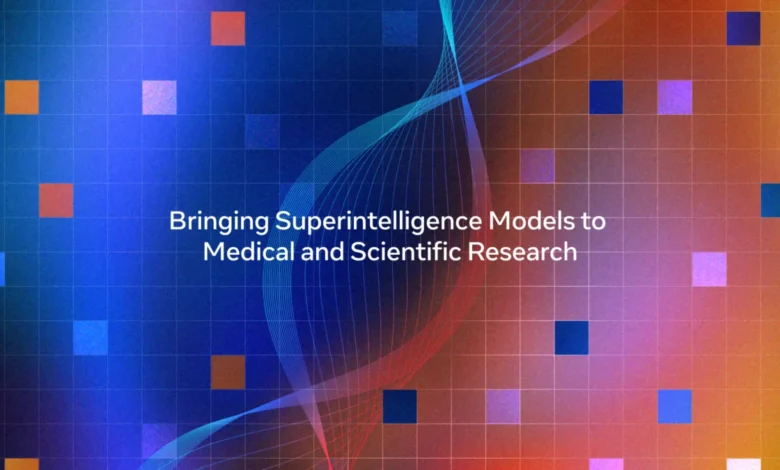
Meta has officially launched a strategic initiative aimed at bridging the divide between industrial-scale artificial intelligence development and fundamental academic research, committing $2 million in funding to five prominent American universities. By providing access to its sophisticated superintelligence models, proprietary hardware—including mixed reality headsets and smart glasses—and direct collaboration with its internal research teams, Meta is positioning itself as a primary architect of the next generation of scientific discovery. The participating institutions, which include the California Institute of Technology (Caltech), The Ohio State University College of Medicine, Louisiana State University (LSU), Indiana University, and UTHealth Houston, are tasked with applying open-weight AI architectures to complex challenges in physics, chemistry, biology, mathematics, and, most notably, clinical medicine.
The Strategic Shift Toward Open-Weight Collaboration
This initiative represents a significant evolution in Meta’s research strategy. While the tech giant has historically maintained a robust internal research division, the decision to integrate external academic minds signals a realization that the most pressing societal challenges—particularly those in healthcare—require domain-specific expertise that resides primarily within the ivory towers of academia.
The $2 million grant is allocated to facilitate research that leverages Meta’s open-weight models, such as the Segment Anything Model (SAM) and various Large Language Models (LLMs). These models serve as the computational backbone for researchers who are attempting to solve problems that have long been considered intractable due to data limitations or the inability of traditional software to interpret unstructured, multimodal medical data.
Chronology of the Partnership and Institutional Integration
The partnership framework was solidified throughout the current calendar year, with the formal announcement serving as the culmination of months of vetting research proposals that met specific criteria: clinical feasibility, scalability, and the potential for significant patient outcomes.
- Phase 1: Identification and Alignment (Q1-Q2): Meta’s research division engaged with university leadership to identify departments where AI integration could yield immediate, measurable breakthroughs.
- Phase 2: Resource Allocation (Q3): The $2 million fund was distributed based on the project scopes, with a focus on labs that already possessed the necessary infrastructure to handle high-compute AI workloads.
- Phase 3: Operational Deployment (Current): Projects have officially moved into the proof-of-concept phase, with researchers integrating Meta’s hardware and software suites into existing laboratory environments.
Clinical Innovation: Solving Critical Medical Gaps
Among the most critical projects being funded is the work led by Dr. Michael Dunham at Louisiana State University. The "Eyes-On" project targets the high-risk, life-threatening scenario of tracheostomy tube displacement in infants. In neonatal intensive care units (NICUs), the inability of an infant to vocalize distress when a tube is dislodged creates a persistent monitoring gap. By utilizing Meta’s SAM models in conjunction with bedside computer vision, Dr. Dunham’s team is building a system that acts as a 24/7 digital observer. The implications are substantial; by automating the detection of physical displacement, the system reduces the cognitive load on nursing staff and potentially prevents catastrophic outcomes associated with hypoxia.
Simultaneously, at Indiana University, Dr. David Crandall is addressing the burgeoning crisis of geriatric care. With the global population of individuals living with dementia rising, standard conversational AI—which relies on clear, linear syntax—often fails these users. Dr. Crandall’s research focuses on the intersection of multimodal AI and cognitive health, attempting to create social robots and conversational agents that can interpret non-verbal cues, fragmented speech patterns, and the nuanced emotional states of patients with neurodegenerative conditions. This research is pivotal, as it shifts the AI paradigm from "utility-focused" to "empathy-informed."
In the field of cardiology, the team at The Ohio State University College of Medicine, led by Dr. Yuan Xue, Dr. Yuchi Han, and Dr. Xia Ning, is tackling the diagnostic ambiguity of Heart Failure with Preserved Ejection Fraction (HFpEF). Given that HFpEF is notoriously difficult to diagnose in its early stages due to its symptom profile overlapping with obesity and hypertension, the researchers are training Meta’s open-weight models to synthesize disparate data points—including abdominal CT scans, longitudinal EHR (Electronic Health Record) data, and ECG readings. A key innovation here is the model’s ability to function despite "missingness," a common reality in clinical data where patients rarely have a complete history available at the point of care.
Data-Driven Analysis of the AI-Academic Symbiosis
The investment by Meta is not merely a philanthropic gesture; it is a calculated effort to stress-test the generalizability of their AI models in "noisy", real-world environments. Meta’s AI, like most modern Large Language and Vision models, excels in controlled data environments. However, medical data is notoriously unstructured, inconsistent, and highly sensitive.
By pushing these models into the medical sector, Meta gains access to critical feedback loops. If their models can effectively assist in the interpretation of abdominal CT scans or detect infant distress, it proves the viability of their technology for high-stakes, real-world applications. Conversely, the academic institutions gain access to compute power and algorithmic sophistication that would otherwise be cost-prohibitive for university-funded laboratories.
According to industry analysts, this type of "industry-to-academia" transfer is essential for the democratization of AI. While major tech firms hold the capital, the academic sector holds the institutional knowledge regarding human biology, clinical ethics, and long-term research validation.
Official Perspectives and Expected Outcomes
While Meta has not released individual statements from every project lead, the consensus among the participating universities is one of cautious optimism. The integration of Meta’s mixed reality headsets, such as the Quest series, into these projects is particularly noteworthy. Researchers are exploring how mixed reality can be used to visualize complex anatomical data in three dimensions, allowing for better surgical planning and patient communication.
From a broader perspective, this initiative suggests that the next decade of AI development will be defined by "vertical specialization." Instead of creating singular, omnipotent AI systems, the focus is shifting toward specialized agents capable of navigating the high-stakes, highly regulated fields of healthcare and physical sciences.
Broader Implications for the Tech and Medical Sectors
The partnership between Meta and these five universities creates a blueprint for how Big Tech can contribute to the "public good" while simultaneously refining its proprietary technology.
- Ethical AI Development: By involving university ethics boards and institutional review boards (IRBs) in the research process, Meta ensures that its models are subjected to rigorous peer review—a step often skipped in fast-tracked commercial deployments.
- Regulatory Preparedness: As AI becomes more deeply integrated into clinical diagnostics, the data collected from these projects will likely serve as foundational evidence for future regulatory filings with the FDA and other international health authorities.
- The Talent Pipeline: These partnerships serve as a recruitment funnel. By fostering deep relationships with top-tier research institutions, Meta secures a steady pipeline of PhD-level talent who are already fluent in the company’s specific AI infrastructure.
As these projects move forward, the scientific community expects to see a surge in published peer-reviewed literature. The success of these trials could eventually lead to the standardization of AI-assisted monitoring in hospitals across the United States. For Meta, the ultimate goal is to move beyond the screen and into the physical world, proving that their superintelligence models are not just tools for social media or digital content creation, but essential instruments for the advancement of human health and scientific knowledge.
As the projects progress, the integration of edge computing—where the AI processes data locally on the device rather than in the cloud—will likely become the standard. This shift is critical for patient privacy, as it ensures that sensitive medical data remains within the facility, minimizing the risk of data breaches during transmission. The collaboration, therefore, is as much about architectural innovation in privacy as it is about the power of the AI models themselves. The coming months will be critical as the teams begin to aggregate their findings and report on the efficacy of these models in real-world, clinical settings.
Related posts: