Jennifer Hudson to Headline US National Anthem Performance at 2026 FIFA World Cup Final as FIFA Targets Record Growth in American Markets

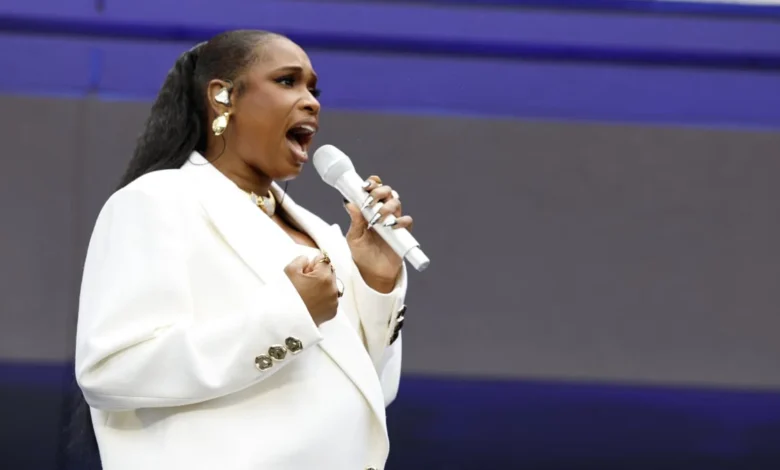
FIFA has officially confirmed that Academy Award and Grammy-winning artist Jennifer Hudson will perform "The Star-Spangled Banner" during the closing ceremonies of the 2026 World Cup. The performance is scheduled to take place on July 19 at the New York New Jersey Stadium, colloquially known as MetLife Stadium, shortly before the final match between Spain and Argentina. While the inclusion of a host nation’s anthem is a traditional gesture in many international sporting events, the announcement has sparked a nuanced debate among global football fans regarding the "Americanization" of the world’s most popular tournament and the logistical reasoning behind performing the U.S. anthem at a match where the United States national team is not competing.
The decision to feature Hudson, a celebrated vocalist and talk show host, was announced on July 14. According to FIFA’s official media release, the "special rendition" of the American national anthem is intended to serve as a tribute to the primary host nation on the day of the tournament’s conclusion. However, the 2026 World Cup is a historic tri-nation effort, with hosting duties shared between the United States, Canada, and Mexico. This shared responsibility has led critics and fans on social media to question why "The Star-Spangled Banner" was selected for the final ceremony while the national anthems of Canada and Mexico were not given similar billing for the tournament’s ultimate match.
Historical Context and Hosting Traditions
The performance of a host nation’s anthem at a World Cup final, while not a mandatory requirement under international football protocol, has historical precedent. When the United States last hosted the FIFA Men’s World Cup in 1994, the closing ceremony featured renowned saxophonist Kenny G performing "The Star-Spangled Banner" before the final match between Brazil and Italy at the Rose Bowl in Pasadena, California.
FIFA officials have clarified that Hudson’s performance is part of a pre-game ceremony designed to celebrate the cultural journey of the tournament across the three North American nations. The event is scheduled to begin at 1:30 p.m. ET, approximately 90 minutes before the 3:00 p.m. ET kickoff. By placing the anthem within this dedicated entertainment window rather than immediately preceding the match, FIFA distinguishes the host nation’s tribute from the official match protocol. Following the conclusion of the pre-game entertainment, the standard international procedure will resume, featuring the national anthems of the two finalists, Spain and Argentina.
A Star-Studded Pre-Game Lineup
The closing ceremony is poised to be one of the most elaborate in the history of the tournament. Jennifer Hudson is only one segment of a high-profile roster of entertainers intended to capture a massive global television audience. The pre-game festivities will be headlined by American rapper and singer Post Malone. Other confirmed performers include British pop icon Robbie Williams, Nicole Scherzinger, and Italian singer Laura Pausini.
In a move clearly aimed at younger, digitally native demographics, FIFA has also enlisted the popular YouTube streamer IShowSpeed for a scheduled appearance. Furthermore, Hollywood veteran Tom Cruise is slated for a "special appearance," the details of which remain under wraps. This convergence of traditional music stars, digital influencers, and cinema icons underscores FIFA’s broader strategy to transform the World Cup final into a multi-platform entertainment spectacle akin to the Olympic Games opening ceremonies or the NFL’s Super Bowl.
The First-Ever World Cup Halftime Show
Perhaps the most significant departure from traditional football norms is the introduction of an 11-minute halftime show. Historically, the 15-minute interval in professional soccer is reserved for player recovery and tactical adjustments, with television broadcasts usually focusing on highlights and analysis. For the 2026 final, however, FIFA has curated a high-energy musical performance during this break.
The halftime show will feature a collaborative performance by global superstars Madonna, Shakira, BTS, and Justin Bieber. The event is being produced and curated by Coldplay frontman Chris Martin. The lineup also includes Nigerian artist Burna Boy, acclaimed conductor Gustavo Dudamel, the PS22 Chorus, and iconic characters from Sesame Street and The Muppets.
This initiative is not merely for entertainment; it is tied to the FIFA Global Citizen Education Fund. The performance aims to raise awareness and funds to expand access to education and youth soccer programs globally. Despite the charitable angle, the introduction of a halftime show has drawn criticism from purists who argue that the extension of the halftime break—reportedly to accommodate the stage setup and performance—disrupts the flow of the game and prioritizes commercial interests over the integrity of the sport.
Economic Objectives and Market Expansion
The decision to infuse the final with American-style entertainment is rooted in significant financial objectives. FIFA has projected a record-breaking revenue of $13 billion for the 2023–2026 commercial cycle. A substantial portion of this growth is expected to come from the North American market, specifically through domestic sponsorships, ticket sales, and media rights.
Data from the group stages of the 2026 tournament suggests that FIFA’s focus on the American audience is yielding results. Fox Sports reported that its group-stage broadcasts averaged over 5 million viewers, nearly doubling the audience recorded during the 2022 World Cup in Qatar. Furthermore, Spanish-language coverage on Telemundo and Peacock has seen record-breaking engagement, with U.S. matches drawing the largest Spanish-language audiences in the history of the tournament.
By featuring Jennifer Hudson and a halftime show filled with Western pop icons, FIFA is attempting to engage "casual" viewers—those who may not follow soccer year-round but are drawn to major cultural events. The presence of the U.S. national anthem serves as a symbolic anchor for this domestic audience, reinforcing the event’s status as a premier American sporting moment, even in the absence of the U.S. Men’s National Team on the pitch.
Critical Reaction and the "Americanization" Debate
The shift toward an entertainment-heavy format has not been without controversy. Throughout the 2026 tournament, fans and commentators have voiced concerns regarding the "Americanization" of the sport. Specific complaints have centered on the length of opening and closing ceremonies, as well as the implementation of "hydration breaks." While these breaks are officially mandated for player safety in high temperatures, some viewers and analysts believe they are being utilized as convenient windows for additional television advertising.
Social media sentiment following the Jennifer Hudson announcement reflected a divide between North American viewers and the global football community. Many international fans expressed confusion, noting that in previous World Cups hosted by nations like Germany, South Africa, or Brazil, the host nation’s anthem was not typically a central feature of the final unless that nation was competing. The omission of Canadian and Mexican anthems in the final ceremony has also been cited as a point of contention, with some suggesting it undermines the "United" theme of the 2026 bid.
Logistics and Viewing Information
The World Cup final will be the culmination of a 48-team tournament, the largest in history. The New York New Jersey Stadium, which beat out AT&T Stadium in Dallas and SoFi Stadium in Los Angeles for the right to host the final, is expected to be at its full capacity of over 82,000 spectators.
For viewers in the United States, the schedule and broadcast details are as follows:
- Event: FIFA World Cup 2026 Final
- Date: Sunday, July 19
- Closing Ceremony Start: 1:30 p.m. ET
- Match Kickoff: 3:00 p.m. ET
- English Broadcast: Fox, Fox Sports App
- Spanish Broadcast: Telemundo, Peacock
As the world prepares to watch Spain and Argentina compete for the most prestigious trophy in sports, the atmosphere in East Rutherford will be a unique blend of international competition and American showmanship. Whether the inclusion of "The Star-Spangled Banner" and a star-studded halftime show becomes a new standard for FIFA or remains a unique artifact of the 2026 North American tournament remains to be seen. What is certain, however, is that FIFA’s $13 billion gamble on the American market has fundamentally altered the presentation of the World Cup final.
Related posts: