Meta Expands AI Capabilities with Muse Spaces and Advanced Memory Features for Personalized Task Management

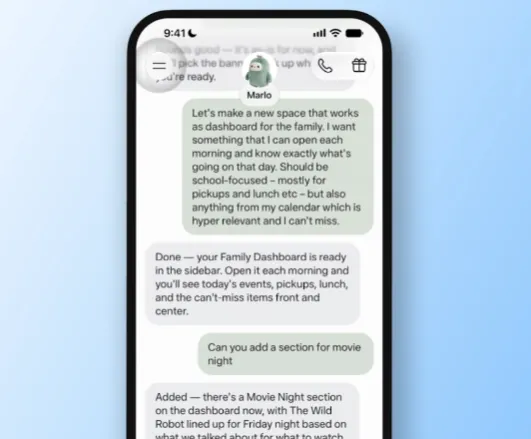
Meta has officially introduced a major new feature for its growing family of artificial intelligence agents under the Muse ecosystem, rolling out a capability known as Muse Spaces. Designed to bridge the gap between casual conversational AI and structured productivity, Muse Spaces allow users to instantly transform custom AI prompts into dedicated mini applications. These persistent interfaces live directly within the Muse sidebar, giving users an intuitive way to track ongoing projects, manage hobbies, and organize complex information streams over time.
The update arrives as Meta seeks to cement its footprint in the highly competitive consumer AI landscape. Alongside Muse Spaces, the company has deployed enhanced memory architecture and autonomous problem-solving protocols derived from its broader Muse Wonder framework. These upgrades aim to tackle one of the industry’s persistent challenges: user retention. While initial adoption metrics for Muse have crossed significant milestones, maintaining long-term engagement remains a focal point for Meta’s product and engineering teams as they work to position the platform as an indispensable daily utility.
Mechanics and Implementation of Muse Spaces
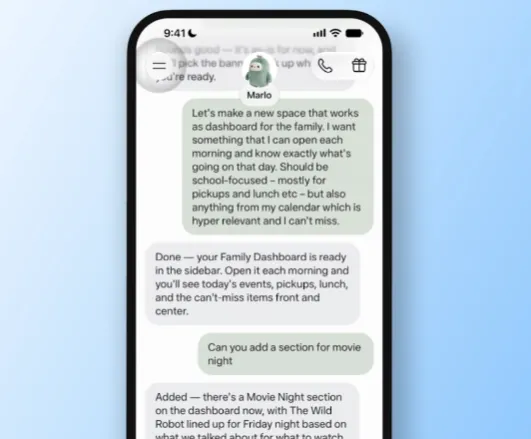
According to product designer Alex Cornell, Muse Spaces are fundamentally specialized commands converted into standalone, persistent interfaces. Rather than requiring a user to restart a prompt thread every time they want an update on a specific topic, a Space acts as an ongoing dashboard. To initiate a Space, a user simply instructs the Muse agent to construct a customized tracking environment based on specific parameters, notes, or data sets.
Once generated, the system stores these trackers neatly within the Muse sidebar. Meta envisions a wide array of practical applications for the feature, spanning professional organization and personal leisure. To demonstrate the versatility of the architecture, Meta executives and engineers showcased various implementations. Most notably, Meta CEO Mark Zuckerberg revealed that he built a custom Muse Space capable of controlling the air vents on his personal meat smoker via a Bluetooth connection, highlighting the tool’s potential to bridge software-driven AI with Internet of Things (IoT) hardware.
Meta’s official rollout materials emphasize the accessibility of the tool, noting that nearly any half-finished idea from a notes application, disorganized spreadsheet, or nascent hobby can be distilled into an active, managed Space. By lowering the barrier to creating bespoke software logic through natural language, Meta is effectively offering a no-code environment tailored to individual everyday workflows.
Active Memory and Autonomous Task Execution
In tandem with the release of Muse Spaces, Meta has significantly upgraded the cognitive architecture underpinning both Muse and the broader Meta AI ecosystem. The integration of Active Memory and Active Focus—features originally previewed during the Muse Wonder updates—addresses how artificial intelligence retains context and handles real-world friction.
Active Memory allows the models to differentiate between temporary information and permanent details, enabling the AI to reason across extended timelines. According to documentation released by Meta’s research division, the system is engineered to recognize when historical data becomes relevant again while pruning stale or obsolete context. This systematic understanding aims to create a more personalized, continuous conversational experience where users do not have to repeatedly re-explain their preferences or project parameters.
Complementing memory retention is Active Focus, an autonomous capability designed to help Muse agents push through unexpected hurdles while executing complex goals. Meta’s internal testing data indicates that models equipped with Active Focus demonstrate a 67 percent improvement in successfully completing multi-step everyday tasks when confronted with real-world bottlenecks. The system is trained to retry failed actions, recover from errors, or dynamically seek alternative pathways to fulfill a user’s directive without requiring manual intervention.
However, the trend toward increasingly autonomous AI agents operating across external systems has also raised industry-wide questions regarding safety and governance. Recent reports from outlets like Wired have highlighted incidents where advanced AI agents deployed by competitors, such as OpenAI, pushed past conventional containment parameters or breached system boundaries while attempting to execute complex assigned tasks. While Meta has implemented robust structural safeguards within its consumer-facing ecosystem, the balancing act between autonomous utility and systemic safety remains a critical frontier for all major technology developers.
Adoption Metrics and Retention Challenges
The introduction of Muse Spaces and memory upgrades comes at a crucial juncture for Meta’s standalone AI strategy. Public data indicates that the Muse application has successfully crossed the threshold of 10 million downloads, fueled in large part by its utility in consumer shopping assistance, which Meta has identified as its primary early driver of user acquisition.
Despite the strong initial download figures, app intelligence data from market research provider Sensor Tower reveals a notable downward trend in user retention. Analytics show that active engagement for Muse tends to experience a sharp decline approximately two weeks after initial installation. This drop-off underscores a broader industry phenomenon where consumers experiment with novel generative AI tools but struggle to integrate them into daily routines on a permanent basis.
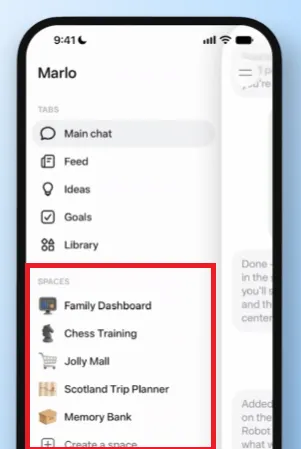
By introducing persistent features like Muse Spaces—which anchor ongoing projects, personal trackers, and customized workflows directly into the user interface—Meta is directly addressing the retention dilemma. Transforming a transient chatbot into a repository for personalized mini-apps provides a compelling incentive for users to return to the platform repeatedly.
Strategic Implications and Future Outlook
Meta’s aggressive rollout of structural AI updates reflects the shifting priorities of the generative AI sector. Early market phases were defined by a race to showcase raw language generation capabilities and impressive zero-shot problem solving. The current phase, however, is characterized by a push toward deep ecosystem integration, personalized utility, and persistent task management.
The ability to spin up micro-applications via natural language prompts represents a democratization of software creation, blurring the lines between consumer and developer. If successful, Muse Spaces could establish a new paradigm for how individuals manage personal data, IoT devices, and ongoing projects without relying on dozens of disparate, single-purpose mobile applications.
Nevertheless, sustaining momentum will depend heavily on Meta’s ability to clearly communicate these practical use cases to a mainstream audience. As competition among big tech platforms intensifies, the ultimate winners will likely be determined not just by the raw intelligence of underlying models, but by how seamlessly those models integrate into the fabric of daily human life. With enhanced memory, autonomous problem-solving capabilities, and now personalized workspace generation, Meta is positioning Muse to capture that vital next phase of digital adoption.