Mauritius Signs Artemis Accords as 70th Nation Marking Major Milestone for International Space Cooperation

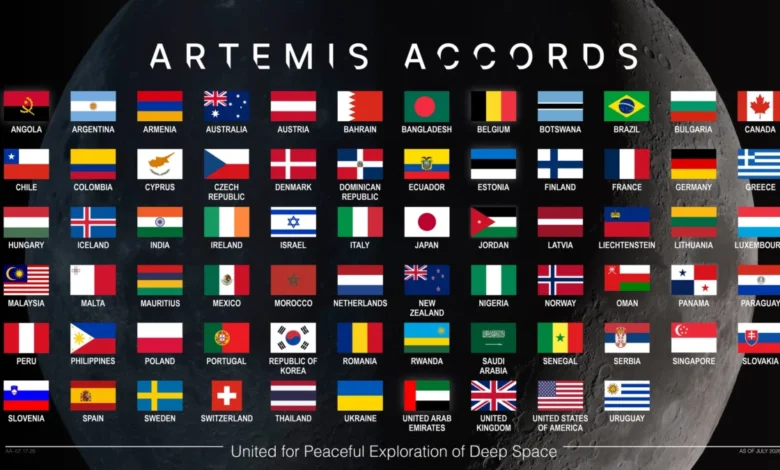
The island nation of Mauritius officially signed the Artemis Accords on July 17, 2026, marking a significant diplomatic milestone as the 70th nation to join the United States-led coalition for responsible and sustainable space exploration. The signing ceremony, held in the Mauritian city of Ébène, was attended by high-ranking officials from the Mauritian government and representatives from the U.S. State Department. Navindsing Jugmohunsing, representing the Ministry of Tertiary Education, Science and Research, signed the document on behalf of the Republic of Mauritius. NASA Deputy Administrator Matt Anderson provided remarks via a pre-recorded video message, emphasizing the importance of diverse global participation in the next era of lunar and deep-space discovery.
The accession of Mauritius to the Accords is not merely a symbolic gesture but represents the growing interest of Small Island Developing States (SIDS) in the burgeoning space economy. By joining the Accords, Mauritius has signaled its intent to leverage space technology for domestic priorities, including maritime surveillance, climate change mitigation, and the protection of its vast exclusive economic zone in the Indian Ocean.
A New Chapter for Mauritian Science and Research
In a statement following the signing, Navindsing Jugmohunsing highlighted the strategic importance of this agreement for the nation’s future. He noted that the accession to the Artemis Accords marks a defining chapter in the country’s "new space journey." As an island nation particularly vulnerable to the effects of climate change and rising sea levels, Mauritius views space-based data as a critical tool for survival and economic growth.
"As a small island developing state in the Indian Ocean, we are committed to ensuring that space serves humanity by protecting our oceans and coastlines and amplifying the voices of nations like ours," Jugmohunsing said. He further noted that Mauritius is prepared to play an active role in shaping the future of space governance, ensuring that the benefits of space exploration are not confined to traditional spacefaring superpowers but are accessible to smaller nations seeking innovation and partnership.
The ceremony in Ébène serves as a testament to the rapid expansion of the Artemis Accords. Just one day prior to the Mauritian signing, the Republic of Serbia joined the Accords during a ceremony at NASA Headquarters in Washington, D.C. This rapid succession of signings underscores a momentum that has seen 11 nations join the framework in the first seven months of 2026 alone.
Understanding the Artemis Accords: Principles and Objectives
The Artemis Accords were established in 2020 by NASA and the U.S. Department of State as a non-binding set of principles grounded in the 1967 Outer Space Treaty. The primary goal of the Accords is to create a safe and transparent environment for space exploration as NASA moves forward with its Artemis program, which aims to return humans to the lunar surface and eventually facilitate a crewed mission to Mars.

The Accords outline several key principles that signatories agree to uphold:
- Peaceful Exploration: All activities conducted under the Artemis program must be for peaceful purposes, in accordance with international law.
- Transparency: Signatories are committed to the public release of scientific information and the transparent sharing of their respective space policies and exploration plans.
- Interoperability: Nations agree to utilize common technical standards to ensure that different spacecraft and ground systems can work together, enhancing safety and efficiency.
- Emergency Assistance: Signatories commit to providing aid to personnel in outer space who are in distress, reinforcing the Agreement on the Rescue of Astronauts.
- Registration of Space Objects: To prevent collisions and manage orbital traffic, nations must register their space objects as required by the Registration Convention.
- Release of Scientific Data: To ensure the global community benefits from exploration, signatories agree to share scientific data with the public and the international scientific community.
- Preserving Heritage: The Accords call for the protection of historically significant sites and artifacts in space, such as the Apollo landing sites.
- Space Resources: The extraction and utilization of space resources (such as lunar regolith or water ice) are deemed essential for sustainable exploration and must be conducted in a manner that complies with the Outer Space Treaty.
- Deconfliction of Activities: Signatories agree to establish "safety zones" to prevent harmful interference between different nations’ lunar operations.
- Orbital Debris: Nations commit to planning for the mitigation of orbital debris and the safe disposal of spacecraft at the end of their missions.
The Rapid Growth of a Global Coalition
The journey from the inception of the Accords to the 70th signatory has been remarkably swift. When the framework was first introduced in October 2020, it featured only eight original signatories: the United States, Australia, Canada, Italy, Japan, Luxembourg, the United Arab Emirates, and the United Kingdom.
Since then, the coalition has expanded across every continent, reflecting a shift in the global perception of space exploration from a Cold War-era "race" to a 21st-century collaborative endeavor. The inclusion of Mauritius is particularly notable as it represents the growing voice of the African continent and Indian Ocean nations in the Accords.
Mike Gold, the current president of Redwire Space and a former NASA associate administrator who was instrumental in drafting the Accords, expressed his enthusiasm for the milestone. "Going from seven nations joining the U.S. in signing the Accords in 2020 to 70 signatories in 2026 is a huge accomplishment," Gold told SpaceNews. "The success of the Accords demonstrates the inherent optimism and hope that the space program represents not only in America but around the world."
Gold emphasized that the Accords are "inseparable" from the Artemis program itself. As NASA prepares for the Artemis III mission—the first human return to the Moon in over half a century—the diplomatic framework provided by the Accords ensures that the international partners contributing to the mission are operating under a unified set of values and rules.
Geopolitical Context and the Lunar Competition
The expansion of the Artemis Accords occurs against a backdrop of increasing geopolitical competition in cislunar space. While the Accords represent the U.S.-led vision for lunar exploration, a parallel effort exists in the form of the International Lunar Research Station (ILRS), led by China and Russia.
Interestingly, several nations have chosen to navigate these two frameworks simultaneously. Mauritius’s neighbor in signing, Serbia, is one of three nations—alongside Senegal and Thailand—that have signed both the Artemis Accords and joined the ILRS project. This "dual membership" suggests that many middle-power and developing nations are seeking to maximize their access to space technology and lunar opportunities by maintaining partnerships with both major space blocs.

For the United States, the signing of the Accords by nations previously aligned with the ILRS is seen as a diplomatic victory. Mike Gold noted, "Through the Artemis Accords, we’re not just launching our astronauts, we’re launching our values to the moon. Which is why every ILRS nation, such as Serbia, that commits to the principles of the Artemis Accords is a special victory for a peaceful and prosperous future in space."
Implications for the Future of Space Governance
The addition of Mauritius as the 70th member brings fresh perspectives to the Artemis Accords, particularly regarding the use of space for sustainable development. For Mauritius, the partnership provides a pathway to enhance its National Space Policy, which focuses on satellite technology for disaster management and oceanography.
The broader implications for the Artemis program are equally significant. As the number of signatories grows, the "rules of the road" established by the Accords become de facto international norms. This normalization is crucial for the private sector as well; companies involved in lunar mining, transport, and habitat construction require a stable and predictable legal environment to justify large-scale investments.
NASA’s Deputy Administrator Matt Anderson reiterated that the work of lunar exploration requires "capable partners and a shared commitment to responsible exploration." With 70 nations now on board, the Artemis program has transitioned from a national initiative into a truly global movement.
Chronology of Recent Artemis Accords Signings (2026)
The year 2026 has been the most active year for the Accords since their founding. The following timeline illustrates the accelerating pace of international interest:
- January – March 2026: Several nations from the Middle East and South America joined the coalition, focusing on regional cooperation in satellite telecommunications.
- May 2026: Significant expansion into Southeast Asia, with Thailand joining the Accords while maintaining its research ties with the ILRS.
- June 2026: Senegal becomes a signatory, highlighting the growing space ambitions of West African nations.
- July 16, 2026: Serbia signs the Accords at NASA Headquarters, emphasizing the importance of transparency and the peaceful use of space.
- July 17, 2026: Mauritius signs as the 70th nation, focusing on the intersection of space technology and environmental stewardship for island nations.
As NASA moves closer to the launch of Artemis II—a crewed mission that will orbit the Moon—and the subsequent Artemis III landing mission, the diplomatic foundation provided by these 70 nations will be essential. The Accords ensure that when humanity returns to the Moon, it does so not as a single nation, but as a diverse and unified global community committed to the peaceful exploration of the final frontier.
Related posts: