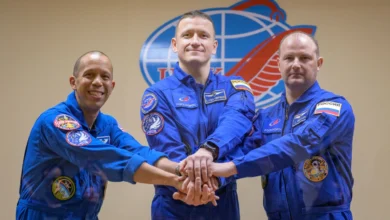
NASA and Roscosmos Crew Members Begin Eight-Month Science Mission Following Successful Docking at International Space Station

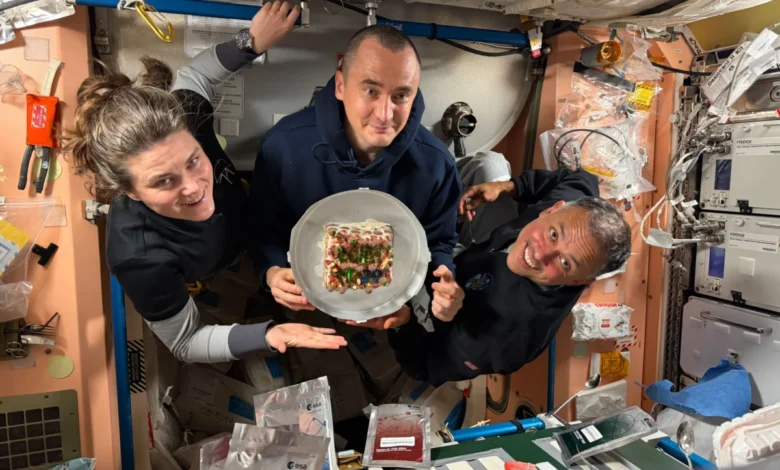
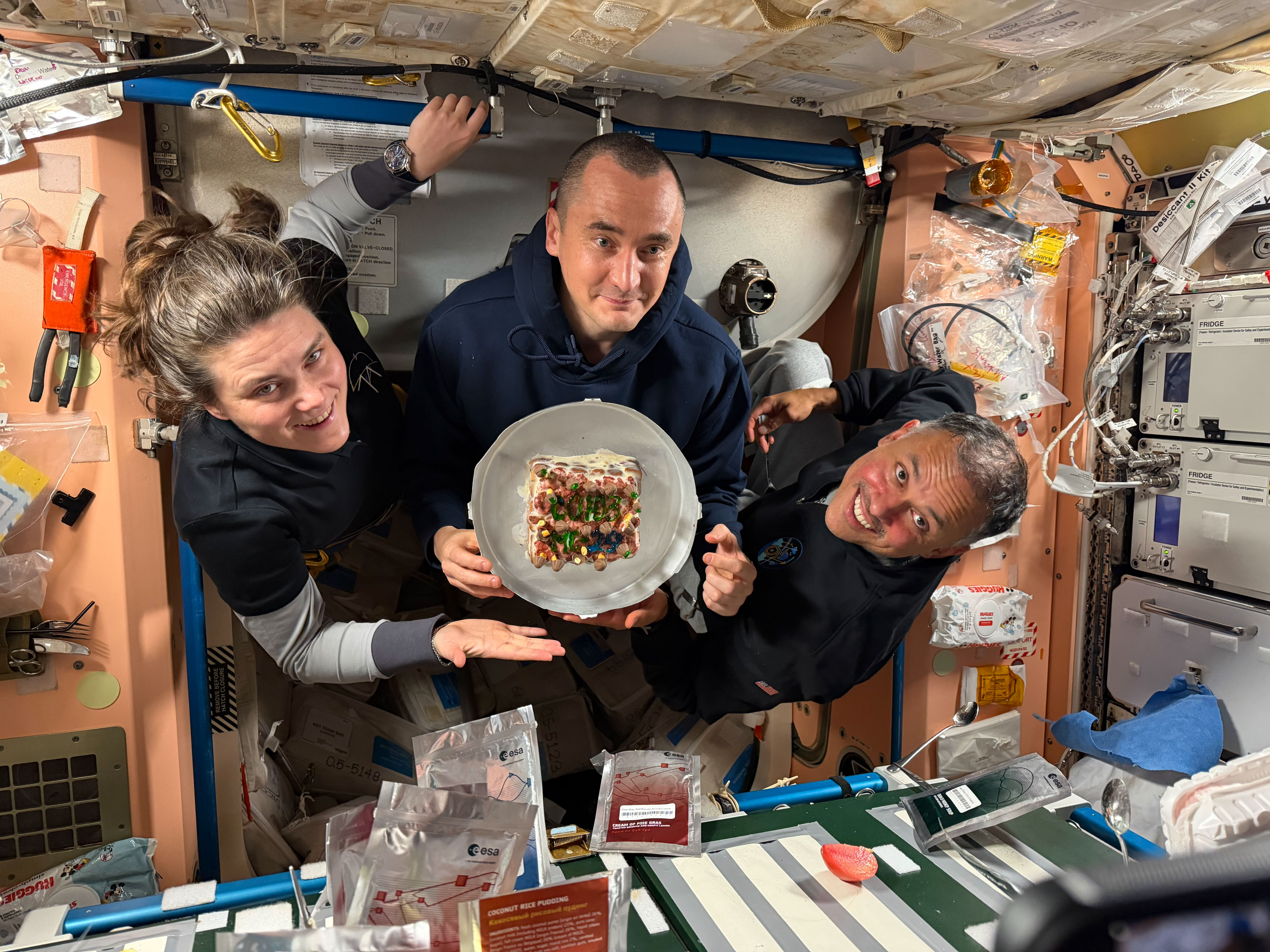
The arrival of Expedition 74 flight engineers Anna Kikina and Pyotr Dubrov of Roscosmos, alongside NASA astronaut Anil Menon, marks the beginning of a critical phase in international space collaboration and scientific advancement. On July 18, 2026, the trio paused their rigorous orientation schedule to celebrate their successful arrival with a traditional cake, a moment of levity captured by NASA’s Chris Williams that underscores the camaraderie essential for long-duration spaceflight. Having launched from the Baikonur Cosmodrome in Kazakhstan on July 14, 2026, the crew successfully docked their Soyuz spacecraft with the International Space Station (ISS) just hours after liftoff, initiating an eight-and-a-half-month mission that will push the boundaries of human endurance and microgravity research.
The crew is currently entering their second week aboard the orbiting laboratory, a period traditionally characterized by "on-the-job" training. While Kikina and Dubrov are seasoned veterans of the Russian space program, and Menon brings a wealth of medical and aerospace expertise from his tenure as a SpaceX flight surgeon and NASA astronaut, the transition to the weightless environment requires a period of physiological and operational adjustment. They are currently balancing the demands of settling into their new quarters with the commencement of a dense schedule of scientific experiments and station maintenance tasks.
Mission Chronology and Launch Logistics
The journey of the Expedition 74 crew began in the early morning hours of July 14, 2026, at the historic Baikonur Cosmodrome. The Soyuz rocket, a cornerstone of human spaceflight reliability, ascended through the Kazakh atmosphere with precision, placing the crew into a preliminary orbit within nine minutes of ignition. Following a series of orbit-raising maneuvers and a "fast-track" rendezvous profile, the spacecraft approached the ISS from the nadir side, docking with the Rassvet module.
The successful docking was followed by a comprehensive series of leak checks and pressure equalization procedures. Once the hatches were opened, the new arrivals were greeted by the existing crew of Expedition 73, transitioning the station into a period of increased occupancy. This overlap period is crucial for the handover of responsibilities, allowing the departing crew to brief the newcomers on the specific nuances of current station systems and ongoing long-term experiments.
The July 18 celebration, featuring a cake provided by the station’s pantry and prepared by the crew, served as a symbolic milestone. In the high-stakes environment of the ISS, such rituals are vital for psychological well-being and team cohesion. By their second week, the crew had already begun participating in standard "station familiarization" activities, which include locating emergency equipment, mastering the galley systems, and understanding the complex waste management protocols that govern life in a closed-loop environment.
Profiles of the Expedition 74 Crew
The diversity of the Expedition 74 crew reflects the multi-faceted nature of modern space exploration. Each member brings a unique set of skills tailored to the mission’s specific objectives.
Anil Menon (NASA): A Lieutenant Colonel in the U.S. Air Force and a former flight surgeon for SpaceX, Menon’s background is uniquely suited for the medical and physiological research planned for this mission. Having served as the first flight surgeon for SpaceX’s Demo-2 mission, his transition to the role of an active astronaut represents a bridge between commercial and government space sectors. His expertise will be pivotal in conducting human health studies that aim to mitigate the effects of bone density loss and muscle atrophy during the 255-day mission.
Anna Kikina (Roscosmos): Kikina remains a trailblazing figure in the Russian space program. As the only woman currently in the Roscosmos cosmonaut corps, her presence on Expedition 74 continues her legacy of high-profile assignments. Her previous experience, including cross-training on the SpaceX Crew Dragon, makes her an invaluable asset for cross-platform operations on the ISS. Her focus during this mission will include the operation of the European Robotic Arm (ERA) and the maintenance of the Russian segment’s life support systems.
Pyotr Dubrov (Roscosmos): Dubrov is no stranger to the rigors of long-duration flight. Known for his previous record-breaking stays aboard the ISS, his technical proficiency in extravehicular activities (EVAs) and complex station repairs provides the crew with a deep well of operational knowledge. Dubrov’s role will involve extensive work within the Nauka multipurpose laboratory module, focusing on integrated physics experiments and the continued integration of Russian hardware into the station’s power grid.
Scientific Objectives and Research Scope
The eight-and-a-half-month duration of Expedition 74 is specifically designed to facilitate long-term data collection that shorter missions cannot provide. The research portfolio for this mission spans biology, Earth science, human physiology, and physical sciences.
One of the primary focuses of this mission is the study of "Spaceflight-Associated Neuro-Ocular Syndrome" (SANS). Using advanced imaging equipment, Menon will lead efforts to understand why long-duration spaceflight causes structural changes in the eyes and brains of astronauts. This research is critical for future missions to Mars, where crews will be exposed to microgravity for years at a time.
In the realm of materials science, the crew will utilize the Microgravity Science Glovebox to conduct experiments on liquid-phase sintering. This process involves heating metal powders to create new alloys that are impossible to manufacture on Earth due to gravitational sedimentation. The data gathered could lead to the development of stronger, lighter materials for use in both aerospace and terrestrial industries.
Furthermore, the crew is tasked with maintaining the station’s "Biological Technologies" suite. This includes the cultivation of protein crystals and the use of the BioFabrication Facility (BFF), a 3D bioprinter designed to print organ-like tissues. During their second week, the crew has already begun the initial calibration of these systems, ensuring that the biological samples remain viable throughout the mission’s duration.
International Cooperation in a Changing Geopolitical Landscape
The successful launch and integration of Menon, Kikina, and Dubrov serve as a testament to the enduring partnership between NASA and Roscosmos. Despite the complexities of international relations on the ground, the ISS remains a sanctuary of scientific cooperation. The "seat-swap" agreement, which allows Russian cosmonauts to fly on American vehicles and American astronauts to fly on the Soyuz, ensures that there is always a balanced presence of technical expertise on both segments of the station.
NASA officials have noted that the 2026 mission is a "keystone" in the station’s final decade of operation. As the ISS moves toward its planned retirement in the early 2030s, every mission becomes a race against time to maximize the scientific return on the multi-billion-dollar investment. The collaboration on Expedition 74 exemplifies the shared commitment to maintaining a continuous human presence in low-Earth orbit (LEO).
"The seamless integration of the Expedition 74 crew demonstrates the resilience of the ISS partnership," a NASA spokesperson stated during a recent press briefing at the Johnson Space Center. "Having Anil Menon, Anna Kikina, and Pyotr Dubrov working together highlights the best of what we can achieve when we focus on shared scientific goals. Their mission is not just about the next eight months; it’s about the next twenty years of human exploration."
Technical Challenges and Station Maintenance
Living on the ISS is as much about plumbing and electrical work as it is about high-level science. The station, parts of which have been in orbit since 1998, requires constant vigilance. During the first month of their mission, the crew will participate in a series of "preventative maintenance" tasks.
Key among these is the management of the station’s Environmental Control and Life Support System (ECLSS). The crew will monitor the water recovery systems, which recycle urine and sweat into potable water with an efficiency rate exceeding 98%. Additionally, Kikina and Dubrov are scheduled for several EVAs later in the year to replace aging solar array batteries and install new high-definition cameras on the exterior of the Zvezda service module.
The arrival of the crew also coincides with a busy period of cargo traffic. Several uncrewed resupply missions, including the SpaceX Dragon, Northrop Grumman Cygnus, and the Russian Progress, are scheduled to arrive during the Expedition 74 tenure. These vehicles will bring fresh food, new scientific hardware, and the "consumables" necessary to sustain a crew of seven to eleven people during peak occupancy periods.
Broader Implications for the Future of Space Exploration
The mission of Menon, Kikina, and Dubrov is a vital link in the "Moon to Mars" architecture. The physiological data Menon collects on himself and his crewmates will directly inform the health protocols for the Artemis program. As NASA prepares for sustained lunar presence, the ISS serves as the ultimate testbed for the technologies and human factors strategies that will be required on the lunar surface.
Moreover, the mission highlights the shifting landscape of LEO. With the rise of commercial space stations like Axiom Space and Orbital Reef, the lessons learned by the Expedition 74 crew regarding station management and international crew dynamics will be shared with the private sector. This transition is essential for ensuring that there is no gap in LEO capability once the ISS is eventually deorbited.
As the crew moves past their second week, the initial "familiarization" phase will give way to the steady rhythm of orbital life. The July 18 cake may be long gone, but the spirit of that celebration remains. For the next 240+ days, these three individuals will represent the pinnacle of human achievement, working 250 miles above the Earth to unlock the secrets of the universe for the benefit of all.
The public can continue to follow the progress of Expedition 74 through the official International Space Station blog and NASA’s social media channels, which provide near-real-time updates on the crew’s scientific breakthroughs and daily life in the final frontier.
Related posts: