LG Electronics Moves to Purge Smart TV Apps That Turn Televisions Into Residential Proxy Nodes

Home appliance giant LG Electronics USA has announced plans to suspend and remove any applications built for its smart televisions that convert consumers’ devices into always-on residential proxy nodes. This decisive regulatory shift comes less than a month after independent cybersecurity researchers revealed that a staggering percentage of applications hosted on LG’s proprietary webOS platform allowed unknown third parties to silently route their internet traffic through ordinary living room televisions.
The security implications of these findings extend far beyond a single manufacturer. They touch on a multi-million-dollar industry built around software development kits (SDKs) designed to monetize consumer electronics by transforming everyday households into anonymous traffic-relaying stations. As consumer hardware becomes increasingly interconnected, the boundary between personal devices and commercial proxy networks is growing dangerously thin.
The Findings: How Smart TVs Became Proxy Nodes
The catalyst for LG’s policy shift was a comprehensive security study published on July 2 by the threat intelligence and digital footprint firm Spur. Researchers at Spur set out to examine the prevalence of residential proxy software development kits embedded within smart television applications. Their findings exposed a widespread monetization practice that had largely eluded mainstream consumer awareness.
According to Spur’s telemetry and analysis, more than 42 percent of all applications available for download within LG’s official webOS app store contained embedded SDKs that indefinitely converted a user’s television into a proxy node. Furthermore, the problem was not isolated to a single manufacturer; researchers discovered that more than a quarter of all applications engineered for Samsung’s competing Tizen operating system harbored similar residential proxy components.
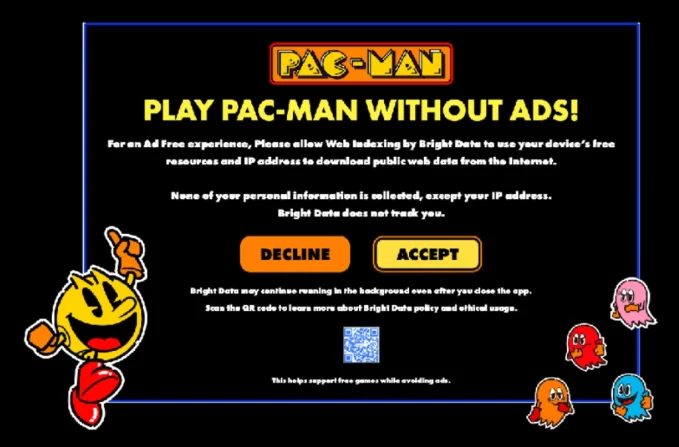
These SDKs were found bundled inside an unexpected array of utilities, including simple arcade games like Pac-Man, custom screensavers, and basic file management utilities. In exchange for utilizing these seemingly free programs, users were often presented with a digital Faustian bargain: view intrusive video advertisements or grant permission for the application to siphon internet bandwidth and route third-party traffic through their home local area network.
Corporate Response and Enforcement Timeline
In the wake of Spur’s public disclosure, technology journalists and security investigators pressed major hardware manufacturers for comment. John Taylor, Senior Vice President at LG Electronics USA, addressed the revelations directly, confirming that the company was actively collaborating with app developers to eradicate residential proxy capabilities from the webOS ecosystem.
"A residential proxy network is not an intended use for LG smart TVs, and LG Electronics is working with developers to remove the residential proxy option from their apps on the webOS platform," Taylor stated in an official correspondence. He emphasized that developers who refuse or fail to comply with these platform guidelines will have their software immediately suspended from the app marketplace.
Taylor noted that internal evaluations and application reviews are already "well underway now" as part of a broader corporate commitment to locking down the webOS ecosystem. "As part of our ongoing efforts to enhance platform quality and the user experience, LG will continue to strengthen our evaluation process for developer-submitted apps, including those that incorporate residential proxy SDKs," Taylor added.
The Mechanics and Defense of Residential Proxy Networks
To understand why application developers willingly embed these SDKs, one must examine the economic engine driving the residential proxy industry. App creators looking to monetize free or low-cost products often partner with proxy platforms. These providers pay developers a fee for every active user whose device is converted into a proxy node.

Once activated, these nodes are rented out to paying corporate and institutional clients who require legitimate-looking residential IP addresses to conduct tasks such as market research, price aggregation, web scraping, and geo-testing.
Bright Data, one of the prominent residential proxy networks identified in Spur’s research, accounted for the majority of proxy SDK detections across both Samsung and LG television platforms. In a formal statement defending its operational model, Bright Data asserted that its entire network is anchored in explicit user consent, strict compliance, and rigorous oversight.
"Every peer opts in through a dedicated screen and receives value in return; every customer is vetted, and our practices have now undergone a second independent audit by PwC," the company’s statement read. Bright Data further maintained its dedication to an open and transparent internet, arguing that academic institutions, cybersecurity researchers, and legitimate businesses require lawful avenues to access publicly available web data.
Industry representatives from Bright Data and competing proxy platforms insist they enforce strict "know-your-customer" (KYC) compliance programs to vet prospective clients. Additionally, these firms claim to deploy technical safeguards designed to isolate the proxy traffic, theoretically preventing external renters from pivoting into and interacting with other vulnerable internet-connected devices operating on the host’s local home network.
Industry Criticism and the Illusion of Consent
Despite corporate assertions of transparency, cybersecurity analysts remain deeply skeptical of how consent is obtained within consumer living room environments. Trevor Sutter of Spur argued that the core issue is not the legal existence of residential proxy networks, but rather their aggressive integration into domestic hardware that consumers historically perceive as passive entertainment devices rather than audited computing terminals.
"A one-time consent prompt buried in a TV app is not a substitute for meaningful transparency, ongoing control, and platform oversight," Sutter wrote. He underscored that domestic devices are uniquely vulnerable because they are shared by diverse household members. "The risk is amplified when consent comes from individuals within the household who use the device but shouldn’t give consent, such as minors."
When a child clicks "accept" on a digital prompt inside a casual video game to bypass an advertisement, they may inadvertently sign away the security posture of their family’s entire home internet connection. Because televisions lack the granular endpoint security, continuous monitoring tools, and administrative visibility typical of a corporate laptop or desktop computer, households are poorly equipped to audit what data is traversing their hardware.
Broader Implications for IoT Security
LG’s prompt crackdown on proxy SDKs represents a significant win for consumer advocacy and platform hygiene, yet the hardware giant simultaneously faces unrelated scrutiny regarding its software distribution practices. Just as the smart TV proxy controversy made headlines, the prominent YouTube technology channel Gamers Nexus revealed that specific high-end LG LCD monitors automatically push third-party software—namely, promotional applications for McAfee antivirus subscriptions—directly through Windows Update without seeking explicit, upfront user approval.
These concurrent events highlight a pervasive trend across the consumer electronics landscape: manufacturers increasingly seek secondary monetization channels through third-party partnerships, often at the expense of user autonomy and transparency. Whether through unrequested security software installations on computer monitors or hidden residential proxy nodes embedded inside television arcade games, consumers are routinely treated as monetization vectors.
As regulatory bodies and security researchers continue to shine a light on these practices, the actions taken by LG to purge proxy SDKs from webOS establish a crucial precedent. However, the discovery that nearly half of an ecosystem’s applications leveraged residential proxies demonstrates that app store vetting procedures have historically been reactive rather than preventative. Moving forward, the pressure will mount on Samsung, LG, and other consumer electronics manufacturers to implement automated static and dynamic code analysis that can catch abusive SDKs before they ever reach the living room.
Related posts: